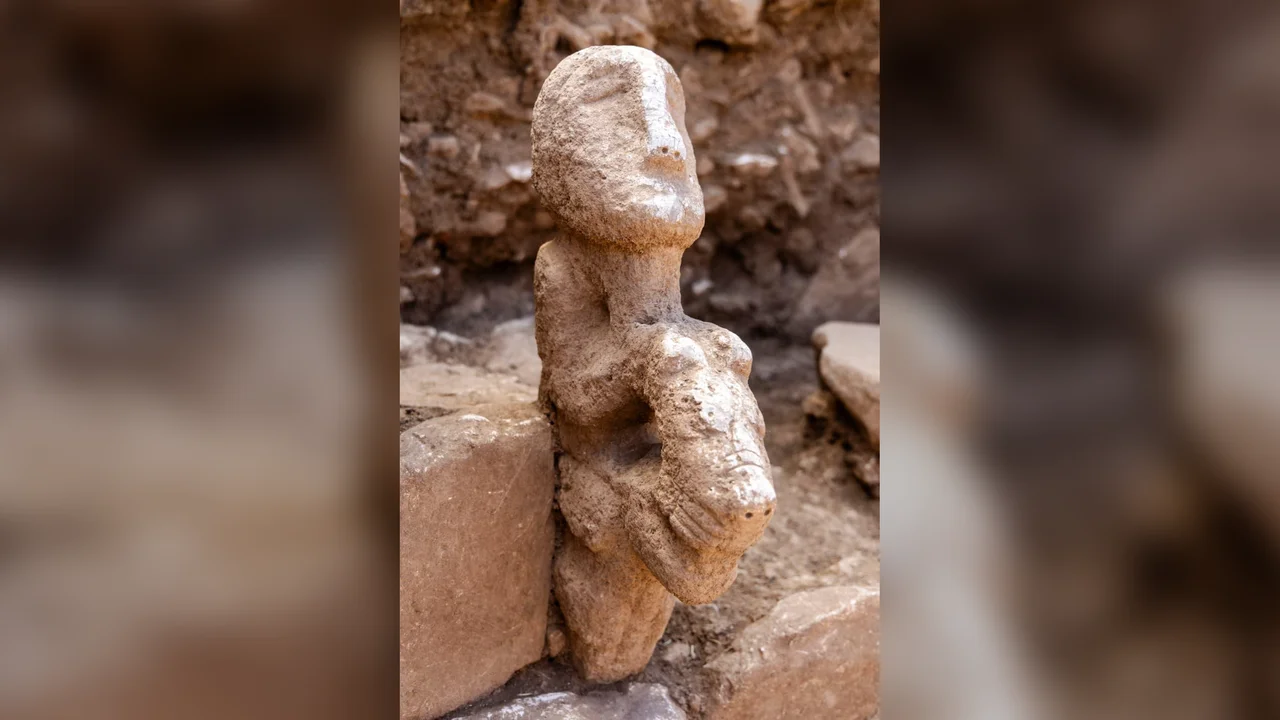
Archaeologists in Turkey have uncovered a rare 11,000-year-old statue that depicts a human riding a leopard, reflecting a culture steeped in themes of power and virility.
A New Find at Karahan Tepe
Excavations at the ancient site of Karahan Tepe in southern Turkey have unveiled a remarkable sculpture depicting a human figure perched atop a leopard, dating back approximately 11,000 years. This discovery adds to the narrative of early human settlements that explored themes of strength and virility, experts suggest. Such artifacts can shift our understanding of the symbolic language used by ancient people, hinting at a complex interplay between nature and human identity.
The Discovery in Detail
The statue, measuring about 28 inches tall, was found on a stone platform within a circular structure measuring roughly 10 feet in diameter. As per a translated statement from the Turkish Ministry of Culture and Tourism, the depiction is said to be in "a style unlike anything seen before," according to Mehmet Nuri Ersoy, Turkey’s Minister of Culture and Tourism. The unique characteristics of this sculpture could indicate an advanced stage of artistic expression for this period—implying these early artists had a developed understanding of form and representation.
Historical Context of Karahan Tepe
Karahan Tepe stands as one of the world's oldest known villages, established around 9750 B.C. While it shares its historical context with other significant early settlements, including Göbekli Tepe, this site draws particular interest due to its enigmatic artwork of figures interacting with wild animals. Both locations contribute to a growing body of evidence that questions established narratives about the origins of settled life and social complexity. Göbekli Tepe itself perplexed archaeologists for its massive megalithic structures that predated agriculture, forcing a reconsideration of how we view social organization in prehistoric times.
Continued Discoveries at the Site
This year, additional findings at Karahan Tepe include another extraordinary sculpture: an 11,000-year-old figure of a man grasping his genitals, a motif reminiscent of earlier works like the Urfa Man, discovered nearby in 1993. The recurrence of such themes suggests a lasting cultural connection among prehistoric peoples, reflecting shared beliefs or rituals. Just last year, archaeologists at Sayburç found a carved scene featuring leopards and a man striking a similar pose. These discoveries signal a continuing pattern of illustrating human-animal relationships within this prehistoric duration, providing a lens into the psyches of those early individuals.
Expert Analysis: Symbolism and Societal Values
Jens Notroff, a Neolithic archaeologist at the German Archaeological Institute, highlighted the mirrored aesthetic between the recently found statue and known artifacts depicting animals mounted on humans. This is a telling detail. Notroff pointed out that the imagery of a human figure in control of a leopard might signify the conquest over nature, as leopards were prominent predators within the region's culture—symbolizing power amidst danger. In examining such symbolism, it becomes clear that these early societies were not merely survival-focused; they also grappled with concepts of control and dominance, perhaps even relating to their status within their communities.
The precise meaning of this human-animal motif remains open to interpretation. However, it could likely represent notions of strength or courage within the context of early human life, as Notroff speculated. This aspect is interesting, showing that while we might focus on the literal storytelling of their lives, there’s an underlying current of philosophical inquiry into what it meant to exist in a world shared with formidable beasts.
Future Implications of the Findings
Ersoy expressed strong optimism for how this statue might reshape perspectives on the origins of human civilization, commenting that such discoveries could profoundly influence the broader scientific community. These findings challenge existing paradigms about how art and culture developed in human history. As research continues, these artifacts may unveil further insights into the lifestyle and cultural dynamics of one of humanity's earliest chapters.
What this means for you, the reader, is that these discoveries are not just dusty relics for archaeologists to ponder. They prompt broader questions about humanity's relationship with nature and each other. Will future findings at sites like Karahan Tepe push us to redefine our understanding of community before the advent of agriculture? This exploration may open doors to reexamining the social and cultural constructs that define us even today.
Engage with history: Test your knowledge on Paleolithic, Mesolithic, and Neolithic periods through our Stone Age quiz!
Discussion
Sign in to join the discussion.