Celestron StarSense Explorer DX 130AZ: A Versatile Telescope for Stargazers
Published
Sep 12, 2026
Views
858
The Celestron StarSense Explorer DX 130AZ delivers impressive celestial views, combining user-friendly design with solid performance for both beginners and enthusiasts.
Celestron StarSense Explorer DX 130AZ Overview
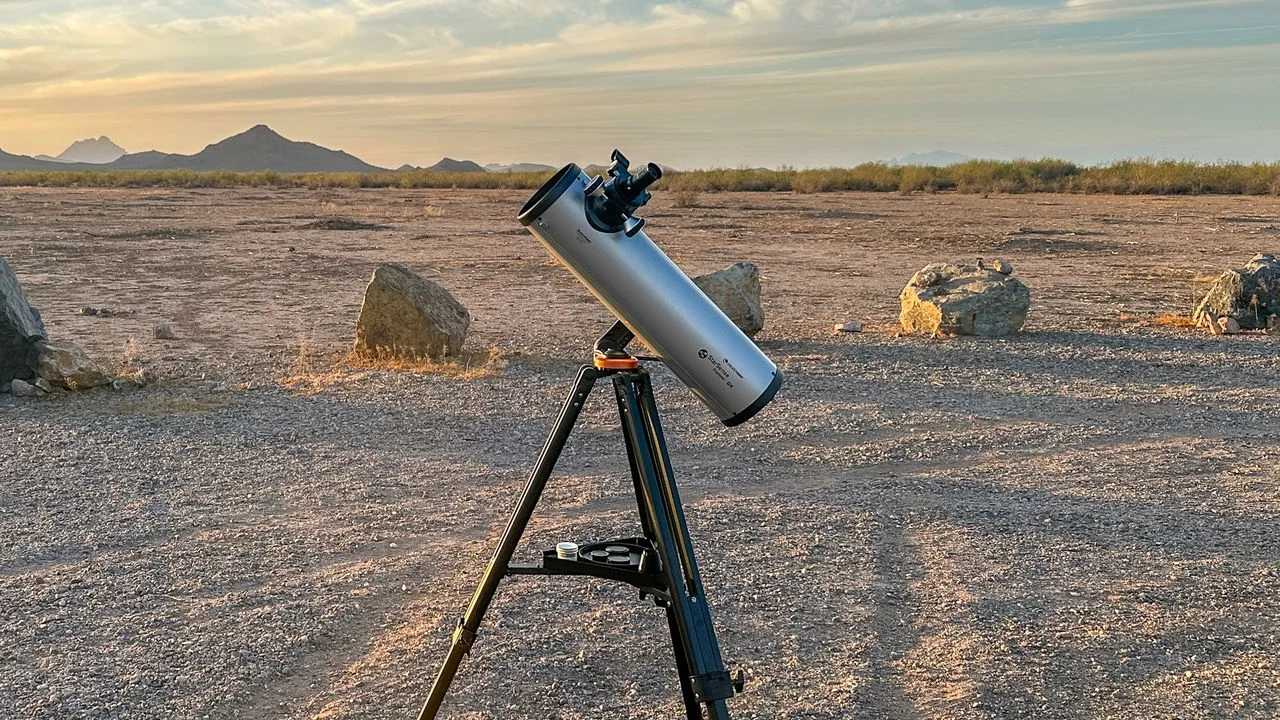
The Celestron StarSense Explorer DX 130AZ stands out as a 5.1-inch (130mm) f/5 Newtonian reflector, a notable offering within Celestron’s extensive lineup of telescopes. Among its peer models, it forms one of the two variants equipped with the StarSense technology. The different approach here is that this model is designed for standard use on an alt-azimuth tripod rather than being a compact Dobsonian style telescope, which sets it apart in terms of usability and setup.
Design Insights
When we dive into the construction of the DX 130AZ, it’s apparent that it combines functionality with portability. While it uses a solid alt-azimuth mount, there’s a limitation worth noting—the design of the mount inhibits straight-up pointing, leading to potential frustration when trying to observe objects high in the sky. To circumvent this, users can intentionally level the tripod unevenly, sacrificing aesthetic for functionality, but it allows for uninterrupted zenith viewing. Stability remains decent unless you’re outdoors in windy conditions, and a bit of DIY effort with sandbags can go a long way in enhancing stability.
The telescope comes equipped with two eyepieces: a 25mm that offers 26x magnification and a 10mm which ramps it up to 65x. While these three-element eyepieces perform adequately, particularly for newcomers, they do show imperfections like edge blurriness and some internal reflections—underscoring the importance of investing in aftermarket options for enhanced views.
Performance Evaluation
When it comes to on-the-sky performance, the DX 130AZ delivers impressive images of lunar features and planetary details. Even on a night with less-than-ideal atmospheric conditions, it competently resolves detail on the moon and planets, achieving up to 250x magnification in perfect circumstances. While hovering around 200x tends to yield the most satisfying results, users can experience wobbliness at the highest settings.
Planetary observing is particularly engaging, as the telescope easily reveals multiple moons of Jupiter and the unique characteristics of Saturn’s rings. Even more distant bodies like Uranus can be detected, albeit as faint green disks. However, Neptune often remains elusive, blending in with background stars, though the StarSense Explorer app can provide some guidance.
For deep-sky enthusiasts, the DX 130AZ holds its ground well. Under dark skies, galaxies like Andromeda and M33 flourish, displaying their beauty; however, light pollution tends to dampen these views significantly. The telescope can also tackle various globular clusters, although results may vary based on the observing conditions.
Functionality and Usability
With the StarSense Explorer DX 130AZ, you have the freedom to observe strictly through manual controls, making the experience simplified. The setup is refreshingly quick: just assemble the tripod, attach the optical tube, and you’re ready to start observing. While the StarSense app is a glorified optional extra, it can facilitate easier navigation through the night sky if desired.
The wide field of view allows for a forgiving approach to manual pointing errors, making it suitable for anyone from novice stargazers to seasoned astronomers. Even without utilizing digital technology, the DX 130AZ can efficiently guide you through a casual session of lunar or planetary viewing.
Is the Celestron StarSense Explorer DX 130AZ Right for You?
This telescope makes sense for those who prioritize portability and ease of use, particularly if you want an option that marries manual aiming with the possibility of smartphone assistance. If you derive pleasure from stargazing under less-than-perfect skies with a varied range of celestial targets, the DX 130AZ could very well fit your needs. On the flip side, for those who seek higher aperture telescopes or want the functionality of motorized tracking, other options like an 8-inch Dobsonian may prove more beneficial.
While I wouldn’t put the DX 130AZ at the top of my recommendation list, it certainly holds its own within its price bracket. It suits those looking for a blend of tradition with a modern twist, but consider your specific requirements before finalizing your choice.
Discussion
Sign in to join the discussion.