A well-preserved Pacific mastodon molar has been uncovered in California, offering insights into the species that roamed North America over 10,000 years ago.
Discovery in a Nature Preserve
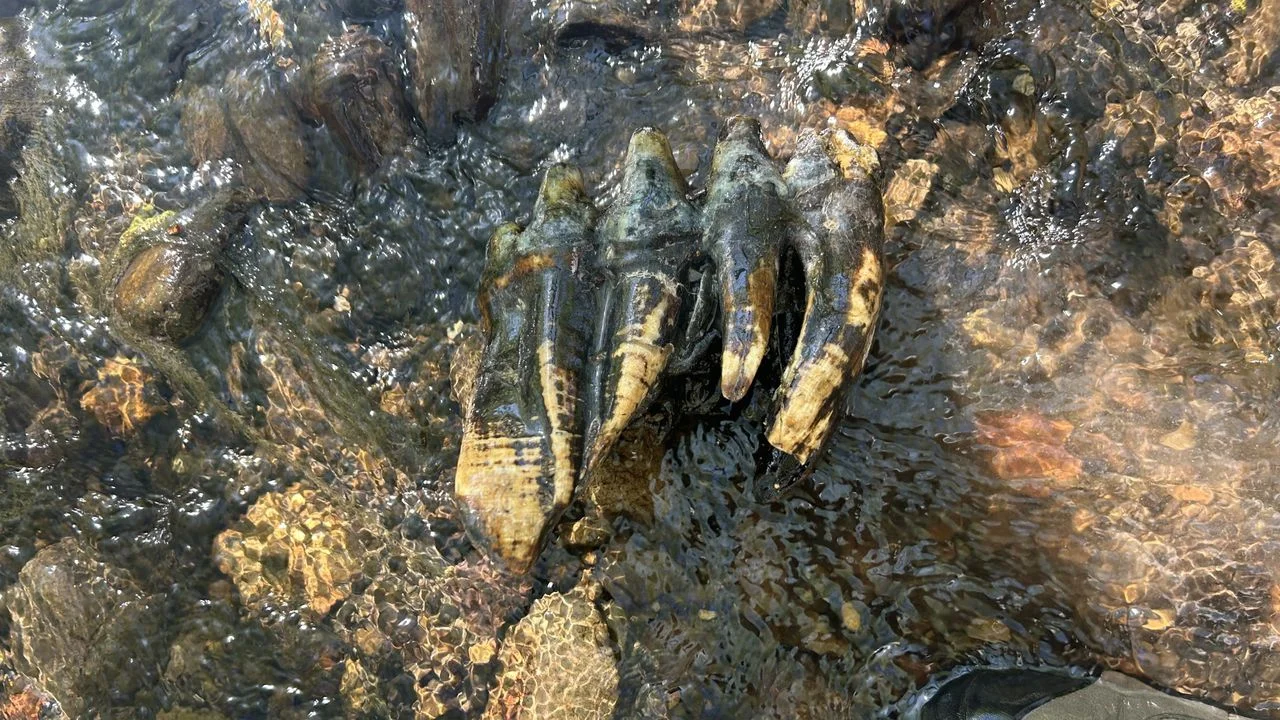
An extraordinary find has emerged in a California nature preserve near San Francisco—an exceptionally preserved fossilized molar from a Pacific mastodon. Initially mistaken for an oddly shaped rock by field geologists, the fossil was identified as a significant discovery from the last ice age and subsequently sent to Stanford University for carbon dating. This context gives the discovery added weight: fossils like these aren’t everyday occurrences, especially in an area where ice age remains are infrequently uncovered. The fact that it was even found speaks volumes about the ongoing efforts to explore and understand regional geology and paleontology.
The Find's Significance
“The tooth is in immaculate condition,” noted Wayne Thompson, paleontologist and CEO of Pacific Paleontology, who performed a preliminary assessment. "This is the most complete mastodon molar from our area, and I have to say, it’s the most spectacular mastodon molar I've ever encountered.” His enthusiasm for the find is evident, describing the moment as giving him chills. For paleontologists like Thompson, such finds do more than just quench curiosity; they serve as critical pieces in understanding ancient life forms.
The Pacific mastodon has its own unique profile in North American history, and a well-preserved specimen like this one can tell us a lot about its lifestyle and habitat. The implications stretch beyond just scientific interest; they touch upon how we visualize ancient ecosystems and the species that once roamed them. With the proper dating, researchers may be able to glean insights not just into the mastodon's biology, but the environmental conditions of its time—how climate change has shaped, and continues to shape, ecosystems.
About the Discovery Process
The discovery was made this past summer by Brigid Lynch, a geomorphologist at Balance Hydrologics, while she was conducting a survey in a creek bed as part of a habitat enhancement project aimed at preserving the threatened California red-legged frog (Rana draytonii). This detail is particularly telling. Not only was the find serendipitous, but it also underscores how environmental preservation efforts can yield unexpected scientific rewards. This isn’t just a story about an ancient creature; it’s also a reminder of the interconnectedness of conservation and scientific research.
Age and Extinction
Dating back to at least 10,000 years, the fossil signifies an era when the Pacific mastodon (Mammut pacificus) is believed to have gone extinct. This example stands out in a region where such fossils are not commonly unearthed. The rarity of this type of fossil in the San Francisco area presents an interesting puzzle for scientists. Their absence had previously masked the ecological narratives of the region. Consequently, it was easier to overlook the roles these large mammals played in their ecosystems. If you’re working in this space, you’d find it compelling how isolated discoveries can rewrite history. This fossil could catalyze a reevaluation of what we know about the distribution of these creatures across North America.
Scientific Classification and Differences
The Pacific mastodon was first recognized as a distinct species in 2019 and is closely related to the American mastodon (Mammut americanum). While both species roamed North America during the Pleistocene epoch (2.6 million to 11,700 years ago), the Pacific mastodon inhabited western regions, including parts of Mexico, California, and the Rocky Mountains. This geographical distinction could help direct future paleontological digs and studies, focusing on the specific adaptations and life cycles that allowed each species to thrive in its unique environment.
Fossil evidence indicates subtle distinctions between the two species, such as a narrower third molar and variations in limb bone structure. That said, these differences might help paleontologists pinpoint how environmental factors influenced physical traits over time. Thompson considers this molar another piece of the intricate puzzle of Ice Age history. Every fossil tells a story, but this one could contribute vital information about evolutionary adaptations in response to climate and environmental changes.
Long-Term Implications
The tooth was officially donated to Stanford University's Doerr School of Sustainability for precise dating in July. Researchers plan to create a 3D replica for educational purposes, highlighting the significance of this unique find. But here’s the thing: beyond just being an educational resource, this fossil could become a cornerstone for discussions about extinction and biodiversity. The Pacific mastodon’s journey can serve as a cautionary tale about how environmental conditions can lead to mass extinctions—a lesson applicable to modern-day conservation efforts.
And this is the part most people overlook. As the effects of climate change intensify, learning from historical extinction events becomes increasingly relevant. Fossils like this one provide not just facts but also a narrative about survival, adaptation, and the impact of environmental changes. So, while the excitement around its discovery is palpable, the layers of significance are what truly stand the test of time.
Discussion
Sign in to join the discussion.