A new fossil discovery in China reveals a unique 168 million-year-old mammalian ancestor, showcasing key traits that shaped modern mammals.
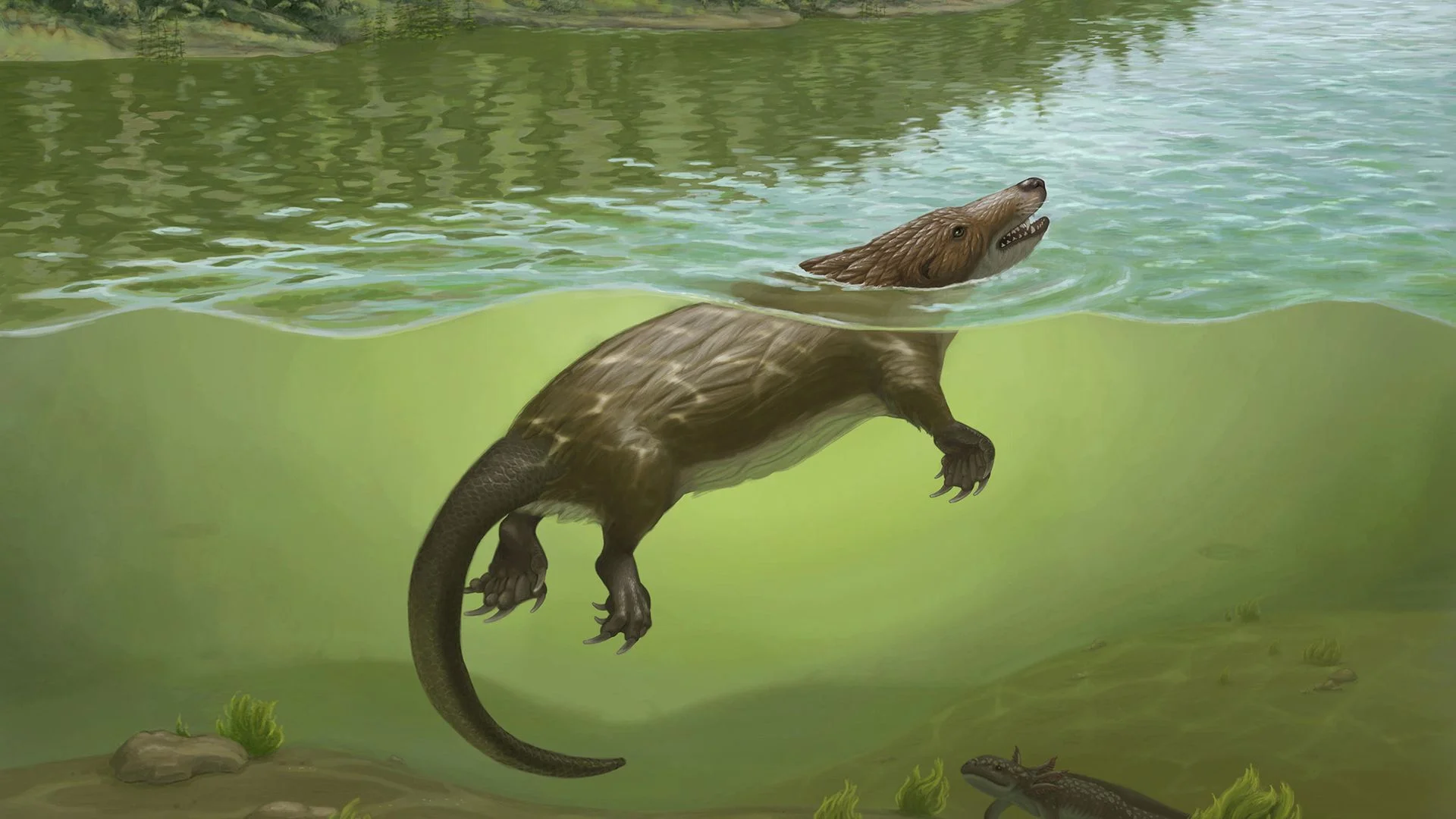
A fascinating discovery in Inner Mongolia has unveiled Megacauda sungei, the largest-known mammal relative from the Jurassic period, which lived between 168 and 163 million years ago. While this creature weighed roughly as much as a Chihuahua, its significance lies not only in its size but also in the evolutionary insights it offers into the traits of early mammals.
The fossil, excavated in 2016, showcases features suggesting a semiaquatic lifestyle. Weighing between 2.2 and 4.4 pounds (1 to 2 kilograms), its name translates to "big tail," reflecting its broad, flattened tail that implies strong swimming capabilities. According to paleontologist Zhe-Xi Luo from the University of Chicago, the anatomy of this critter resembles a chimera, combining traits common to modern animals. "The back half is very much like a platypus, capable of swimming or digging," Luo explained. This unique combination makes M. sungei a vital puzzle piece in our understanding of mammalian evolution.
Insights from Fossil Remains
Remarkably, M. sungei exhibited teeth markedly different from those of a platypus; its robust canines and unique shearing cheek teeth indicate a specialized carnivorous diet. Luo pointed out the creature's transitionary traits, describing it as partly otter-like, demonstrating its adaptability for various predation methods. This adaptability suggests that early mammals were not the simple, small creatures we often imagine, but rather sophisticated hunters capable of exploiting diverse niches.
Evidence from the fossil appears to suggest that M. sungei preyed on small vertebrates, indicated by remains found in its presumed stomach and adjacent fossil beds. Researchers believe it hunted in freshwater environments, targeting fish and invertebrates while possibly sheltering in burrows on land. This behavior highlights the crucial transition from fully terrestrial to semiaquatic species among early mammals, which would have laid the groundwork for future evolution in diverse environments.
A standout feature of this fossil is its throat structure. Modern mammals possess a "U"-shaped hyoid bone that aids in swallowing and suckling. Strikingly, M. sungei has evolved a mechanism indicating that such capability was present in the Middle Jurassic. Thomas Martin, a paleontologist at the University of Bonn, emphasized the evolutionary significance of these findings. Luo remarked that this advancement likely played a role in the diversification of early mammals into various diets. It not only opens up questions about the diets of other mammals but also about the nature of social behavior and reproduction during that time.
The presence of a suckling mechanism in M. sungei suggests that these traits emerged much earlier than previously thought, predating the divergence of marsupials and placental mammals by a considerable margin. According to Luo, this discovery pushes the timeline of mammalian evolution back, showing that the ability to suckle evolved prior to significant mammalian diversification about 165 million years ago. This challenges traditional views of mammalian capabilities during the Jurassic period, indicating they may have been capable of complex behaviors much sooner than previously believed.
This semiaquatic mammal belongs to a lineage known as docodonts, which inhabited diverse environments from approximately 200 to 120 million years ago. Their adaptability is remarkable, as seen in other docodonts like the tree-dwelling Microdocodon gracilis and the burrowing Docofossor brachydactylus. Luo’s previous work also included the description of another semiaquatic mammal, Castorocauda lutrasimilis, which lived around the same time. This connection invites further inquiry into the different strategies these creatures employed for survival amidst the era's vibrant biodiversity.
The Broader Implications
The study of M. sungei not only sheds light on a specific lineage but also suggests aquatic lifestyles may have frequently emerged among early mammal-like species. Tim Flannery, a mammalogist at the Australian Museum Research Institute, noted the "spectacular fossil," exemplifying how docodonts occupied various ecological niches during the age of dinosaurs. "The detailed findings indicate that mammaliaforms held a broad range of ecological roles much sooner than previously acknowledged," Flannery remarked. This commentary reinforces the idea that early mammals were highly adaptive, filling ecological roles in ways we’ve only just started to understand.
In essence, the discovery of M. sungei marks a significant milestone in understanding the evolutionary history of mammals, revealing that advanced traits associated with modern mammals were developing long before their appearance in the fossil record. If you're working in this space, it might change how you view mammalian ancestry altogether.
Significance and Future Outlook
The implications of these findings extend beyond just the characteristics of M. sungei. They suggest that the evolutionary history of mammals is filled with shifts and transitions we’re only beginning to unravel. One could argue that the ecological roles animals played during the Jurassic have a significant resonance with today's role of mammals in ecosystems globally. As researchers continue to study docodonts and related species, we'll likely uncover more revelations regarding their ecological strategies and adaptations. This ongoing exploration could change our understanding of mammalian evolution and challenge some preconceived notions about early mammals. The timeline of mammalian evolution, once thought linear and straightforward, may turn out to be a much more complex web of ecological interactions and traits. And let’s be real: that’s the kind of history worth exploring.
Discussion
Sign in to join the discussion.