A new study reveals the first serious candidate for a microblazar, offering insights into the behavior of black holes and their energetic jets.
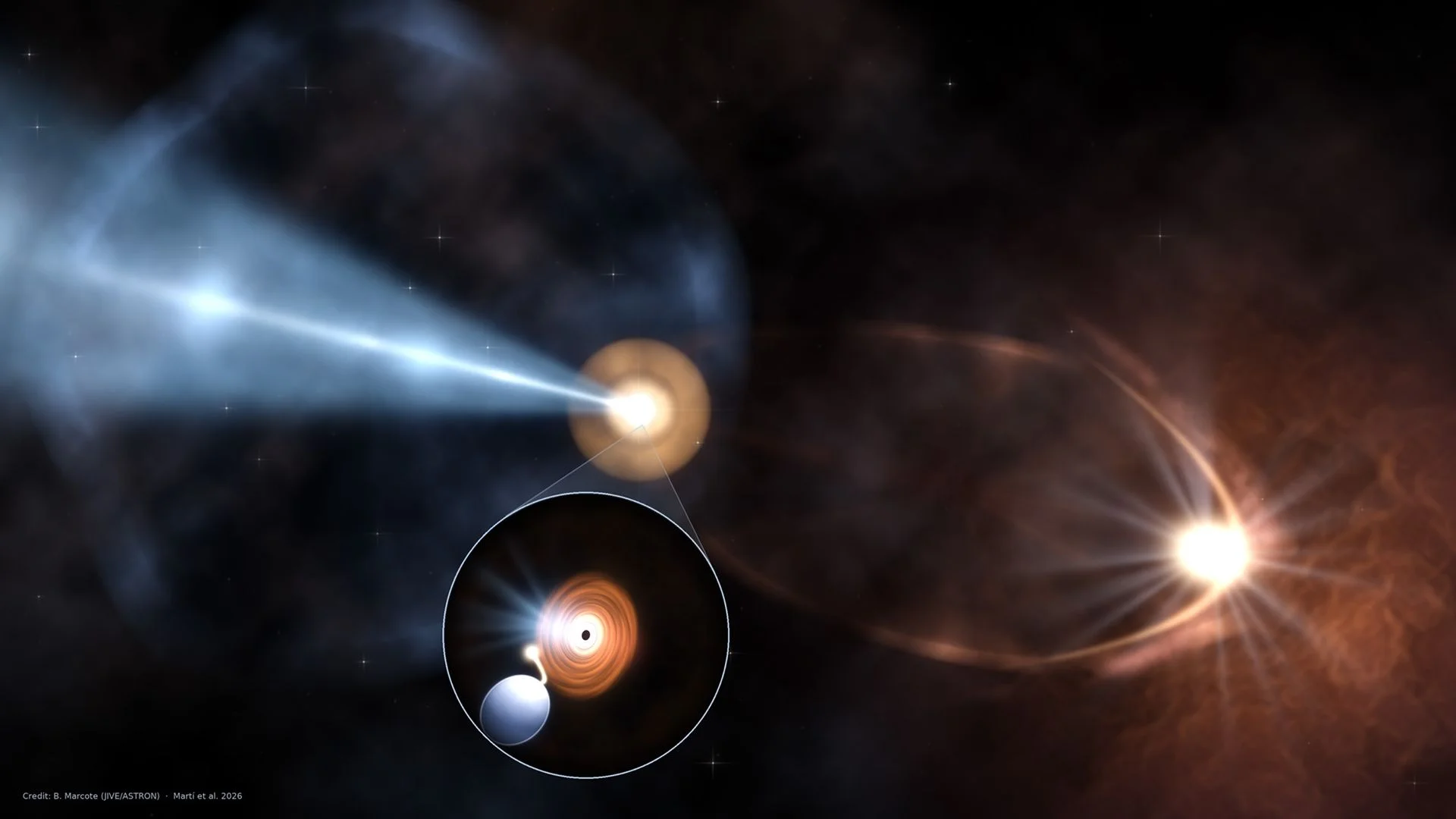
Recent astronomical research has spotlighted IRAS 18293-0941 as a compelling candidate for a "microblazar," a theoretical cosmic phenomenon that has eluded detection until now. This discovery could pave the way for a deeper understanding of black holes and the intense jets of energy they emit.
What Are Microblazars?
Microblazars are a fascinating subclass of astrophysical objects akin to blazars, both associated with powerful jets produced by black holes. Blazars, typically observed with their jets directed straight at Earth, create a unique set of observational challenges. Microblazars, however, represent a smaller-scale alternative, theorized to exhibit similar characteristics but often on a much subtler level. The most significant distinction is their size, which creates substantial hurdles for astronomers attempting to observe and characterize them.
This classification envelops a broad range of potential phenomena related to black holes, and while the concept of microblazars is relatively new, it opens up a wealth of questions regarding their formation and significance. The physics underlying these jets and their interactions with surrounding material is essential for fully grasping how these cosmic wonders influence their environments and contribute to the dynamics of the universe.
Key Features of Microblazars
The team, comprised of astronomers from Spain, the Netherlands, and Argentina, published their findings in the journal Astronomy and Astrophysics. They identified that IRAS 18293-0941 resides approximately 12,000 light-years away and is obscured by a dust cloud, complicating observations. This binary system features a black hole orbiting a massive star, with material from that star spilling into the black hole, which generates opposing jets. One of these jets is oriented toward Earth, making it more conducive for study than others.
Josep Martí, the study's lead author, emphasized the significance of this observation: “It is the first time that we have a serious candidate.” This is more significant than it looks—it confirms long-held theoretical predictions about the existence of microblazars while also suggesting an array of active black holes capable of producing extraordinary cosmic emissions. This has profound implications for our understanding of high-energy astrophysics.
Challenges in Observation
Here's the thing: tracking these cosmic objects is complex. According to Martí, pinpointing microquasars requires precise timing due to their fleeting phases of development. The microblazar category, being a potentially transient state, makes these observations all the more daunting. Even seasoned astronomers struggle, as these events often occur rapidly and unpredictably, complicating the data collection needed for concrete analysis.
The researchers noted several predictive characteristics of microblazars, including rapid brightness variations and diverse emissions across the electromagnetic spectrum. These are telltale signs of their activity and help in identifying the interactions between jets and their surrounding environments—a key factor in understanding high-energy phenomena in the universe.
To analyze IRAS 18293-0941, the team employed an array of observational tools. These included the Calar Alto Astronomical Observatory in Spain, the European VLBI Network, and the MeerKAT radio telescope array in South Africa, as well as archival data from the Very Large Array in New Mexico. Despite confirming many anticipated traits of a microblazar, the object exhibited a noticeable absence of rapid brightness variability—an expected hallmark of such systems that remains to be fully understood.
Understanding the Variability Issue
The lack of this rapid variability may stem from the dense gas surrounding IRAS 18293-0941, which could be smoothing out fluctuations in brightness. This invites more questions than it answers. Is the absence of variability a sign of a fundamentally different mechanism at play? This could imply unique aspects of the microblazar phenomenon that astronomers must unravel. Consequently, further research is underway to determine if the area behind the microblazar is indeed a hotspot driving particle interactions.
Experts outside the research team have weighed in on the implications of this study. Kinwah Wu, a theoretical astrophysicist at University College London, praised the results as sensible and devoid of questionable assumptions. Meanwhile, Svetlana Jorstad, a senior research scientist at Boston University, commended the study as important, asserting it illuminates previously overlooked mechanisms driving the universe's most energetic processes. It’s an exciting time for astrophysics—discoveries in this area could shift current paradigms.
Itumeleng Monageng, an astronomer at the University of Cape Town, highlighted the potential implications of microblazars, suggesting they might be responsible for powering some of the cosmos’ highest-energy emissions. If you're working in this space, you might want to keep an eye on microblazars. This ongoing research could ultimately enhance our understanding of black holes and their energetic roles in the universe, providing the context needed to address some of the biggest questions in astrophysics.
Future Implications and Significance
The study by Martí and collaborators represents a significant advancement in the quest to confirm the existence of microblazars and elucidate the behaviors of these exotic cosmic entities. As observational strategies refine—bearing in mind the limitations highlighted by this research—the cosmic mystery of microblazars inches closer to revelation. This ongoing investigation not only expands our comprehension of black hole activity but also contributes essential insight into the energetic processes governing our universe.
As the scientific community builds upon these findings, one can’t help but wonder about the broader implications. How might this shift our understanding of cosmic evolution? What unknown factors remain in the equation as we probe deeper into the fabric of high-energy astrophysics? With every new discovery, we find ourselves not just expanding knowledge, but also redefining our place in the cosmos.
Discussion
Sign in to join the discussion.