Recent archaeological findings in Scandinavia shed light on the unusual burial practices and social implications of violence in ancient communities.
Recent excavations in Scandinavia have unveiled unsettling evidence of how violence permeated the lives of ancient inhabitants, including men, women, and children. Rather than typical burial sites, these individuals were often interred in unexpected locations like pits, wells, or even within the residential grounds of their own homes.
Insights from the Iron and Viking Ages
During the Scandinavian Iron Age and Viking Age, spanning from approximately 500 BCE to 1050 CE, there was a marked escalation in violent encounters between communities. This period is well-documented through the discovery of elite warrior burials and mass grave sites from violent conflicts. To peel back the layers of this turbulent history, researchers focused on 192 human skeletal remains found in domestic environments across present-day Denmark, Norway, and Sweden.
The findings emphasize that not all deceased individuals were given grand funerals or graves. "The reality is that many bodies didn’t end up in the customary burial mounds or urnfields during the Iron and Viking Ages,” the research team stated in a recent publication in the Journal of Archaeological Method and Theory. Instead, some were interred in postholes and even within the floors of living spaces, reflecting a more complex relationship with death and memory.
Evidence of Violence
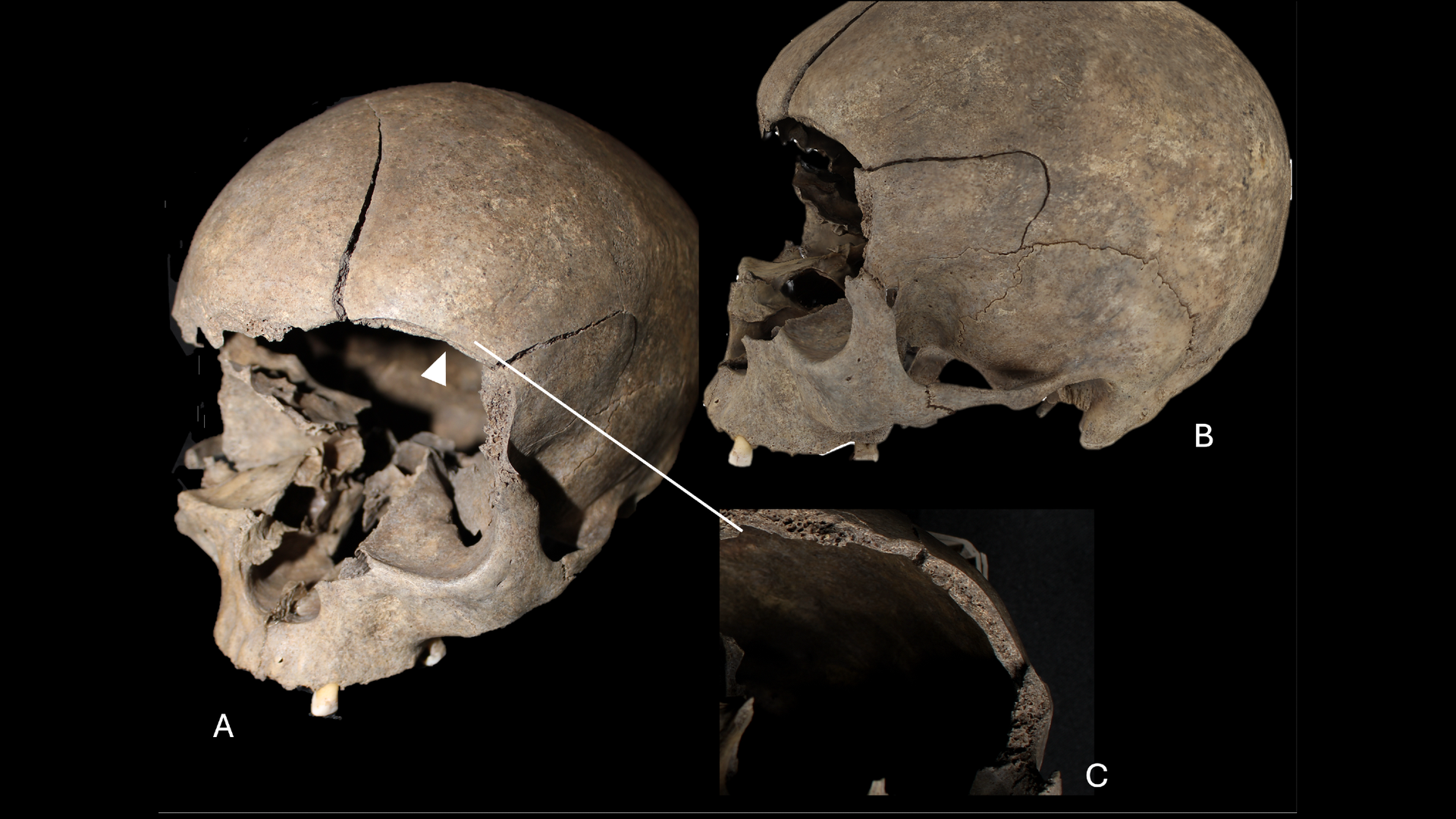
The investigation revealed that at least a dozen of those uncovered had clear signs of violent trauma at the time of death. Remarkably, half of these cases involved head injuries, while others showed multiple wounds. Although most victims were male, there were also two female victims and a child whose tragic fate was uncovered.
Among these discoveries was the frontal bone of a child, roughly aged 2 to 4, found embedded in the floor of an Iron Age house in Denmark, dating back to between 500 BCE and 1 CE. This critical piece of evidence indicates that the child had suffered a sword-related injury prior to death. “Our DNA findings confirm that it is a young boy who bore a fatal cut,” noted study lead author Marianne Hem Eriksen. “The child's skull was incorporated into the floor of a dwelling where life continued as usual, with people walking over it daily.”
Unearthed Contexts
Radiocarbon dating has indicated that the skull predates the construction of the house itself by up to 200 years, suggesting this bone may have been preserved for an extended period before its placement.
In another significant find from the Viking Age, a young woman's skull was discovered in a well adjacent to a cluster of residences. This skull also displayed evidence of blunt force injuries. Eriksen hypothesized that her bones, like those of the child, had likely been retained for a considerable span before being discarded into the well.
At Gammel Lejre, an archaeological site recognized as a potential inspiration for the epic poem "Beowulf," researchers unearthed a male skeleton exhibiting numerous healed blunt force injuries, hinting at a tumultuous life filled with hardship. This skeleton was found directly south of a known feasting hall.
Reevaluating Social Norms
This study prompts a reassessment of societal structures and attitudes toward violence in Iron Age culture. "The examination of remains in domestic sites provides a fresh perspective on societal interactions, attitudes toward violence, and the treatment of the deceased,” Eriksen remarked. “The findings denote a much more intricate social fabric and cultural understanding than often attributed to people of this era.”
However, questions persist regarding why these individuals were targeted for violence and why their remains were treated so atypically. The researchers speculate that many victims may have been involved in domestic disputes rather than larger-scale military conflicts. Furthermore, such acts could represent socially sanctioned punitive measures within tight-knit communities.
With rising social stratification and increasing conflict during this period, the researchers argue that marginal groups may have faced heightened vulnerability. “Not all lives were afforded equal respect and commemoration in Iron and Viking Age Scandinavia," they concluded. "It raises the question of whether some lives were perceived as expendable.”
Discussion
Sign in to join the discussion.