Genetic analysis of a 1,200-year-old burial site in Latvia reveals familial ties among victims, hinting at a possible Viking raid.
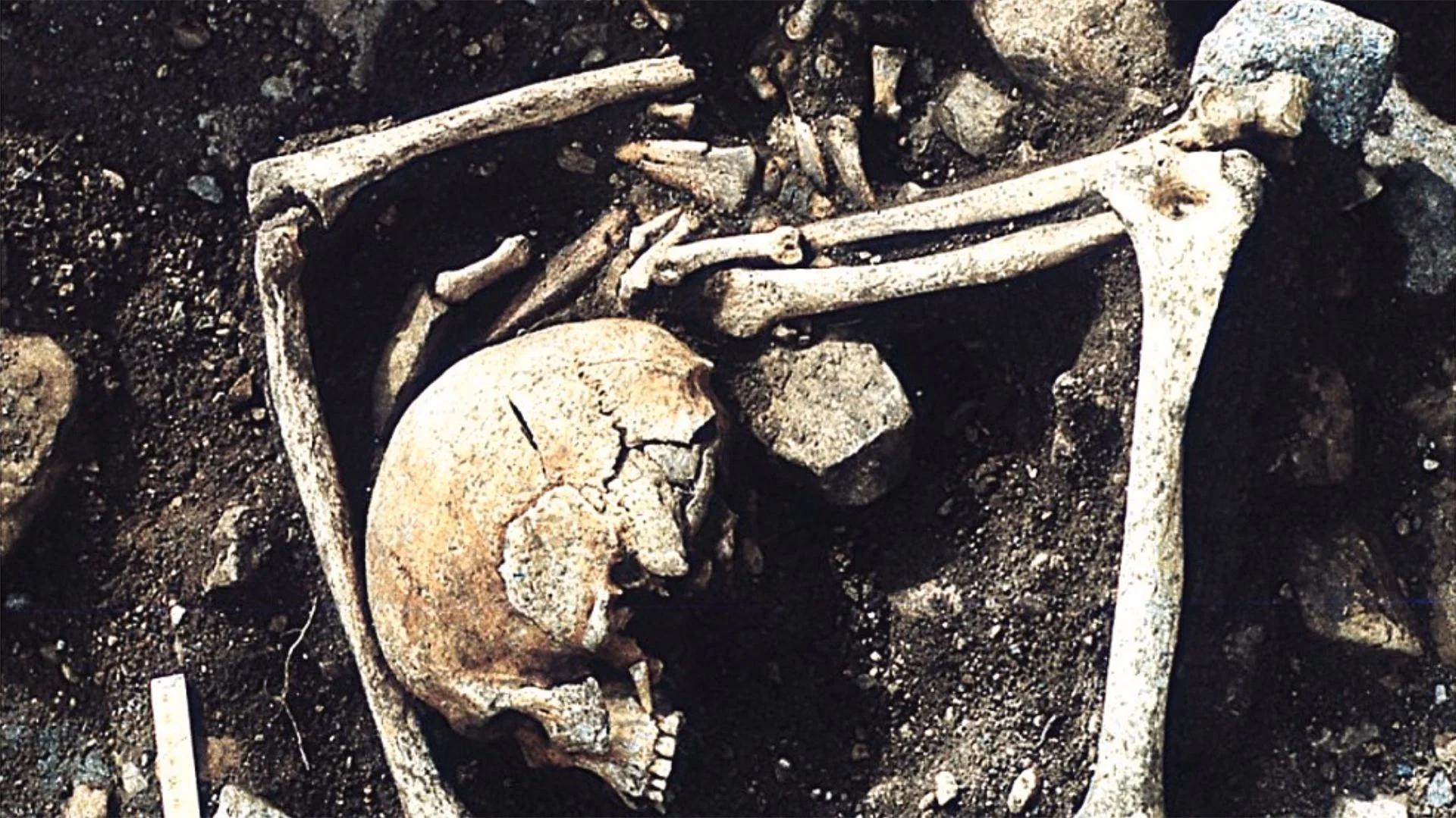
A burial site in Latvia, dating back over 1,000 years, has prompted researchers to explore the possibility that its occupants were victims of a Viking raid. Recent genetic findings indicate that this grave, containing six individuals—four men, a boy, and a girl—might reflect a tragic episode linked to violent conflict during the early Viking Age.
Among these deceased, genetic testing revealed familial connections: notably, the boy was the son of one of the men, while another male was a relative, possibly a first cousin or great-uncle. Three of the men bore evidence of "sharp force" injuries, suggesting they succumbed to weapons like axes or swords. The specific fates of the remaining three individuals, however, remain uncertain, as detailed in the September edition of the Journal of Archaeological Science: Reports.
Archaeological Context
Radiocarbon dating places the grave in the latter half of the ninth century, aligning it with the early phase of the Viking Age. Located at the Čunkāni-Dreņģeri cemetery, close to the Gulf of Riga, this burial site was first identified in 1924 and has yielded numerous individual graves spanning from the seventh to the 11th centuries, representing Latvia's Iron Age.
What sets this grave apart is the collective burial of six individuals—an atypical arrangement, as most local sites feature single-set interments. The researchers assert that at least three of the individuals experienced a violent end. Scholars have emphasized that the arrangement of remains was not indicative of a hasty mass grave; rather, it's classified as a "multiple burial," where each body was carefully positioned and accompanied by traditional artifacts.
Cultural and Social Implications
This indicates that the deceased were likely part of a respected community. The female was interred with her head oriented northwest, while the males were aligned in a row with heads facing southeast, mirroring burial practices observed in other remains from the area. Such rituals hint at the cultural significance of these individuals within their society.
All individuals displayed Indigenous Baltic heritage, as determined by genetic assessments. According to co-author Elīna Pētersone-Gordina from the University of Latvia, the deceased were members of the Semigallian group, recognized as Iron Age inhabitants who cultivated the fertile plains of the region.
Given the timing of this burial and the nature of the injuries sustained by the men, a violent encounter with raiders, possibly Vikings, is plausible. Historical records affirm that the Vikings and their predecessors frequented Eastern Baltic territories during this epoch; for instance, Scandinavian boat burials dated to around 750 were uncovered in Estonia, revealing remains of individuals with battle-related injuries.
Family Links and Community Ties
Interestingly, while the genetic analysis indicated familial links among some of the buried individuals, not all were related. Two men were connected by blood, and possibly the girl, whose remains were undetermined due to DNA extraction issues, while the other two men appear to have been community members. This suggests they belonged to the same social group or extended household, reinforcing the notion that they were casualties of a shared violent episode.
The evidence paints a grim picture; marks on the bones reveal that one man sustained defensive injuries, suggesting a desperate attempt to protect himself, while another suffered a fatal blow that damaged his jaw, and a third almost lost his head entirely. The two children and the fourth man might have perished from injuries not easily recognizable in the skeletal remains.
Insights from Experts
Rimantas Jankauskas, an anthropologist and archaeologist at Vilnius University, who was not part of the research team, underscored the importance of this study for understanding the Viking Age in Eastern Baltic territories. He suggested that while it's possible these individuals died from intra-community violence or conflict with neighbors, a Viking raid cannot be discounted as a likely cause of their demise.
Such findings also contribute to a broader understanding of Semigallian social structures, hinting at the potential emergence of an aristocracy during this period, evidenced by the meticulous care lavished on the burial practices. This points to complex social dynamics shaping local communities during a tumultuous time.
For those intrigued by the history of Vikings and their interactions in the region, this ongoing research not only highlights a pivotal moment in Latvian history but invites further exploration into the customs and challenges faced by Indigenous communities during the Viking onslaught.
Discussion
Sign in to join the discussion.