Discover vital Indigenous sites in the U.S. that showcase the rich history and cultural heritage of Native American civilizations.
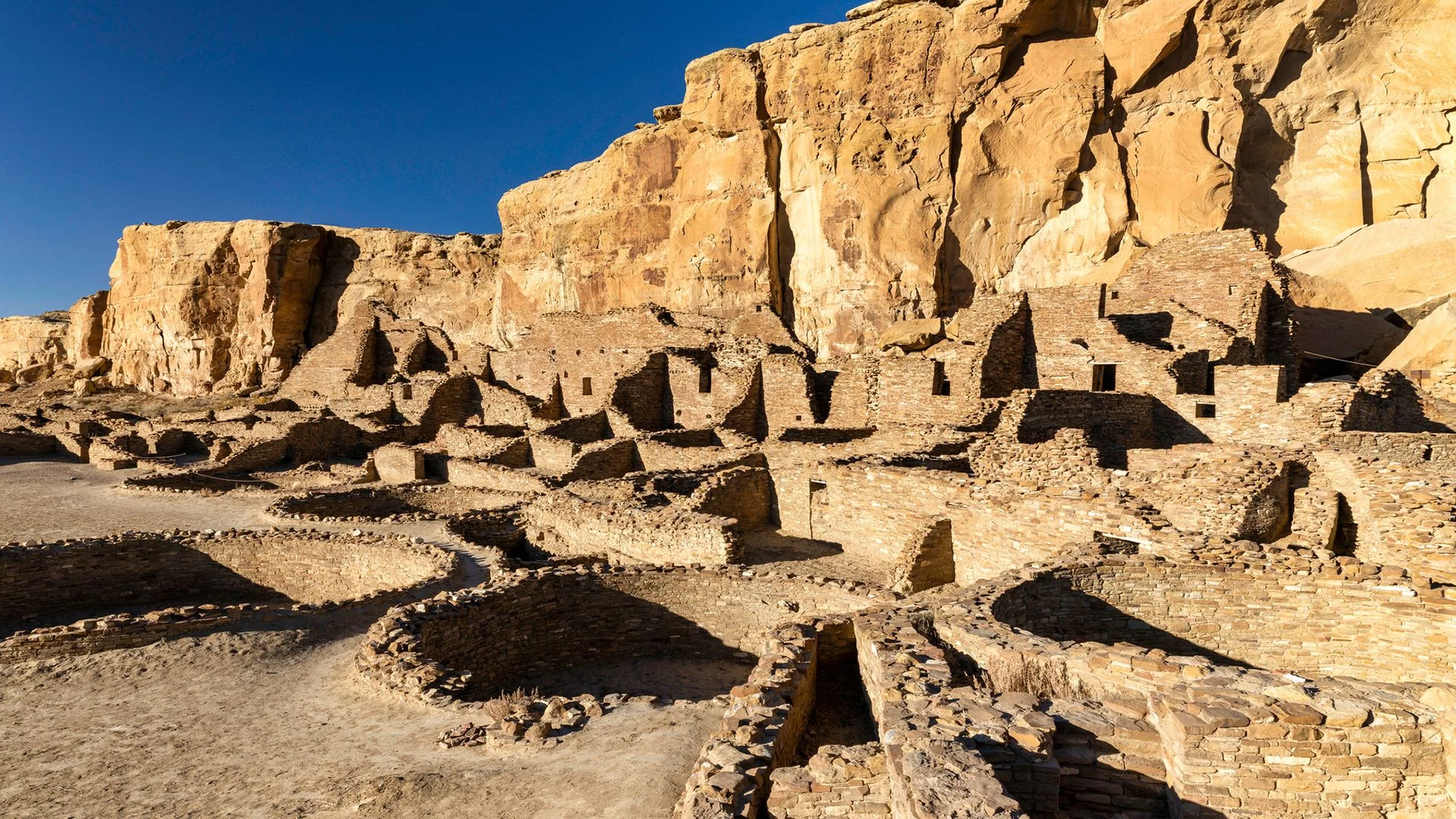
Chaco Canyon, New Mexico
Chaco Canyon stands as a testament to the Ancestral Puebloan civilization, acting as a political and ceremonial hub between A.D. 850 and 1250. Central to the site is Pueblo Bonito, a majestic four-story complex comprising over 600 rooms and 35 kivas, or ceremonial chambers. Estimates suggest that the construction demanded more than 200,000 timber beams, some transported from significant distances, underlining the architectural sophistication of the builders.
Notably, Chaco served as a key node in a 400-mile road network, facilitating substantial trade connections. Archaeological findings include the remains of Mesoamerican macaws and cacao, hinting at long-distance commerce. The intricate architecture and broad trade relations mark Chaco Canyon as a pivotal site in Native American history.
Cahokia, Illinois
Once the largest settlement north of Mexico, Cahokia thrived around A.D. 1100, home to around 40,000 residents, comparable to major medieval European cities. The community featured carefully constructed homes made from a “wattle and daub” technique, extensive public spaces, and numerous ceremonial earthen mounds, including the monumental Monks Mound, which rises over 100 feet.
The archaeological site resonates with historical significance, having been recognized as a UNESCO World Heritage site. The presence of imported resources, like a massive 5-ton tree transported over 110 miles to serve as a marker known as the Mitchell Log, indicates a widespread and connected cultural network. According to historian Christoph Strobel, Cahokia may represent the pre-Columbian pinnacle of urban life in North America.
Mound Key, Estero Bay, Florida
Mound Key, a remarkable artificial island made predominantly of shell deposits, showcases the ingenuity of the Calusa people. This site, once two small islands shaped by mangrove growth, is currently the largest of several shell mounds, reaching heights of over 30 feet. The transformation into Mound Key, composed mainly of oyster shells, reflects a rich history of subsistence and habitation.
Before European contact, the island served as a bustling maritime center. The Calusa utilized the abundant marine resources, turning the island into a thriving community deeply interconnected with the surrounding waters.
Sitka, Alaska
Rich in historical narrative, Sitka National Historical Park is notable for the 1804 Battle of Sitka, which marked the last significant military engagement between native Alaskans and Russian colonizers. This conflict arose from Russian expansion, where they built a fort on Tlingit territory, inadvertently leading to their expulsion by native forces.
The Tlingit subsequently erected their own fortifications, representing a critical moment of resistance and adaptation to foreign encroachment. The resolution of these tensions unfolded over decades, only compounding the layered history of indigenous resilience against colonial forces.
Walnut Canyon, Arizona
Walnut Canyon serves as a profound example of Inigenous ingenuity, showcasing over 80 cliff dwellings constructed by the Northern Sinagua people from A.D. 1125 to 1250. The site offers accessible walking trails leading through dramatic limestone formations where these dwellings provided both shelter and defense. The residents engineered a way to capture and store rainwater, demonstrating advanced environmental adaptation in a challenging terrain.
Strobel notes that Walnut Canyon, while lesser-known, represents the survival and resourcefulness of Indigenous peoples amid arid conditions, effectively illustrating their sustainable agricultural practices alongside canyon resources.
Chimney Rock, Colorado
Chimney Rock, famed for its striking natural spires, serves as an archaeological marker for the rituals of the Ancestral Puebloan people. Dating back about 1,000 years, this site indicates advanced celestial observations, notably the lunar standstill every 18.6 years. Positioned strategically at a ridge, the settlements enabled a superior view of the heavens, enhancing their agricultural and ceremonial practices.
The complex, featuring a Great House akin to structures in Chaco Canyon, supports hypotheses of a regional ceremonial center, highlighting a sophisticated societal structure with a clear differentiation between the elites and the common populace.
Blackwater Draw, New Mexico
Blackwater Draw is critical to understanding the Clovis culture and the peopling of the Americas, believed to date back about 13,000 years. Initially thought to encapsulate the earliest Indigenous culture, significant archaeological finds have uncovered evidence of earlier human habitation, pushing timelines back to potentially 23,000 years. Findings of stone tools and mammoth fossils paint a vivid picture of life for these early inhabitants.
The discovery of ancient footprints at nearby White Sands National Park has reshaped discussions surrounding migration patterns and early human life in North America, establishing Blackwater Draw as a pivotal archaeological location for understanding Indigenous heritage.
Discussion
Sign in to join the discussion.