Excavations at a 13,800-year-old site in Alaska unearth significant artifacts, showcasing the lives and connections of North America's first inhabitants.
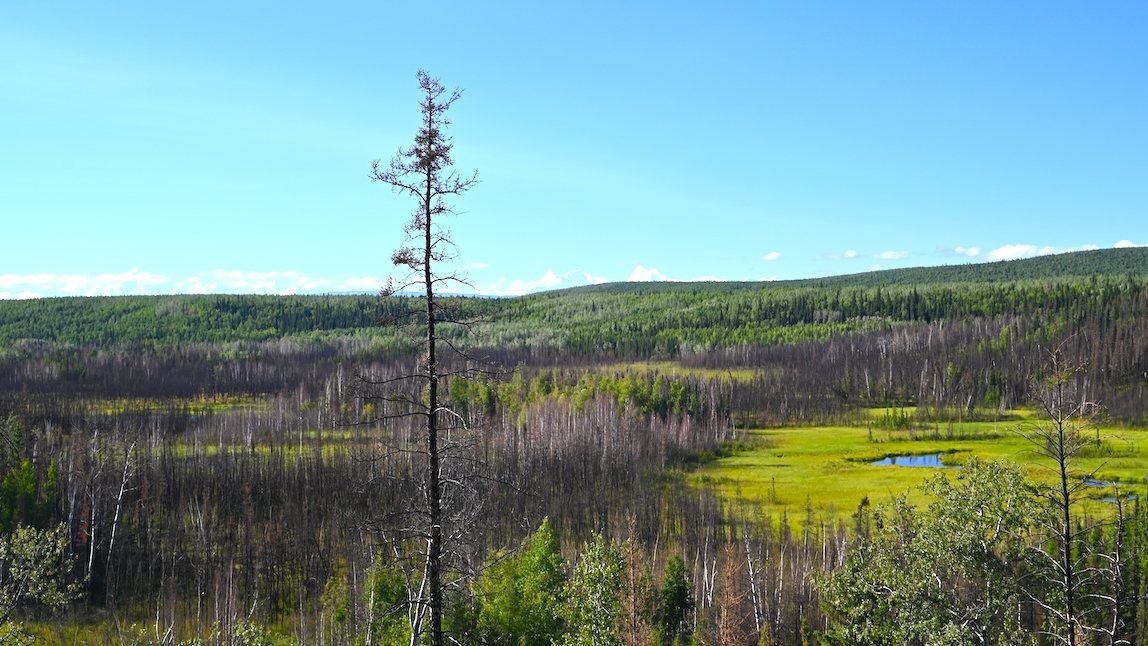
Excavations in interior Alaska at a site known as Shégˊ Xdaltthˊíˊ, translating to "They Were There" in the Athabascan language, have yielded a treasure trove of artifacts and fossils—some of the oldest evidence of human habitation in North America. Dating back 13,800 years, this site offers insights not only into early Arctic life but also into cultural connections spanning across the Bering Strait.
This archaeological dig, located approximately 34 miles southeast of Fairbanks, uncovers the remnants of an encampment used intermittently by some of the earliest settlers in North America over a thousand-year period. As part of the research spearheaded by archaeologist Kelly Graf from the University of Kansas, a variety of find include ancient bones, tools, and what could be the earliest evidence of domestic dogs on the continent.
Unraveling the Site's Significance
Shégˊ Xdaltthˊíˊ occupies a critical position within Eastern Beringia, a land area that linked ancient Asia and North America during the last Ice Age. Prior genetic and archaeological studies suggest that the ancestors of today’s Indigenous populations ventured into North America approximately 21,000 years ago. However, due to the transitory nature of many Beringian sites, much remains uncertain about these early displaced populations.
"I anticipated discovering some basic hunting tools and perhaps some debris from stone tool crafting around a few hearths, but this extensive collection was completely unexpected," Graf remarked. "Stumbling upon a base camp brimming with tens of thousands of artifacts was astounding."
The findings reported in a recent study in the journal Science Advances highlight that the earliest occupation of the site suggests substantial cultural adaptation and residence. The researchers uncovered features such as a hearth, structural remains possibly indicative of early shelter, and an earth oven used for cooking. These discoveries imply that early inhabitants had a profound understanding of their environment and resource management.
Cultural Connections Across Regions
The diversity of stone tools found at the site, particularly the unique diamond-shaped hafted bifaces, adds another layer to its richness. Crafted from rhyolite and basalt, these tools closely resemble artifacts from much further west within Beringia, specifically modern-day Siberia. The presence of obsidian tools indicates that raw materials were transported hundreds of miles, suggesting complex trade routes or social networks at play.
Interestingly, remains of wolf-like creatures point to genetic lines distinct from known dire wolves, hinting at possible early domestication processes that led to the development of North American dog breeds. Such findings align with genetic evidence suggesting domestication began with Siberian wolves. "The possibility that early Alaskan cultures were capable of dog ownership adds a fascinating dimension to understanding their social structure," the researchers commented.
Excitingly, the site also marks a significant link to the history of bone artifacts used in stitching. The eight bone needle fragments unearthed are the oldest yet found in the Americas, comparable to artifacts previously discovered in more temperate areas. This affinity for stitching tools indicates interactions and exchanges with early southern American sites—a relationship supported by the discovery of an antler pendant resembling personal ornamentation found further down the continent.
Future Research Directions
The importance of Beringia in shaping the early North American narrative cannot be understated. Graf emphasizes that advancing our understanding of these early migrants will require more extensive excavations, especially since numerous promising locations remain unstudied. "Alaska is extensive and largely untouched in many areas, so there's much to explore," Graf stated, indicating that future research will involve engaging Alaska Native youth, fostering community involvement in the project.
In an accompanying commentary, Spencer Pelton, an archaeologist from the University of Wyoming, reinforced the site’s significance. "Shégˊ Xdaltthˊíˊ stands out due to its rich assemblage of artifacts and evidence of prolonged human presence, offering unprecedented insights into our earliest ancestors," he articulated.
While Shégˊ Xdaltthˊíˊ is a defining site in revealing human history in the Americas, researchers acknowledge that much remains to be learned, especially when only a handful of archaeological locations have been identified within Beringia. Continued exploration could illuminate the lifestyles, migrations, and cultural exchanges of these initial inhabitants from 14,000 years ago and offer a clearer window into their everyday existence.
As the investigation continues, researchers remain hopeful that each layer of artifact unearthed will piece together the complex tapestry of North America's first peoples and their extraordinary journeys.
Discussion
Sign in to join the discussion.