Researchers unearth a long-overlooked dinosaur fossil, shedding light on megaraptor evolution and their distribution across ancient continents.
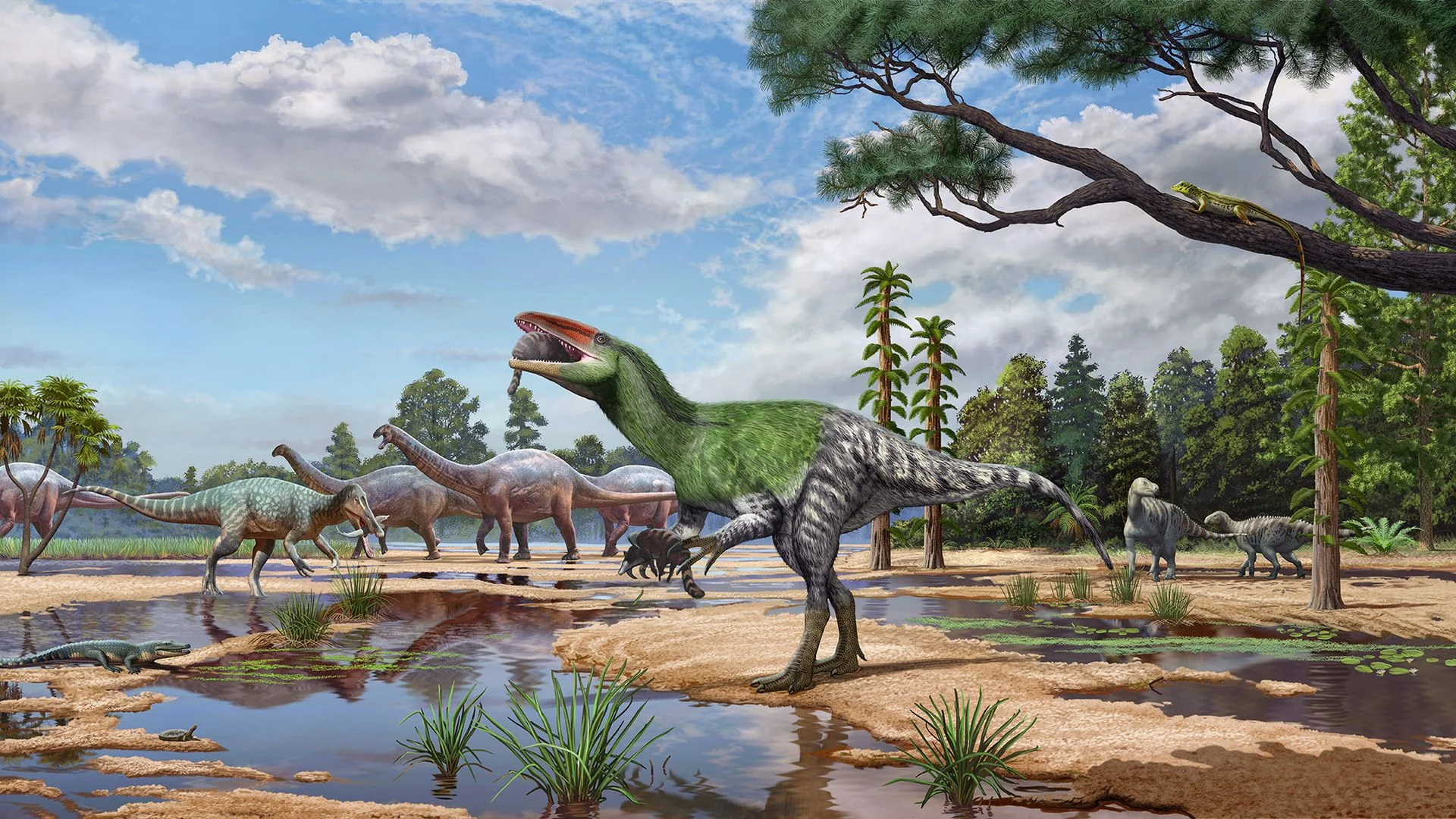
A fossil that remained hidden in museum collections for over a century has now been identified as a new species of predatory dinosaur. This significant finding may aid scientists in resolving long-standing questions regarding how formidable hunters from the Cretaceous period dispersed globally.
The newly recognized dinosaur roamed what is now the Isle of Wight in southern England approximately 120 million years ago. It belongs to a group known as megaraptors, two-legged carnivores related to tyrannosaurs. Unlike their more famous relatives, megaraptors are characterized by their powerful arms and large curved claws, which they likely used to hunt and defend themselves.
The species was formally described in a study published on October 14 in the journal Royal Society Open Science. This represents the first identification of a megaraptor in Europe, bridging an important gap in the fossil record of a group whose evolutionary journey is still poorly understood.
"It's astonishing that this fossil remained overlooked for so long, tucked away in a drawer for nearly a century," remarked Dr. Cassius Morrison, the study's lead author and a researcher at University College London (UCL). "The Isle of Wight yields numerous bones—who knows what else remains to be discovered?"
The Unconquered Female Warrior Dinosaur
The journey to understanding this megaraptor began in 1924 when an amateur fossil collector discovered a skull fragment on the Isle of Wight. This specimen ultimately made its way into the collection at London’s Natural History Museum, where it laid largely forgotten.
Recently, researchers revisited the fossil while researching dinosaur braincases. Employing micro-CT scanning technology, they examined the internal structure of the fossil, constructing intricate 3D digital models of the brain cavity.
By comparing this anatomy against other carnivorous dinosaurs, including tyrannosaurs and spinosaurs, the researchers identified several distinguishing features. Notable differences included a uniquely oval opening where the spinal cord entered the skull and a distinctive hourglass ridge on the back of the braincase.
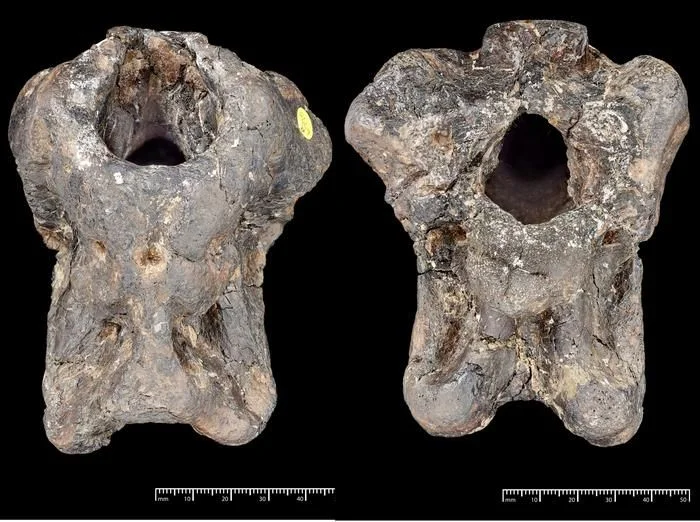
Evolutionary analysis confirmed that this skull represented a previously unknown species. Researchers named the dinosaur Invictibellatrix amberina, derived from the Latin words meaning "unconquered female warrior," with amberina referencing amber found within the fossil bed.
Megaraptors thrived between approximately 125 million and 66 million years ago, exhibiting significant variation in size. While earlier members were relatively small, later species grew into massive predators. For context, Maip macrothorax, discovered in Argentina, may have reached lengths of up to 33 feet (10 meters) and weighed as much as an elephant. In contrast, I. amberina is estimated to have measured around 10 to 13 feet (3 to 4 m) in length, standing approximately 5 feet (1.5 m) tall, and weighed between 440 and 660 pounds (200 to 300 kilograms), categorizing it among the smaller known megaraptors.
"While it wasn't the apex predator of its era, if it had existed alongside humans, this dinosaur would have posed a greater danger than a T. rex," Morrison noted, highlighting our size relative to these predators. "We would have been perfectly sized prey, about a third of their body weight, and one could envision them chasing us down."
Though the fossil does not preserve the arms or claws, its closest relatives suggest that it likely possessed claws measuring between 4 to 8 inches (10 to 20 centimeters) in length. There's also speculation that I. amberina may have been feathered, although this cannot be confirmed directly from the fossil.
A Missing Link in the Dinosaurs' Migration
Long-standing hypotheses propose that megaraptors originated in Asia before spreading globally, ultimately becoming dominant predators across the southern supercontinent Gondwana, which included present-day Africa, South America, and Antarctica. The lack of European fossils has previously hindered verification of this migration hypothesis.
The new evolutionary models suggest that I. amberina descended from Asian megaraptors that migrated into Europe around 130 million years ago. Following this, members of the group may have traversed into Africa and further into Gondwana via temporary land connections across the shallow Tethys Ocean.
"This new species represents the first evidence confirming that megaraptorans were present in Europe and that their expansion into Gondwana occurred through this route, rather than through island-hopping further south," commented Charlie Scherer, co-author of the study and a doctoral student at UCL Earth Sciences.
Despite shedding light on the presence and migration patterns of megaraptors, the exact pathways taken over millions of years remain unclear. Moreover, researchers have yet to determine the reason behind the megaraptors' disappearance from northern areas, although climate shifts or competition from other predatory dinosaurs may have played a role. Further exploration of additional megaraptor fossils like I. amberina could provide more insights into these questions.
"This research highlights the invaluable potential of collaborating with historical museum collections, where countless discoveries still await," emphasized Paul Barrett, a dinosaur evolution expert at the Natural History Museum in London.
Discussion
Sign in to join the discussion.