An 11th-century wooden bread peel found in Staraya Russa bears a carved merels board, offering a rare glimpse of medieval play.
A game hidden in a kitchen tool
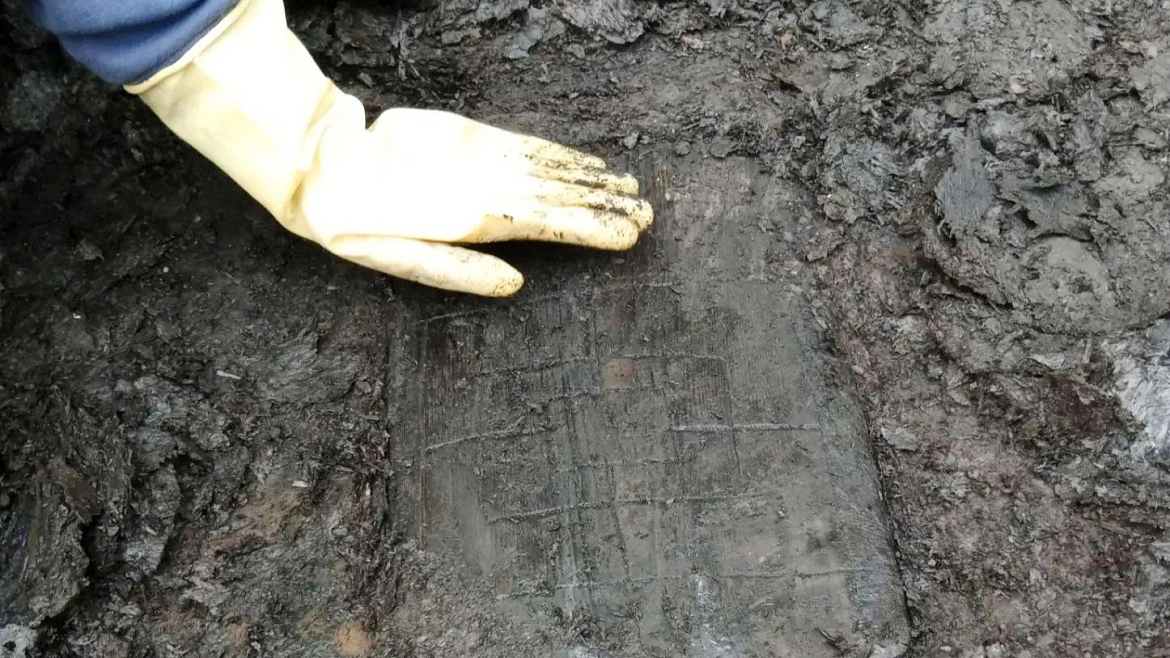
The best clue to how medieval people passed spare moments may be hiding on the back of an everyday kitchen tool. At an archaeological site in Staraya Russa, Russia, researchers found part of an 11th-century wooden bread peel carved with a board for merels, a strategy game also called nine-men’s morris. The object brings two ordinary activities into view at once: baking bread and finding a way to pass time. It’s a small discovery, but one that gives archaeologists a tangible link between domestic work and play.
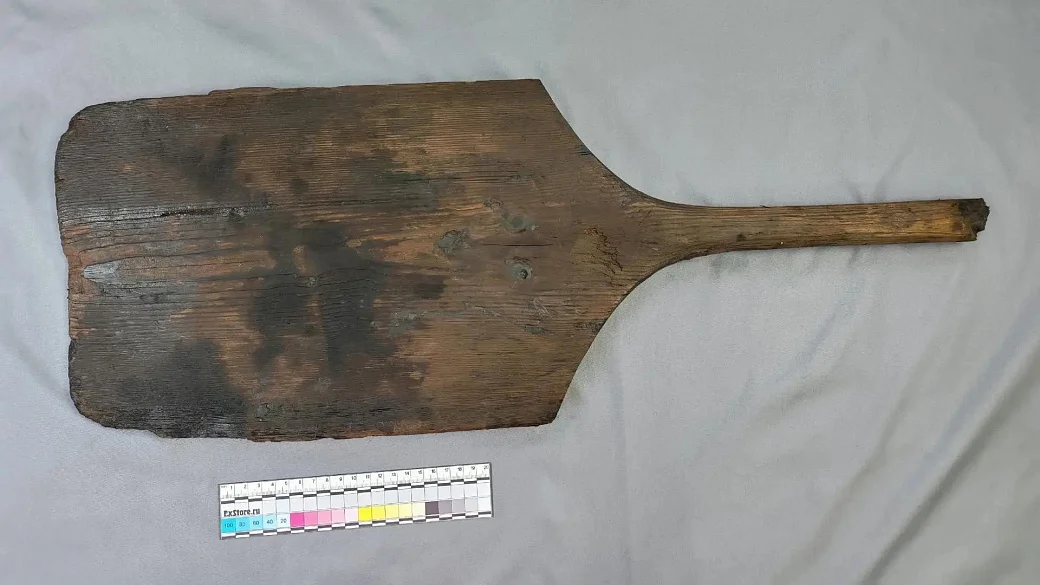
Sergey Toropov, director of Novgorod State University’s Center for Archaeological Research, described the find in a translated statement. “We discovered a fragment of a fairly large shovel,” he said. The likely bread-baking tool had “three squares” carved into its reverse side. Toropov’s profile is available through Novgorod State University. The board’s placement matters: it wasn’t found on a dedicated gaming object, but on an implement whose main job was moving bread. That makes the peel a record of how people adapted familiar things for leisure.
The fragment measures about 12 by 16 inches (30 by 40 centimeters) and was likely made from oak. One face is flat, suited to moving bread into an oven; the other carries the game’s distinctive pattern. The tool was uncovered at the Pyatnitsky archaeological site in central Staraya Russa, a medieval town between Moscow and St. Petersburg. Archaeologists there reported a snake amulet the previous month. The peel’s size and two-sided use make it easy to picture in a household, though the surviving fragment can’t tell researchers exactly how often it was used for either task.
A game built for a flat surface
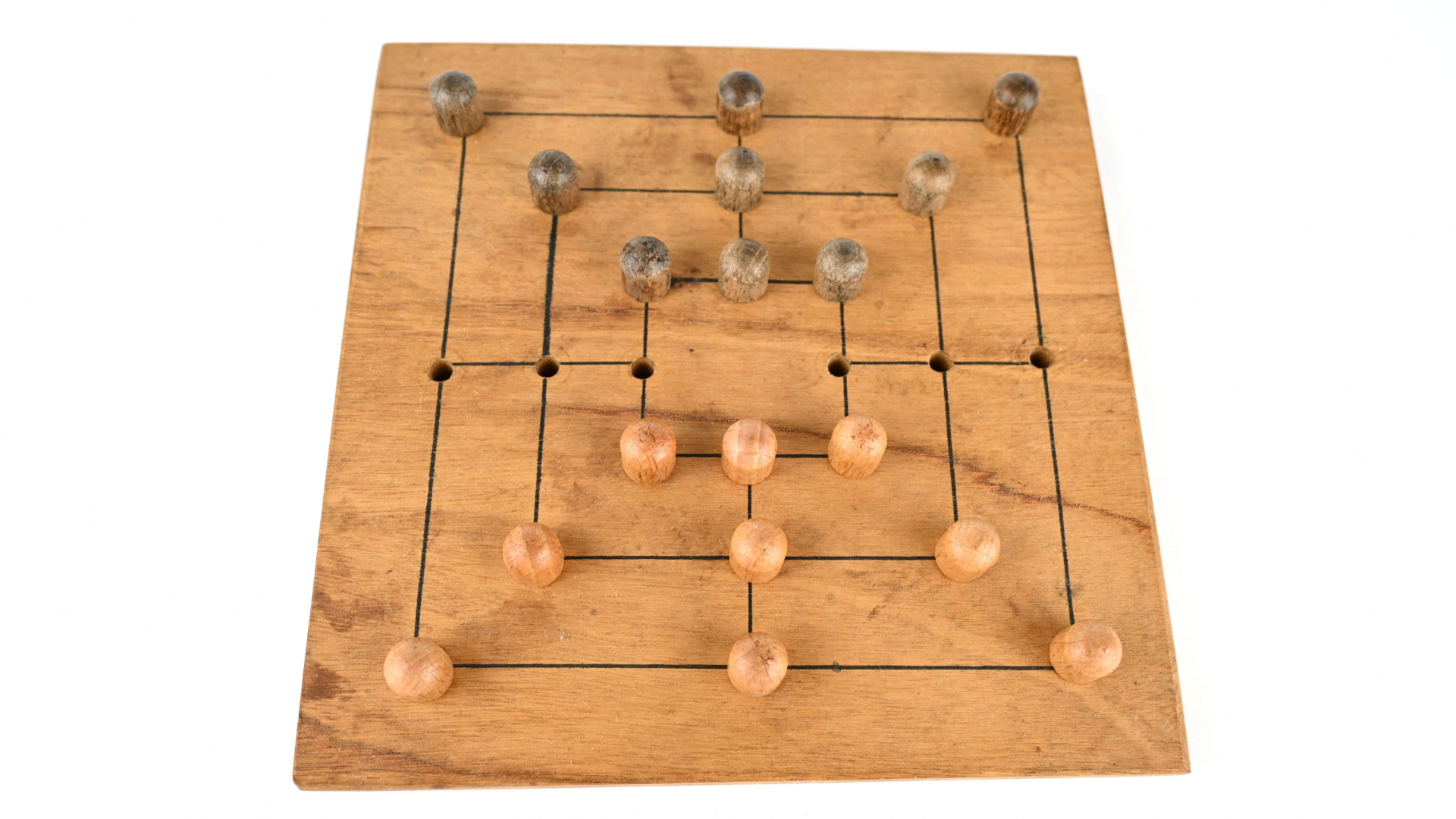
Merels, also known as merrelles, mills or cowboy checkers, uses three squares nested inside one another and joined by lines. Each of two players has nine pieces. Players try to form lines of three, which lets them remove an opponent’s piece; victory comes when the other player has only two pieces left or can no longer move. Its mix of line-making and piece removal has drawn comparisons to tic-tac-toe and checkers. A version can be played online.
The rules are simple enough to explain quickly, but the game asks players to plan around both their own lines and their opponent’s next move. A board scratched into wood could support the same basic play as one made for the purpose, provided the players had pieces to move. That flexibility is part of the appeal: the design doesn’t depend on elaborate equipment or a large playing area. A flat surface and a set of small objects are enough.
The game’s beginnings remain uncertain. Historical records and finds suggest a similar two-player game was played in ancient Rome about 2,000 years ago, and it may be older still. By the Middle Ages, merels was popular across Europe and Asia, likely helped by its simple setup and minimal equipment. That broad history doesn’t establish exactly when or how the game reached Staraya Russa, but it places the carved board within a tradition that crossed regions and generations.
Everyday objects as evidence
That simplicity could explain why the board appears on a kitchen implement. Toropov said dedicated game boards may have existed in antiquity, but people more often carved or scratched boards onto household objects with flat surfaces. “At any moment, one could mark out a board on a flat surface, find suitable pieces — for example, small stones lying underfoot, and while away some time,” he said. In practical terms, a board didn’t need to be built, stored or carried separately if a useful surface was already close at hand.
And this is the part most people overlook: an object’s second use can tell researchers as much about daily routines as its intended purpose. A board carved into a tool suggests that play could fit around work, using whatever materials were available. It doesn’t prove who played, where they sat, or how often the peel became a board. Still, the mark is evidence of someone making time for a game. A modest trace, with limits.
Researchers can’t tell whether the peel was made for both baking and play, or whether someone carved the board after the tool broke. Either way, the find offers a rare, well-preserved example of a familiar game embedded in domestic life. Merels boards and pieces have been found at ninth-century sites in the kingdom of the Rus’, whose ancestors were Vikings who arrived in what is now Russia in the eighth century. The Staraya Russa example, the university’s statement says, is “practically unique.” The uncertainty about its sequence of use is real, but it doesn’t erase what the object shows: a game board was cut into something connected to household labor.
What the find can tell us
This is more significant than it looks. Archaeological accounts often preserve the objects people made and used, while leaving less direct evidence of how they spent unstructured time. A carved game board offers a rare point of contact with that quieter part of daily life. It also cautions against treating work and leisure as separate worlds: the same piece of wood may have served both.
If you’re working in this space, the key question is how much the object can support. Its shape and carving fit the interpretation of a bread peel with a merels board, but the researchers can’t establish whether the board was carved before or after the tool stopped being useful for baking. That distinction could change the story of the object’s life, though either explanation leaves a record of someone choosing to mark a playing surface on wood.
Here's the thing: the discovery doesn’t rewrite the history of merels, and it can’t identify the players. Its value is more grounded. It shows how a widely played game could be made accessible with a simple pattern, a flat surface and pieces at hand. That said, the peel gives only a narrow view of one place and one object. Its strongest contribution is a concrete reminder that medieval leisure could leave marks on the tools of everyday life.
Discussion
Sign in to join the discussion.