Reid Wiseman feared Artemis II had overshot its return point—until the Orion capsule’s distance counter began to fall.
The moment the counter kept climbing
For a few minutes on Artemis II’s trip around the moon, Commander Reid Wiseman thought the crew might not make it back to Earth. The spacecraft’s distance counter had passed the point mission control had identified as the mission’s maximum distance, and Wiseman didn’t yet know why. A number on a display had become a question with immediate stakes: was the spacecraft still following the plan, or had something gone wrong?
Wiseman recounted the moment at the Starmus VIII festival in Tenerife, Spain. On the sixth day of the 10-day flight, the crew was expected to reach 219,667 nautical miles from Earth—farther than any humans had traveled—then begin the return leg. He was watching for the counter to mark that turning point. The expectation was simple: the distance would peak, then start to fall as Orion headed back.
“I was watching this number, and I saw it hit 219,667, and I thought, ‘Great, this is the farthest we will be from Earth, and the next number I will see will be 219,666 — we’ll be going home,’” Wiseman said. Instead, the reading climbed. At 219,668, he thought it was strange. When it reached 219,669 a few minutes later, he said, “that was the moment that I felt real fear because I thought we had just gone too far — we’re never going to come home.”

The counter eventually started going down. Wiseman said he saw it reach 219,668 nautical miles and told the crew, “We’re going home.” They cheered. “I knew there was a good chance we might make it,” he added. The change gave the crew a visible sign that the spacecraft had passed its farthest point and was on the return leg.
The rest of the crew was focused on the work at hand during his brief spell of fear. NASA astronauts Victor Glover and Christina Koch were at the window making observations of the moon, while Canadian Space Agency astronaut Jeremy Hansen relayed reports to mission control. None of them noticed Wiseman’s reaction. That difference in attention is telling: the crew was sharing one flight, but each astronaut had separate tasks and views of the moment.
A return built on Earth
After the mission, Wiseman credited the teams who designed and operated the flight. “Getting home safely is a testament to the engineering rigor and the flight control teams back here on planet Earth, who put this rocket together and then who controlled it as we went out to the moon and came back,” he said. “Those are the true heroes of this mission. They have real courage.” His remarks point to a basic reality of crewed spaceflight: astronauts make decisions in the capsule, but the mission depends on work done long before launch and on support from the ground.
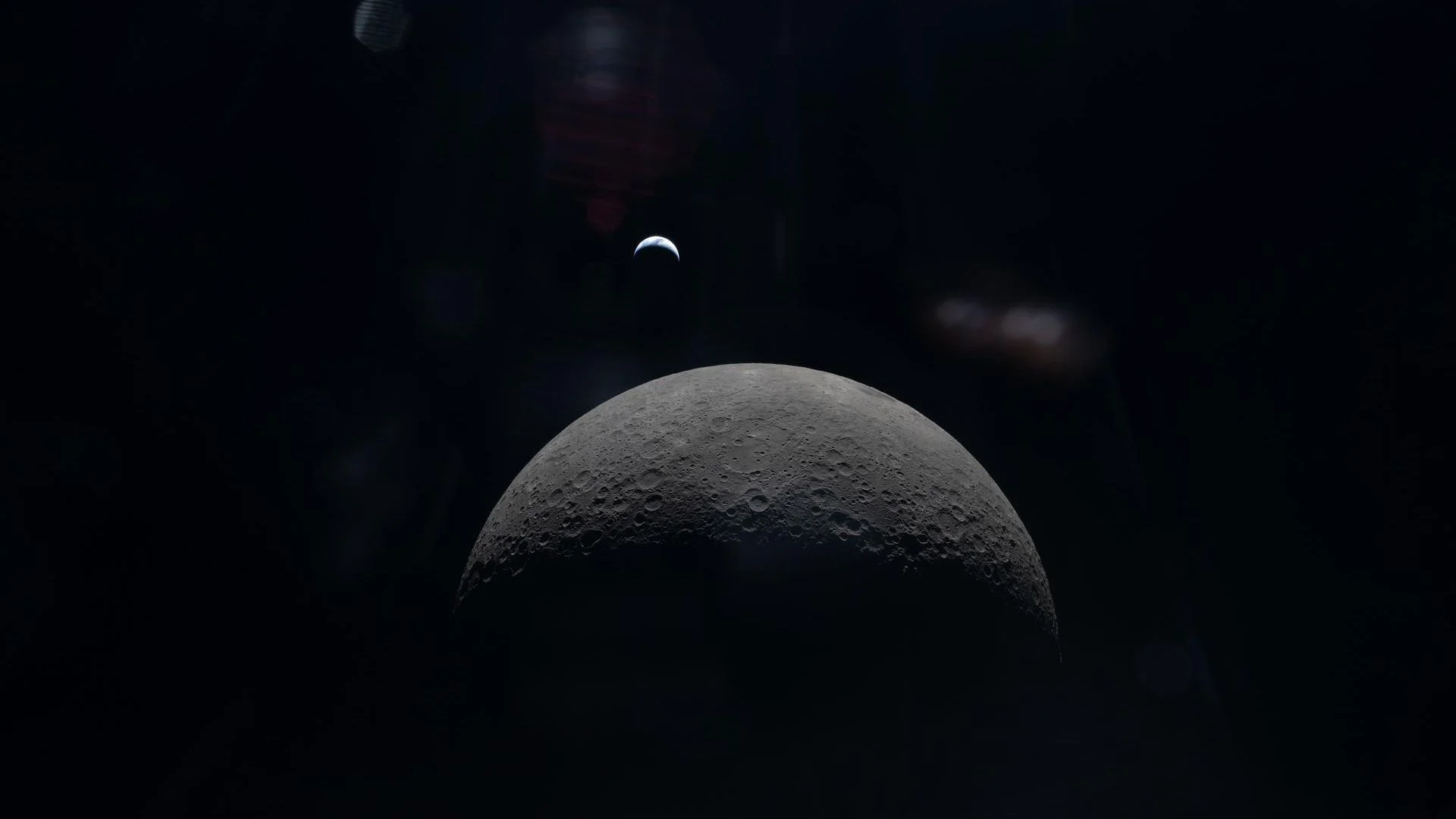
Artemis II launched from NASA’s Kennedy Space Center in Florida on April 1. The flight marked the first crewed journey aboard the Orion capsule and the first crewed mission to travel to the moon since Apollo 17 in 1972. The four-person crew flew around the lunar far side and returned to Earth in nearly 10 days. In that setting, the distance counter was more than a record-keeping display. It was one way to follow a flight whose route carried the crew farther from Earth than any humans had gone before.
Much of the crew’s activity inside Orion was livestreamed, drawing broad public attention to the mission. At Starmus VIII, Wiseman and fellow crew members Glover and Hansen received the Stephen Hawking Medal for Science Communication. The medal and the livestreams put the astronauts’ public role alongside their flight duties: viewers could follow parts of the mission, while the crew continued its work inside the capsule.
What a small reading can reveal
The episode offers a striking glimpse of how a routine flight reading can feel very different from inside a spacecraft. For Wiseman, the falling counter turned a few minutes of uncertainty into a clear sign that the crew was on its way home. This is more significant than it looks: the brief account shows how much a crew can depend on interpreting a stream of information while working through a mission’s planned sequence.
And yet, the story doesn’t describe a malfunction. Wiseman said he didn’t know why the number kept climbing, and the account offers no technical explanation for that reading. That distinction matters. A moment of fear can be real without proving that the spacecraft was in danger; the episode tells us what the commander thought as he watched the counter, not that the flight plan had failed.
If you’re working in this space, the scene is a reminder that clear displays and clear expectations matter most when the stakes feel immediate. Similar systems typically present information that crews must interpret alongside their training and mission procedures. Here’s the thing: a number can be correct and still be unsettling when its meaning isn’t yet clear to the person watching it. (And this is the part most people overlook.)
For the public, the moment makes a distant flight easier to grasp. The record-setting distance is an abstract achievement; a commander watching the counter tick past the expected peak is not. A few minutes of uncertainty. Then the number falls, and the crew cheers.
Are you a NASA nerd? See how well you score on our Artemis quiz to find out!
Discussion
Sign in to join the discussion.