Webb observations reveal metal-rich gas near Sagittarius A*, offering clues to its slow feeding and the origins of elements found on Earth.
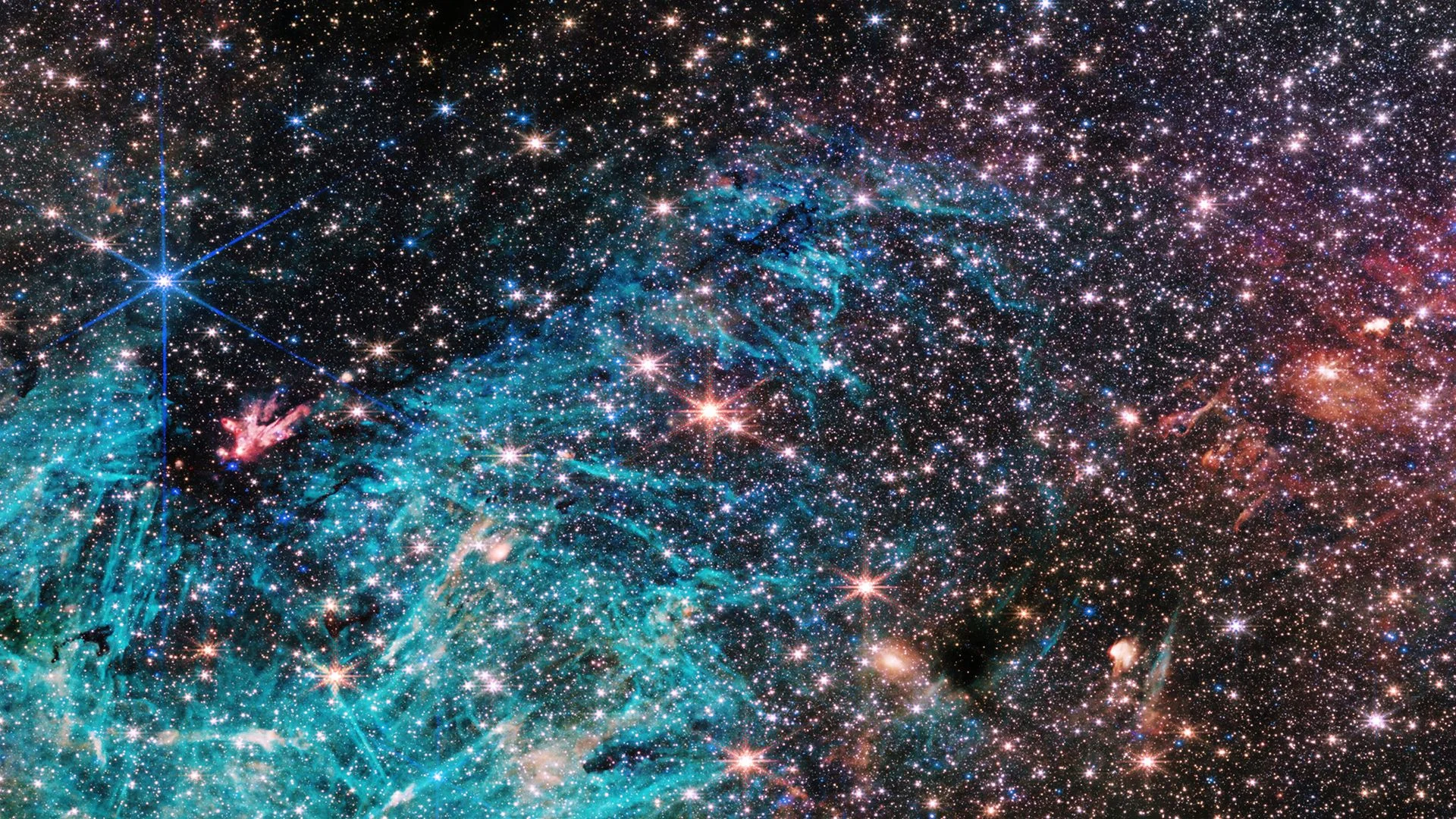
Metal-rich gas near Sagittarius A* may help explain why the Milky Way’s central black hole feeds so slowly. New observations from the James Webb Space Telescope connect that gas to nearby stars, offering a view of how heavy elements circulate around the galactic center. The findings add detail to a familiar puzzle: Sagittarius A* has material around it, yet it consumes far less than many other supermassive black holes.
The observations don’t settle why. They do give researchers another property to examine: the chemical makeup of gas in the black hole’s surroundings. That matters because the material available to a black hole can influence how it behaves, even when the observations can’t show exactly how much of that material will eventually fall in.
What astronomers mean by “metals”
Astronomers use “metals” to describe elements heavier than hydrogen and helium. The category includes familiar elements such as carbon, oxygen, iron and gold, despite their very different roles in stars and planets. In astronomy, the term is a broad shorthand for material built up through stellar processes.
Stars produce many of these elements through nuclear fusion. When stars die, explosions such as supernovas scatter some of that material into space, where it can mix with surrounding gas and become part of later generations of stars and clouds. The gas Webb observed near Sagittarius A* likely carries material from supernovas into the region around the black hole.
That connection gives the measurements a wider purpose. Chemical composition can preserve clues about where gas came from and what processes shaped it before it reached the galactic center. The observations don’t trace every element to a particular star or explosion, but they help researchers examine how stellar material is distributed in a crowded region.
Gas and nearby stars share a chemical history
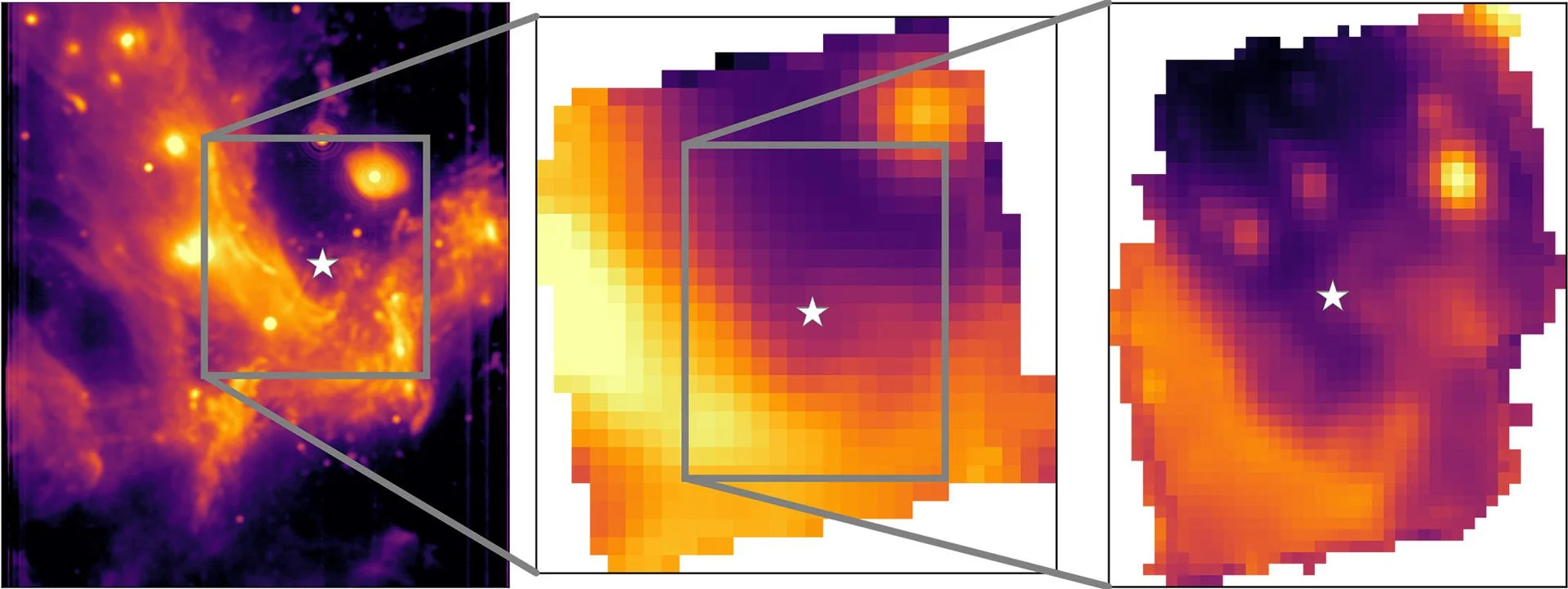
The gas clouds contain metals in proportions similar to those found in several nearby stars. That match suggests the stars and gas may have formed around the same time. Researchers reported the findings in The Astronomical Journal on Oct. 19, building on a study published in The Astrophysical Journal in May.
A shared chemical signature is useful because it gives astronomers a way to compare gas and stars that occupy the same general environment. If their metal proportions are alike, a common origin or period of formation becomes a plausible explanation. The result points to a relationship; it doesn’t establish that the gas and stars formed together as a certainty.
Webb detected heat signatures from gas clouds near the black hole and measured their metal content. Its infrared observations let researchers study warm material in a region that’s difficult to understand from a distance. The telescope operates near Lagrange point 2, about 1 million miles (1.5 million kilometers) from Earth, away from the Sun.
Metal content complicates the feeding puzzle
Sagittarius A* consumes far less material, and at a slower rate, than many other supermassive black holes. “Part of understanding why this is happening means looking at the properties of the materials available for it to consume, including gas, dust and the stars orbiting around it,” said Nicole Ford, lead author and an astrophysics doctoral student at McGill University in Montreal, in a statement.
The amount of material nearby is only part of the question. Gas must also behave in ways that allow it to cool and move inward; conditions that affect those processes can shape how much reaches a black hole. Metal content matters because it affects how quickly gas cools, which can influence whether it falls toward the black hole or remains in its surroundings.
This is more significant than it looks: a chemical measurement can help explain the physical conditions that govern feeding, even if it can’t reveal the black hole’s full history. The numbers here are underwhelming as a direct explanation of why Sagittarius A* is comparatively quiet. They’re more useful as a clue about the material available to it.
What the measurements can—and can’t—show
The findings could help researchers study metal distribution around black holes in more distant galaxies and trace processes that supplied Earth with heavy elements. In both cases, the value lies in connecting the composition of gas to the history of stars and stellar debris. Similar studies can give astronomers a way to compare environments, while the details of any one region still need to be interpreted in context.
There’s a limit to what the gas can reveal, though. The May study found that local cloud conditions shape emissions near Sagittarius A*, so those emissions alone can’t show how often the black hole has been active. A signal from nearby gas reflects its surroundings as well as the black hole, which makes it difficult to read activity directly from the emission.
Here’s the thing: more detail about the fuel doesn’t automatically explain the appetite. The new measurements add information about the material around Sagittarius A*, but leave its history of activity unresolved. And yet, that distinction is useful. If you’re working in this space, the next question is how chemical composition, local conditions and the movement of gas fit together. A clearer picture of the ingredients. Not yet a complete account of what the black hole does with them.
Discussion
Sign in to join the discussion.