New footage captures a male tiger greeting cubs and a female caring for another tigress’s young, complicating ideas about tiger social behavior.
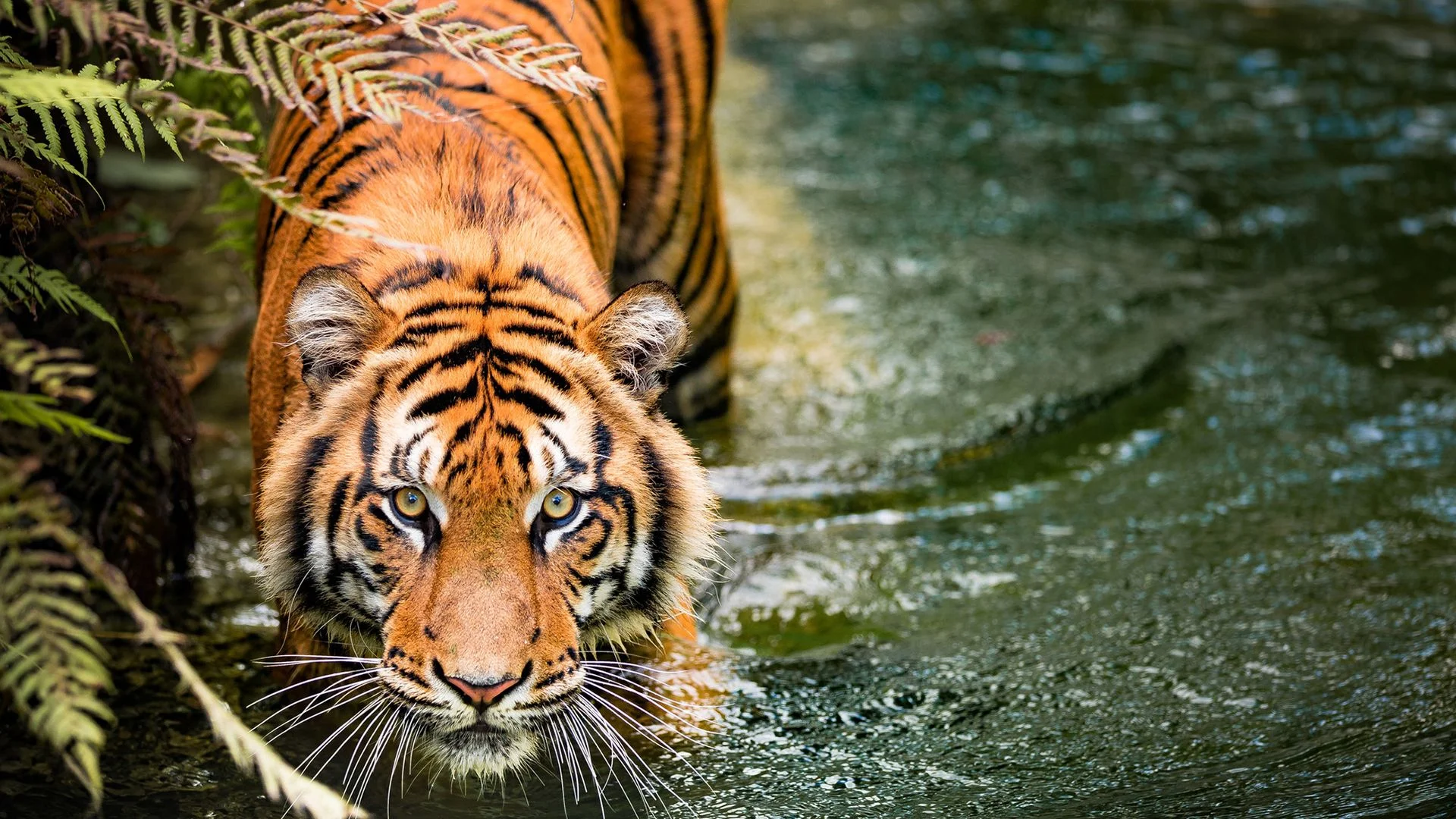
The clearest finding from Tiger Island may be how much remains unknown about tiger family life. The PBS documentary captures a male approaching his cubs and greeting them with a head-bobbing motion as their mother rests nearby. It also shows a female caring for another tigress’s cubs, complicating the familiar picture of tigers as strictly solitary. The scenes don’t establish how common these interactions are, but they make the limits of that familiar picture hard to ignore.
Wildlife biologist and filmmaker Dan O’Neill, who contributed to the two-part series following big-cat families in Nepal, said the footage is the first documented instance of a tiger family spending time together. Researchers have generally understood mothers to raise cubs for up to two years without help from males. These scenes suggest tiger social behavior may be more varied than that account allows. A brief encounter can’t settle how tigers organize family life, but it gives researchers a concrete reason to keep questioning assumptions built from limited observations.
“It just shows that we really know nothing about them,” O’Neill told Live Science. “And they’re so much more complex than people realize.” The remark is emphatic, but the point is measured: a species can be studied for years while its most private behavior remains difficult to observe.
What shared cub care could mean
Care from another female could help protect cubs. Male tigers sometimes kill young, especially when a new male takes over a territory. O’Neill suggested that a tigress helping to care for another female’s cubs may improve their chances of reaching adulthood. The footage raises that possibility; it doesn’t establish that the extra care caused cubs to survive or show how often such help occurs.
Female tigers have been observed co-parenting before, but the behavior appears rare. That rarity matters: an unusual scene can reveal a possibility without showing that it’s typical. If you’re working in wildlife conservation, the distinction shapes what can responsibly be inferred from a documentary observation and what still needs to be studied.
The scenes also underline how easily broad labels can obscure what animals actually do. “We have these very rigid ideas of how these animals live,” O’Neill said, arguing that tiger behavior, like the natural world more broadly, is diverse and changeable. Solitary is a useful shorthand for describing much of a tiger’s life, but it can become misleading when treated as an absolute rule. This is more significant than it looks: conservation decisions depend partly on understanding how animals use space and interact across different circumstances.
Seeing beyond the trails
Capturing such private moments required a different approach from standard camera trapping. The crew used drones fitted with powerful optical-zoom lenses and quiet propellers to watch tigers in hard-to-reach areas. Camera traps often record animals as they pass along trails, offering a narrow view of their lives. That method can show where an animal travels, but it may miss interactions that happen away from established routes or last longer than a passing encounter.
O’Neill said the drones were quieter than the local bees, allowing the team to film the cats without disturbing them. The comparison conveys why the equipment mattered: observation is only useful if the act of recording doesn’t change the behavior being recorded. Still, a drone’s ability to capture a rare scene doesn’t tell us how often that scene occurs. It broadens the window onto tiger life, while leaving the question of frequency open.
Tigers (Panthera tigris) may be solitary, but they often live near or share habitat with people. Those encounters can involve attacks on people or livestock. “It would be absolutely naive and wrong to suggest that they [attacks on people] don’t happen,” O’Neill said. He argued that conservation planning has to account for the conditions that bring communities and big cats into contact. That’s a harder story than a portrait of wildlife in remote wilderness, because the costs of sharing habitat aren’t distributed evenly.
Conservation depends on the human side
O’Neill, a researcher with the wild-cat conservation organization Panthera, has also studied jaguars, pumas and snow leopards. The popular image of big cats in remote wilderness, he said, can hide how often their lives overlap with human communities. When a tiger’s presence brings risk or loss, asking local people to bear those costs can undermine efforts to protect the animal. The documentary’s family scenes and its account of human encounters point to different sides of the same practical question: how can people and tigers continue to share space?
For O’Neill, supporting people who bear the costs of that proximity is part of protecting the animals: “Helping those people is how you help tiger conservation.” That principle has implications beyond this footage. If conservation is to reflect how tigers actually live, it has to account for both their behavior and the communities living alongside them. Here's the thing: a more nuanced picture of tiger social life matters most when it informs how people respond to real encounters.
What the footage leaves open
Tiger Island offers a rare view of interactions that conventional camera traps may not capture, but the scenes don’t answer every question they raise. They don’t show whether male involvement in cub care is common, how frequently females share care, or what effect that behavior has on cub survival. Those are open questions, not gaps the documentary can fill by itself. The value of the footage lies partly in making those questions visible.
For viewers, the broader lesson is straightforward: familiar descriptions of animal behavior can be useful and incomplete at the same time. The scenes invite a more careful account of tiger family life, while O’Neill’s comments on human-tiger contact point to the practical stakes of getting that account right. A wider view. That’s where the documentary leaves its strongest impression.
In the United States, Part Two of Tiger Island airs Wednesday, Oct. 28, at 12:30 a.m. on the PBS channel.
Think you know about lions and tigers? Test your smarts with our big cat quiz!
Discussion
Sign in to join the discussion.