A 30,000-year-old woman from southwestern France carried ancestry linking her to Eastern and Central Europeans, revising the picture of Gravettian mobility.
One genome revises the picture
A woman buried about 30,000 years ago in southwestern France carries evidence that Gravettian communities across Europe were more connected than researchers had thought. Her DNA points to ancestry linked with Eastern and Central European groups, suggesting that people moved across the continent during the Ice Age. The finding gives researchers a traceable connection between regions whose populations had often been described as more separate.
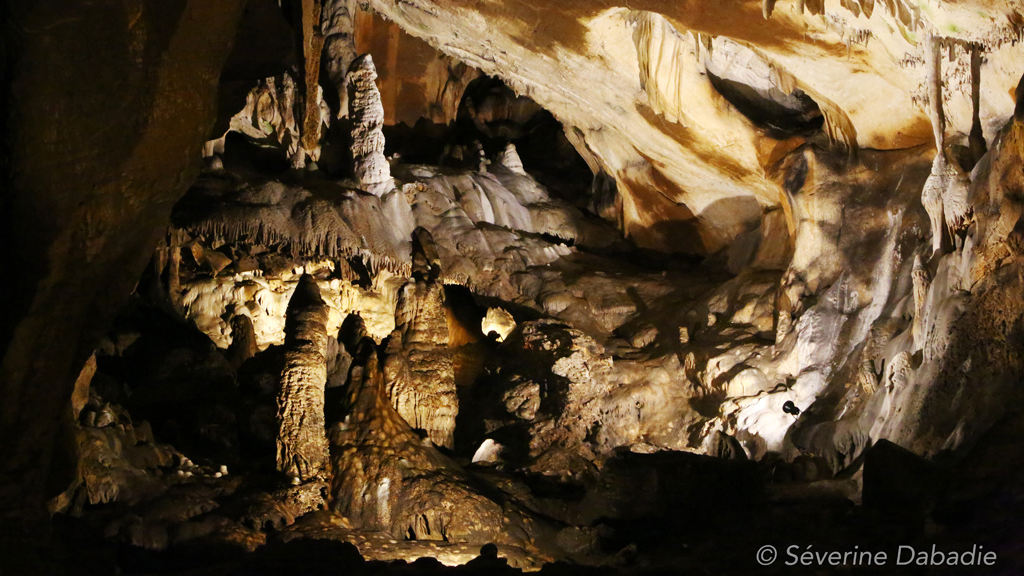
The woman’s remains came from Isturitz Cave, a site occupied intermittently from roughly 80,000 to 10,000 years ago. Her genome most closely resembles previously studied Western European individuals, but it also shows a distinct eastern connection. Researchers estimate that this ancestry entered the population through a gene-flow event around 31,500 to 32,500 years ago. That estimate places the connection within the Gravettian period, though it can’t identify where the woman’s ancestors lived or how they reached southwestern France.
The findings, published Oct. 23 in Science Advances, come from genome sequencing of three people who lived in what are now Spain, France and Italy during the Gravettian period. The study’s first author, Pere Gelabert, an evolutionary anthropologist at the University of Vienna, said in a statement that Western and Eastern European populations “were not as genetically isolated as previously assumed.” Three genomes can’t map a continent’s population, but they can test whether a clean east-west divide fits the evidence.
Earlier studies, based on a small set of ancient genomes, had suggested a stronger divide between eastern and western groups. Just two dozen human skeletons from the Gravettian period had yielded DNA, leaving major questions about ancestry unresolved. Ancient DNA is unevenly available: preservation conditions, excavation history and the remains researchers can study all limit which people enter the record. The new results add a specific link across that divide, though the evidence remains limited to a small number of individuals. The numbers here are underwhelming; the shift in interpretation is not.
A cave at a crossroads
Isturitz’s location between continental Europe and the Iberian Peninsula may help explain the genetic signal. The researchers argue that the cave was a cultural and biological hub during the Late Stone Age, when the Gravettian culture spread across Europe. Its position makes contact between regions plausible, but geography alone can’t show who traveled, how often they moved, or whether the genetic connection arose through one journey or repeated contact. That distinction matters: a cave can sit at a crossroads without every person who used it representing the wider population.
Isturitz’s archaeological record includes portable art associated with the period, while other finds show the site’s much longer history: Neanderthals used the cave, and cups made from human skulls dating to about 15,000 to 12,000 years ago have also been found there. Those discoveries belong to different periods and shouldn’t be collapsed into a single picture of life at the site. The cave’s long record instead shows why it can be valuable for studying changing human communities over time (and this is the part most people overlook): archaeological importance doesn’t mean that every layer answers the same question.
The Gravettian lasted from roughly 34,000 to 25,000 years ago, shortly after Neanderthals disappeared from Europe. Its material culture includes portable objects such as Venus figurines. Similar material objects can reveal shared practices or contact, but they don’t establish that people who made or used them shared the same ancestry. The new genetic evidence adds human movement to that archaeological picture: an eastern ancestry signal in southwestern France suggests exchange between regions that earlier genetic research had treated as more separate. Here’s the thing: genes and artifacts offer different kinds of evidence, and the strongest account comes from reading them together without treating one as proof of the other.
Shared traits, open questions
All three newly sequenced individuals showed close biological ties to Western European groups. Their genetic traits also point to dark skin, hair and eyes. Those traits are part of the researchers’ reconstruction from genetic data, not a complete description of how any one person looked. None had parents who were closely related, which suggests that close-kin unions may have been avoided in these populations. It’s a clue about these individuals’ family backgrounds, though three people can’t establish a rule for every Gravettian community.
The researchers describe Gravettian population structure in western Europe as more dynamic than previously understood. The Isturitz woman’s ancestry offers a dated example of that movement, while the limited number of available genomes leaves the scale and routes of such exchanges uncertain. Her genome doesn’t show a migration map; it shows that ancestry associated with eastern groups reached someone buried in southwestern France. That’s a narrower claim, and a more useful one than a sweeping story about a unified Ice Age Europe.
What the finding changes
This is more significant than it looks because it changes how researchers should frame the question. The evidence doesn’t erase regional differences or show that Gravettian populations mixed constantly. It does make a strict separation harder to defend on the current record. If you’re working in this space, the practical implication is clear: broader sampling across regions and periods will be needed to tell whether the Isturitz woman reflects a rare connection or a pattern that earlier studies missed.
More ancient DNA could show whether this connection was unusual or part of a wider pattern of contact across Ice Age Europe. Researchers would also need more individuals to assess how common eastern ancestry was in western populations and whether its presence changed over time. Until then, the study offers a strong lead and a limited view. A connection, not a complete map.
See how much you know about early humans with our human evolution quiz!
Discussion
Sign in to join the discussion.