A modeling study projects more chronic hepatitis B infections among young people if newborns no longer routinely receive a birth dose.
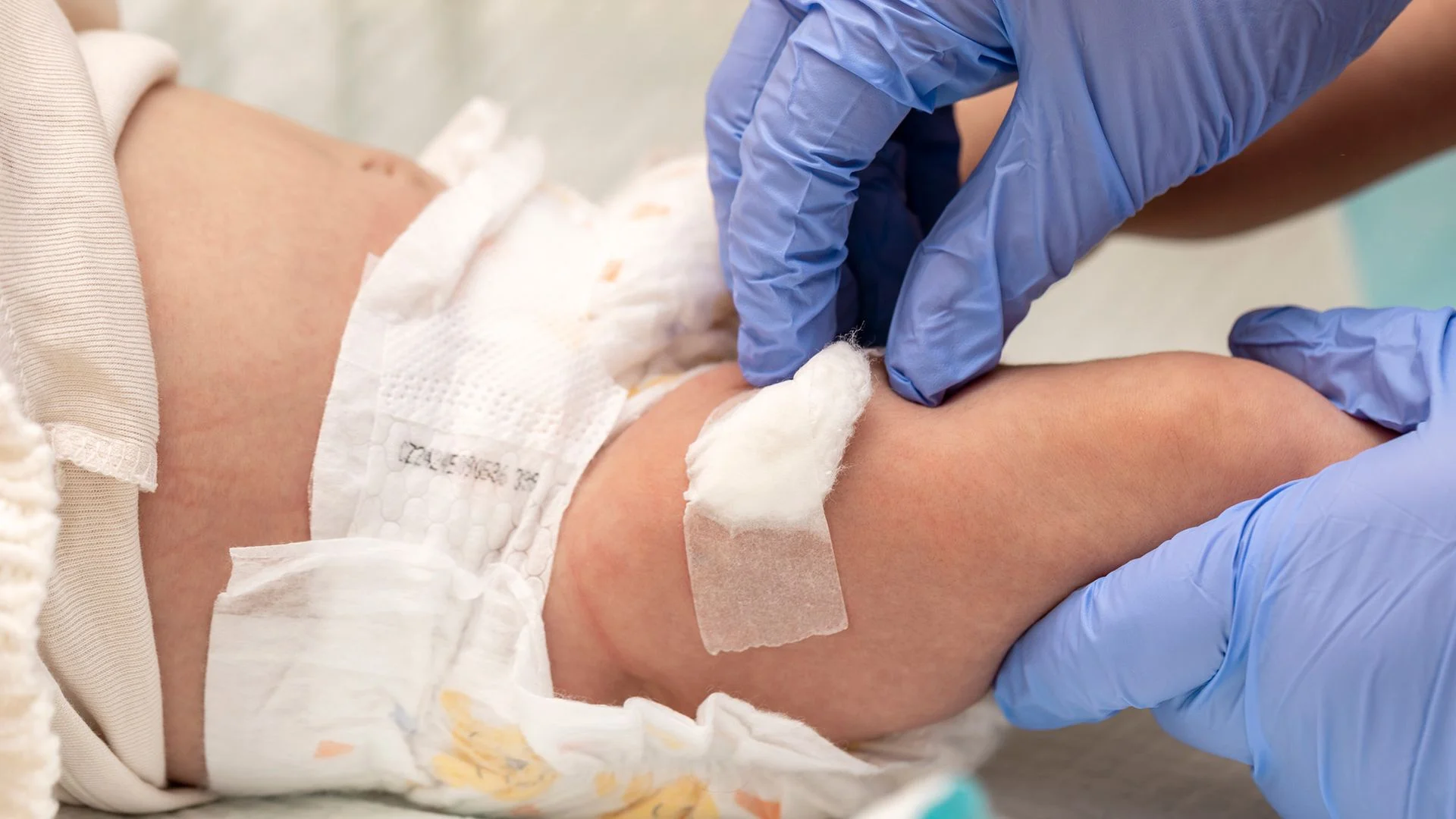
The hepatitis B birth dose works as a safety net: it protects newborns before an infection can turn chronic, including when screening or follow-up misses a risk. A new modeling study estimates that changing the U.S. recommendation could leave substantially more young people vulnerable to hepatitis B virus (HBV), especially if families are asked to decide whether and when to start vaccination.
The study, published Oct. 19 in Annals of Internal Medicine, modeled the effects of a recommendation adopted by the Centers for Disease Control and Prevention (CDC) after its Advisory Committee on Immunization Practices (ACIP) advised ending universal newborn vaccination in December 2025. The CDC accepted that advice. The recommendation's implementation has since been paused following legal action, leaving the study to assess what could happen if the policy takes effect.
Two pathways, different levels of protection
For decades, CDC guidance called for all newborns to receive an HBV vaccine dose within hours of birth. Under the revised approach, that dose is recommended for babies whose mothers test positive for HBV or whose infection status is unknown. If a mother tests negative, parents are encouraged to discuss the birth dose with a doctor. Babies who don't receive it should begin the vaccine series at 2 months or later.
That leaves room for two different outcomes. Families might defer the first shot until 2 months while still completing the series, or they might delay or decline vaccination after a discussion with a clinician. The researchers modeled both scenarios. The second reflects the CDC's recommendation that parents and doctors “decide when or if their child will begin the hepatitis B vaccine series.”
Study co-author Dr. Amir Mohareb, an infectious-diseases physician-investigator at Massachusetts General Hospital and Harvard Medical School, said the birth dose provides a backstop when any part of the care process fails. Not every pregnant person is tested, he said, and a test result can be inaccurate or positive patients may not receive appropriate follow-up.
The virus can also reach a child outside childbirth. HBV spreads through exposure to small amounts of bodily fluids, including blood from a scratch. An unvaccinated baby whose mother tests negative could still encounter the virus through an infected relative or another child. Mohareb described HBV as “very, very transmissible.”

Projected infections rise as vaccination falls
Mohareb's team built a simulation from published data on current HBV prevalence, pregnancy screening, test accuracy, vaccine completion by age 2 and the chance that infection becomes chronic at different ages. The model also estimated children's exposure to infected people in their households and communities.
For babies born in 2026, postponing vaccination until 2 months—while assuming most children still complete the series—was associated with 19% more chronic HBV infections by age 20 than universal birth-dose vaccination.
The projection increased when the team modeled a looser shared decision-making approach. It assumed 87% of children would complete vaccination by age 2 under the delayed-start scenario, compared with 50% under shared decision-making. At that lower coverage level, chronic infections acquired by age 20 rose by 83% relative to universal birth-dose vaccination.
The model also projected that roughly 50% to 70% of people born under the shared decision-making approach could remain susceptible to HBV at age 20. That amounts to about 1.8 million people in the age group per birth year, compared with fewer than 250,000 under universal birth-dose vaccination. The larger susceptible population would reach young adulthood, when exposure through sex or drug use can occur, said Dr. Norah Terrault, a transplant hepatologist at the University of Southern California Keck School of Medicine who was not involved in the research.
The 50% vaccination assumption is uncertain. Mohareb said uptake for other vaccines with similar recommendation language has been as low as 25%, but the public response to this specific guidance is not yet known. To examine how uncertainty affected the results, the researchers varied key inputs across wide ranges and ran the model 1,000 times. Universal birth-dose vaccination produced fewer chronic infections in every simulation. The size of the projected increase varied with how many families deferred vaccination.
Why childhood infections matter
Age at infection shapes the long-term consequences. More than 90% of HBV infections acquired in infancy or early childhood become chronic, according to the World Health Organization. Among people with chronic HBV, about 15% to 25% develop cirrhosis, liver cancer or another chronic liver disease, the CDC says.
The model did not calculate how many additional cases of cirrhosis or liver cancer might follow from the projected infections. Terrault said those conditions, along with liver failure, would be expected to rise when more infections go unprevented. Her assessment of the modeling was that it presents an accurate projection of how the recommendations could affect future chronic HBV infections in the United States.
U.S. childhood infections have fallen sharply: from more than 25,000 a year in 1985 to fewer than 100 reported cases in 2024. That decline has been credited to screening during pregnancy, antibody treatment for babies born to mothers with HBV, and routine vaccination at birth. Dr. Brian McMahon, a hepatologist and director of the Liver Disease and Hepatitis Program at the Alaska Native Medical Center, said removing the universal recommendation would mean more infections early in life.
Mohareb supports doctors and patients making decisions together, but said public health agencies also have a role in identifying policies that protect health at the population level. The study puts a number on the tradeoff under discussion: even when families retain access to later vaccination, delays and lower uptake could widen the pool of young people susceptible to HBV.
More detail on the proposed schedule appears in the CDC recommendation. Health experts have criticized the change. For now, the modeling points to a practical consequence to watch: how many families choose the birth dose, and how reliably children complete the series afterward.
Discussion
Sign in to join the discussion.