Simulations suggest uneven mass loss could send the giant planets into unstable orbits, with collisions possible within hundreds of millions of years.
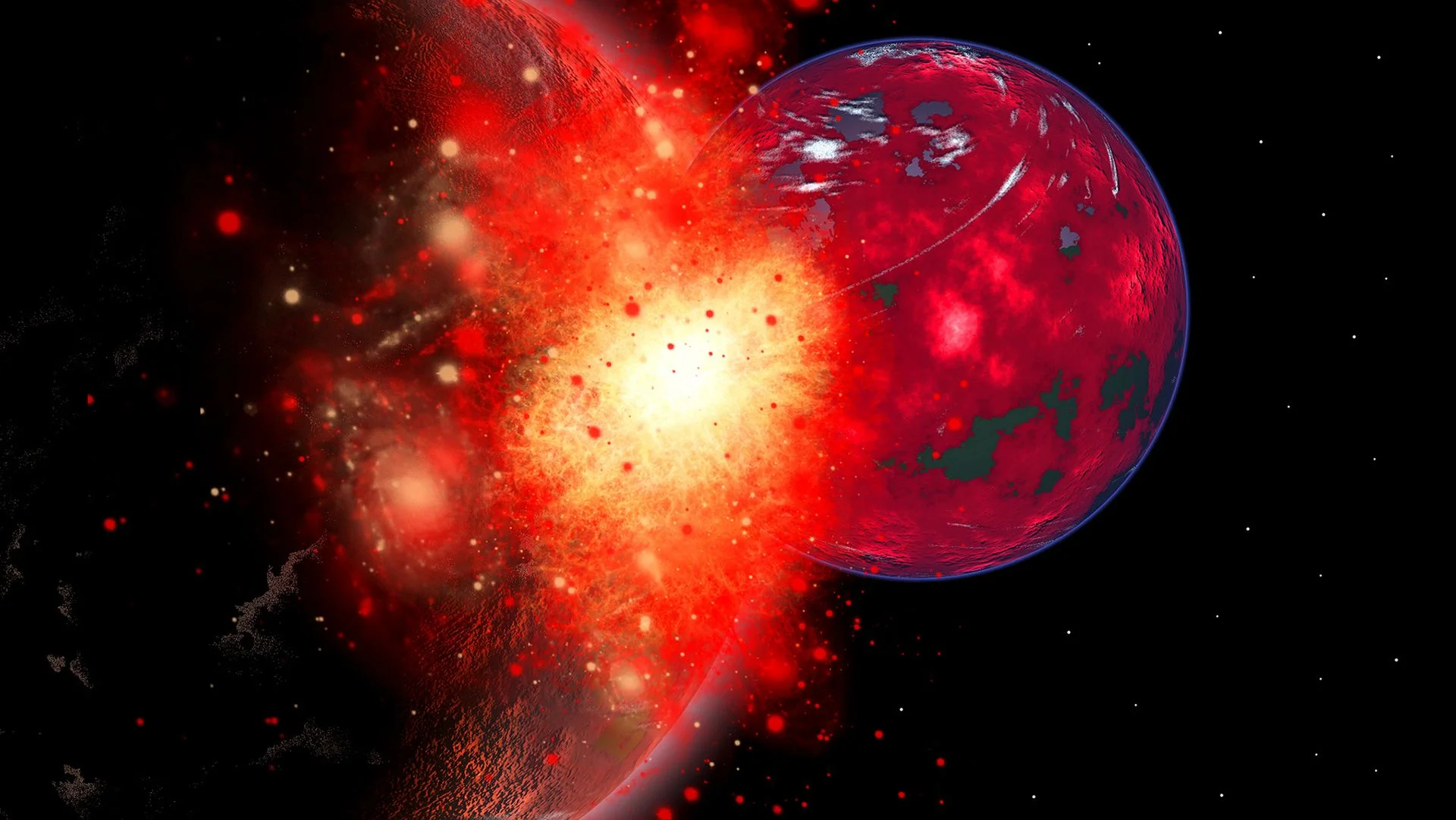
The outer solar system may not stay orderly after the sun dies. New simulations suggest that the way the sun sheds its mass could determine whether Jupiter, Saturn, Uranus and Neptune settle into wider orbits—or veer into a chaotic phase that ends in collisions or ejections.
The research, published Sept. 21 in The Astrophysical Journal Letters, challenges a long-standing expectation that the four giant planets would largely preserve their arrangement for hundreds of billions of years. In some of the study’s simulations, their orbits became unstable within a few hundred million years of the sun becoming a white dwarf, and in extreme cases while it was still a red giant.
The sun’s uneven exit
In roughly five billion years, the sun is expected to exhaust the hydrogen in its core and swell into a red giant, reaching about 100 times its current size. It may engulf Mercury and Venus, and could reach Earth, before shedding its outer layers and leaving behind a compact white dwarf. Planetary scientist Nathan Kaib of the University of Oklahoma, who wasn’t involved in the study, described that future to Live Science in an email.
Earlier models assumed that this mass loss would happen smoothly. A 1998 study found that gas flowing away from the sun should push the giant planets’ orbits outward, roughly doubling their distances from the star. Under that scenario, the new arrangement would be vulnerable mainly to the rare passage of a runaway star, an event thought to occur only once every billion billion years.
But observations of other stars point to a less even process: plasma plumes may lift large clouds of gas from a dying star in bursts. “They’re kind of like coronal mass ejections, except much larger,” said Jim Fuller, a Caltech professor of theoretical astrophysics and a co-author of the study.
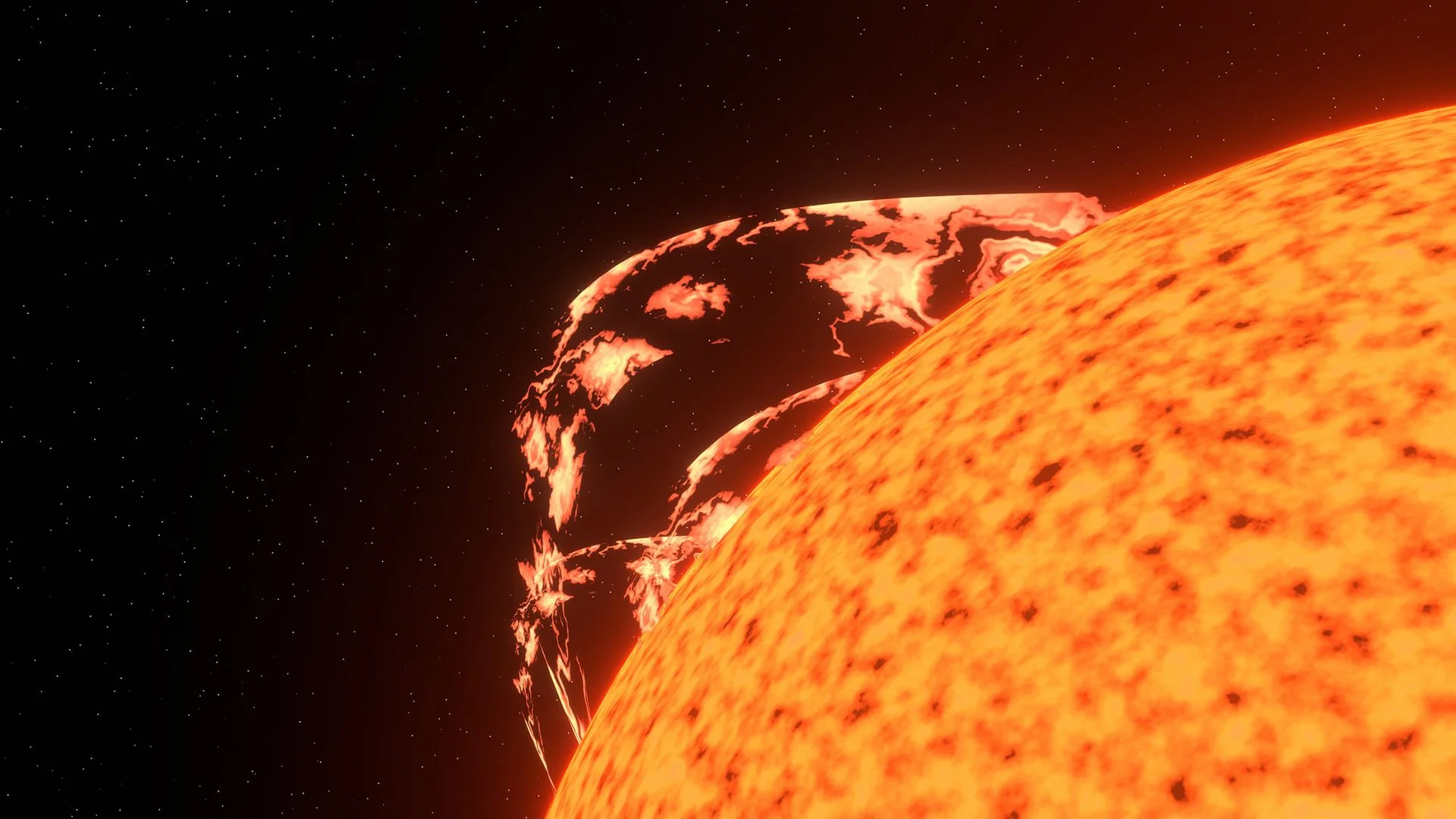
Each burst would give the sun a small push in the opposite direction, much as a gun recoils when fired. A single shove would be slight, but repeated bursts could change the star’s speed by several hundred feet per second. Astronomers have observed white dwarfs in other systems receiving such kicks.
Fuller discussed these stellar recoils with Konstantin Batygin, a Caltech professor of planetary science and the study’s first author. Batygin recognized that a changing solar velocity could alter the gravitational forces shaping the outer planets’ paths.
When planetary orbits lose their footing
Batygin’s team ran 672 computer simulations, comparing smooth mass loss with two burst-driven possibilities: mass ejections throughout the red giant phase, or bursts concentrated in its final stages. They also varied the amount of mass in each ejected packet.
With smooth shedding, the results resembled earlier work: the giant planets remained largely intact for billions of years. Bursty mass loss produced a different picture. The planets could trade places, take on highly oval orbits, or be thrown out of the solar system. In 96% of the simulations using the largest mass packets, the planets were destroyed in collisions with one another.
That timing matters for studies of planetary systems around white dwarfs. The results suggest that systems resembling today’s outer solar system may be less common than earlier models implied, while planets on oval orbits could be more prevalent. Kaib said the simulations point in that direction.
Some researchers have proposed that habitable planets could exist around white dwarfs. The new work doesn’t rule out such worlds, but it suggests their long-term stability may be harder to assume. The sun’s final bursts of mass could turn a seemingly settled planetary system into a short-lived one.
See how well you know our planetary neighborhood with our solar system quiz!
Discussion
Sign in to join the discussion.