A month of meditation and dreamlike VR exercises was linked to more lucid dreams, though a small study leaves the roles of each component unclear.

Dreamlike virtual reality may help people recognize when they’re dreaming. In a small study from the University of Trento, participants who combined VR reality checks with meditation reported lucid dreams four times as often as a group that practiced reality checks alone.
That result suggests the setting for reality checks may matter. Conventional exercises ask people to question whether unusual events are real while awake, in hopes they’ll repeat the habit during a dream. But ordinary life rarely feels strange enough to make that habit stick. “For most people, our day-to-day lives may not feel ‘dream-like,’” said Daniel Morris, a cognitive neuroscientist at Northwestern University who studies dreams and wasn’t involved in the research.
Practicing the check in a strange setting
The Italian team recruited university students for a month of training, held twice a week. Participants meditated to build awareness of their thoughts, then entered VR simulations featuring events such as objects or people breaking the laws of physics and abrupt scene changes. When something odd happened, they performed a reality check by asking whether it was real or a dream.
The researchers published their findings Sept. 28 in Frontiers in Psychology. After each session, participants tracked their dreams in morning diaries and daily questionnaires, recording how many they remembered and whether any were lucid.
Alongside the group that received meditation and dreamlike VR, the study included two comparison groups. One practiced reality checks without meditation or VR. The other performed checks in realistic VR simulations. The dreamlike VR group reported lucid dreams four times as often as the first comparison group; participants in realistic VR were more than eight times less likely to report lucid dreams than those in the dreamlike VR group. That comparison suggests immersive technology alone may not account for the result.
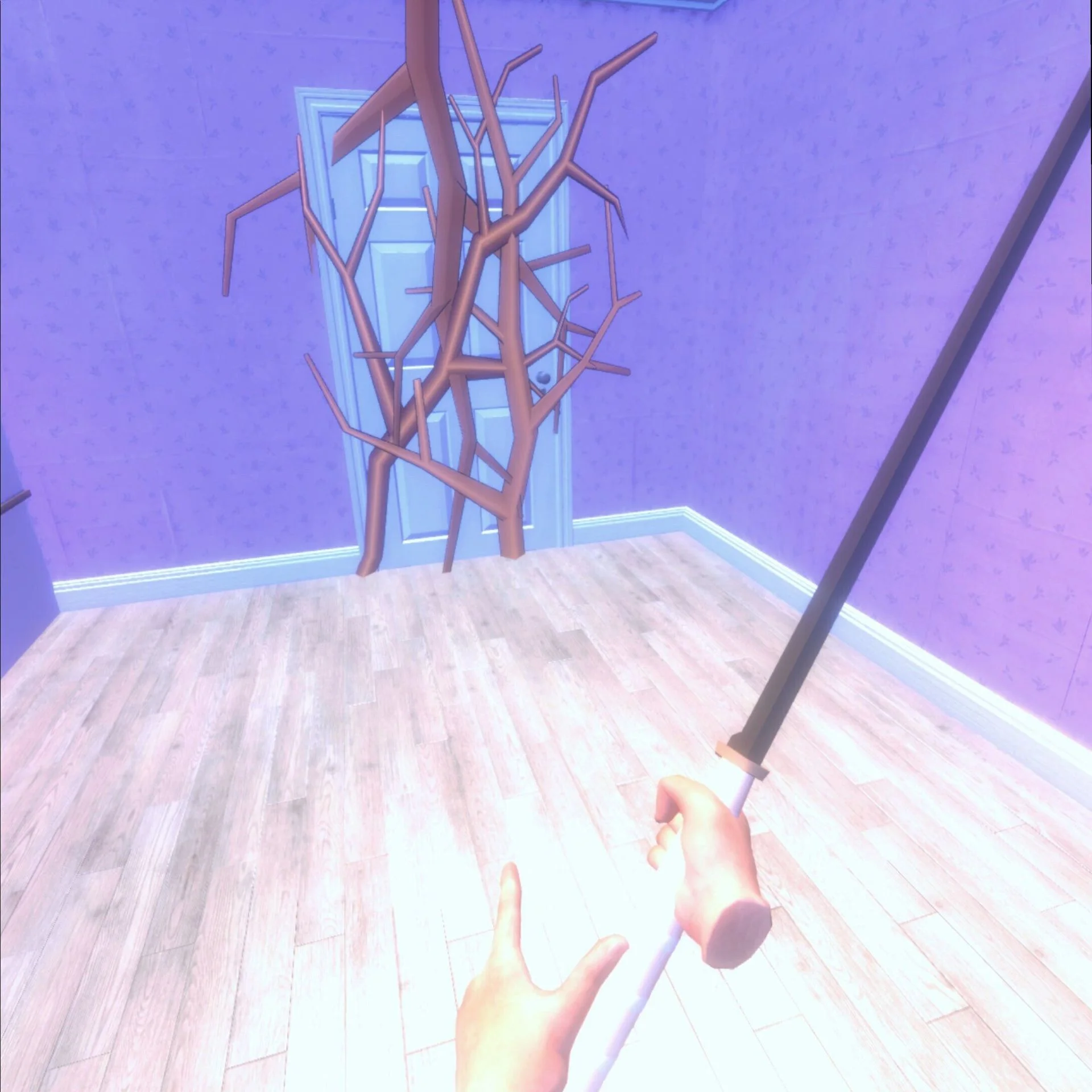
“It was particularly surprising to find that such little training with the dream-like VR simulations was needed to develop lucid dreaming as a skill,” said study co-author Nicola De Pisapia, a neuroscientist at the University of Trento. The researchers limited the experiment to one month because a longer program would have placed too much demand on participants, he said.
Co-author Andrea Signorelli, a doctoral student in De Pisapia’s lab, sees the VR simulations as a likely reason the training worked. Dreams can feel convincing as they happen, making it difficult for people to notice that they’re asleep. “Virtual reality is the technology to fool you on stereoscopic vision and auditory information,” Signorelli said. “It’s basically the most immersive technology that we have at the moment,” which, he argued, makes it a useful setting for practicing reality checks. Stereoscopic techniques create a 3D illusion by mimicking how the eyes see.
Questions remain about dream recall
The study also found a difference between remembering lucid dreams and remembering dreams in general. Participants in every group recalled more dreams after the experiment began than they had beforehand. Yet the dreamlike VR group recalled the fewest dreams overall, despite reporting the most lucid dreams.
Signorelli suggested that lucid dreaming might take energy that would otherwise go toward recalling other dreams. Morris offered another possibility: participants who had lucid dreams may have been less inclined to report dreams that weren’t lucid. That would make the diary results vulnerable to reporting bias.
The sample included just 38 people, and neither comparison group meditated. As a result, the study can’t determine whether meditation, dreamlike VR, or their combination drove the difference. The team is conducting a follow-up study without meditation to test whether the VR scenarios are the main factor, Signorelli said.
He’d also like future training to reflect each participant’s own dreams. A simulation could recreate a recurring nightmare, for example, and help someone recognize cues that are specific to it. Morris said further research could examine whether the approach might help people experiencing nightmares, anxiety or PTSD.
Lucid dreaming may offer people with nightmares a way to change the course of a dream and feel more agency, Morris said. But that possibility remains a research question: the current study tested dream reports, not a treatment for nightmares.
The next study should help clarify whether dreamlike VR is doing the key work. If it is, personalized simulations could give researchers a more targeted way to test lucid-dream training, including its possible use for recurring nightmares.
This article is for informational purposes only and is not meant to offer medical advice.
How much do you know about sleep and dreams? Find out with our sleep quiz!
Discussion
Sign in to join the discussion.