Lumina models the first galaxies, cosmic reionization and the spread of radiation across 2 billion years of early cosmic history.
Why Lumina’s scale matters
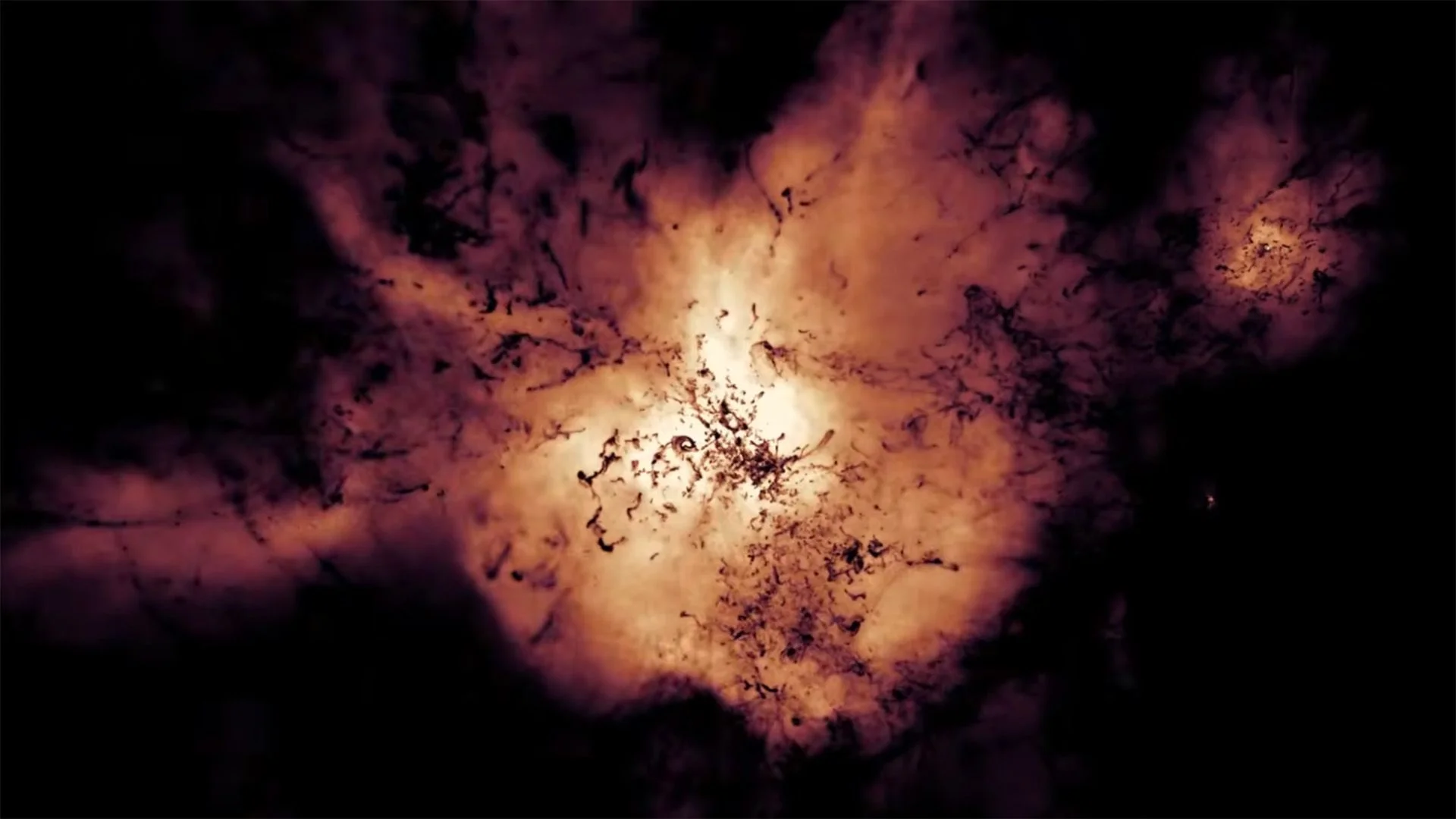
Lumina’s main achievement is its ability to connect galaxy-scale detail with the evolution of a vast volume of the early universe. The simulation follows 2 billion years of cosmic history, giving researchers a way to study how the first galaxies formed and how their radiation changed the space around them. That combination addresses a difficult modeling problem: processes inside a galaxy unfold on vastly smaller scales than the spread of light and matter between galaxies. A simulation that captures both can help researchers examine how local events add up to cosmic change.
The work was published Oct. 26 in Monthly Notices of the Royal Astronomical Society. The universe is about 13.8 billion years old, so Lumina covers a substantial early chapter of its history. Its timeline lets researchers follow a period when the universe’s contents and appearance were changing, rather than treating the first galaxies as isolated snapshots. That distinction matters because observations show what distant objects look like when their light reaches us; simulations can help connect those observations to the processes that produced them.
“Other simulations cannot zoom in as far as this,” study co-author Mark Vogelsberger, an MIT physics professor, said in a statement. “The difference between the smallest and largest scales that we simulate is larger than in any other simulation.” The claim describes the project’s central design choice: preserve a wide view while resolving smaller structures within it. That’s a meaningful technical advantage, though the value of any simulation still depends on the assumptions and physics built into its model.
The accompanying video tracks a region about 1.6 billion light-years across, then narrows in on the structures taking shape within it. That range matters: it lets researchers follow local processes inside young galaxies while also seeing how their effects spread across intergalactic space. In practical terms, a researcher can ask how activity in one region relates to conditions across a much larger volume. The video makes that change in scale easier to see, but it’s the modeled relationships between scales that give the work its scientific purpose.
From dark hydrogen to the first galaxies
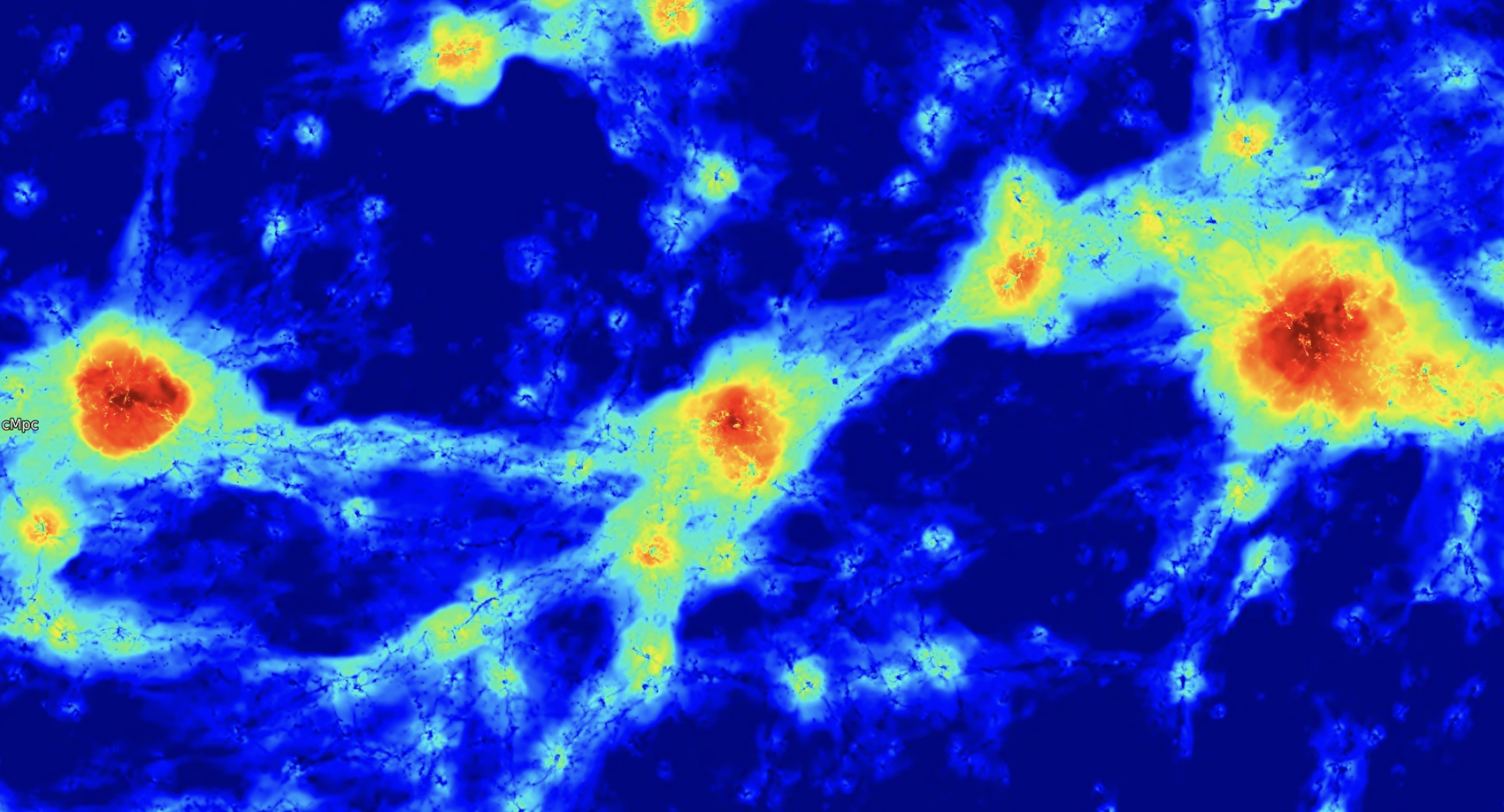
The simulation opens about 45 million years after the Big Bang, during the Cosmic Dark Age. Neutral hydrogen had accumulated into a veil that blocked light from the earliest stars. As gas gathered into halos, the first galaxies and stars began to emerge; their radiation gradually made the universe visible again. This sequence is more than a backdrop: it describes the transition from a universe whose hydrogen absorbed light to one in which radiation could travel through increasingly ionized regions.
Lumina models dark matter, stars, gas and radiation together to trace that sequence. First author Oliver Zier, a former MIT postdoctoral researcher now at Harvard University, described how the simulation follows the process: “We see this is where the first galaxies form,” he said. “And the first stars form in those first galaxies. Those stars then create radiation. The simulation then tracks that radiation, and we can zoom way out to see how that radiation travels out from stars, through the universe, until at some point it ionizes some neutral hydrogen.” The linked processes are the point: stars produce radiation, and that radiation changes the surrounding gas. Here's the thing: separating those stages can obscure how one physical event shapes the next.
That modeling approach also gives researchers a way to test how different ingredients interact over time. Dark matter helps shape the structures in which gas can collect, while stars and radiation affect the gas once galaxies begin forming. Similar simulations typically depend on approximations, since they can’t represent every physical detail at every scale. Lumina’s breadth therefore offers a useful framework for questions about cause and effect, while comparisons with observations remain necessary to judge how well the model describes the real universe.
Tracking reionization across cosmic scales
Lumina models both hydrogen and helium reionization, two major changes in the early universe. Ultraviolet light from young stars and galaxies stripped electrons from neutral hydrogen, clearing the fog that had blocked light. Later, energetic supermassive black holes broke apart neutral helium, driving helium reionization. The two transitions involve different elements and sources of energy, so tracking both helps researchers examine how the universe’s gas changed as galaxies and black holes developed.
By tracing these processes alongside galaxy formation, the simulation could help researchers compare models with telescope observations of the early universe. The team sees particular value for observations that map many galaxies at once: Lumina can connect what those surveys reveal across large areas with the physical activity unfolding inside individual galaxies. Those comparisons may help researchers distinguish between models that produce similar large-scale patterns but rely on different underlying processes. If you're working in this space, that bridge between a galaxy’s local behavior and the larger region around it is likely the most useful feature.
The numbers here are underwhelming only if scale is judged by a single headline figure. The more telling achievement is the attempt to preserve detail across a huge range, and this is the part most people overlook: a wide simulation is useful only if its small-scale behavior can still inform questions about the wider universe. The video offers a striking view of that ambition. The scientific test comes later, through how well Lumina’s results stand up against observations and other models.
What Lumina could help researchers answer
Lumina gives researchers a tool for investigating how the first galaxies influenced their surroundings, and how those surroundings changed as radiation traveled outward. That could make it easier to interpret surveys that capture many early galaxies but can’t directly show every step in their formation. It’s a way to connect snapshots with a proposed history. Still, a simulation doesn’t replace telescope evidence; it gives scientists a structured account to compare with it.
The project’s broad reach is more significant than it looks because the early universe wasn’t shaped by galaxies in isolation. Radiation crossed the space between them, and the state of that space affected how the radiation moved. A model that links both scales can help researchers ask more specific questions about reionization and galaxy growth. A demanding test.
That said, the article’s strongest claim is about what Lumina can model, not what it has already settled. Its usefulness will depend on whether its predictions match what astronomers observe and whether the model’s assumptions hold up under comparison. For now, it offers a detailed way to explore how stars, galaxies, gas and radiation may have combined to transform the early universe.
Discussion
Sign in to join the discussion.