A facial reconstruction brings a Roman-era burial near Inveresk into focus, while isotopes and bone injuries point to the man’s origins and possible army role.
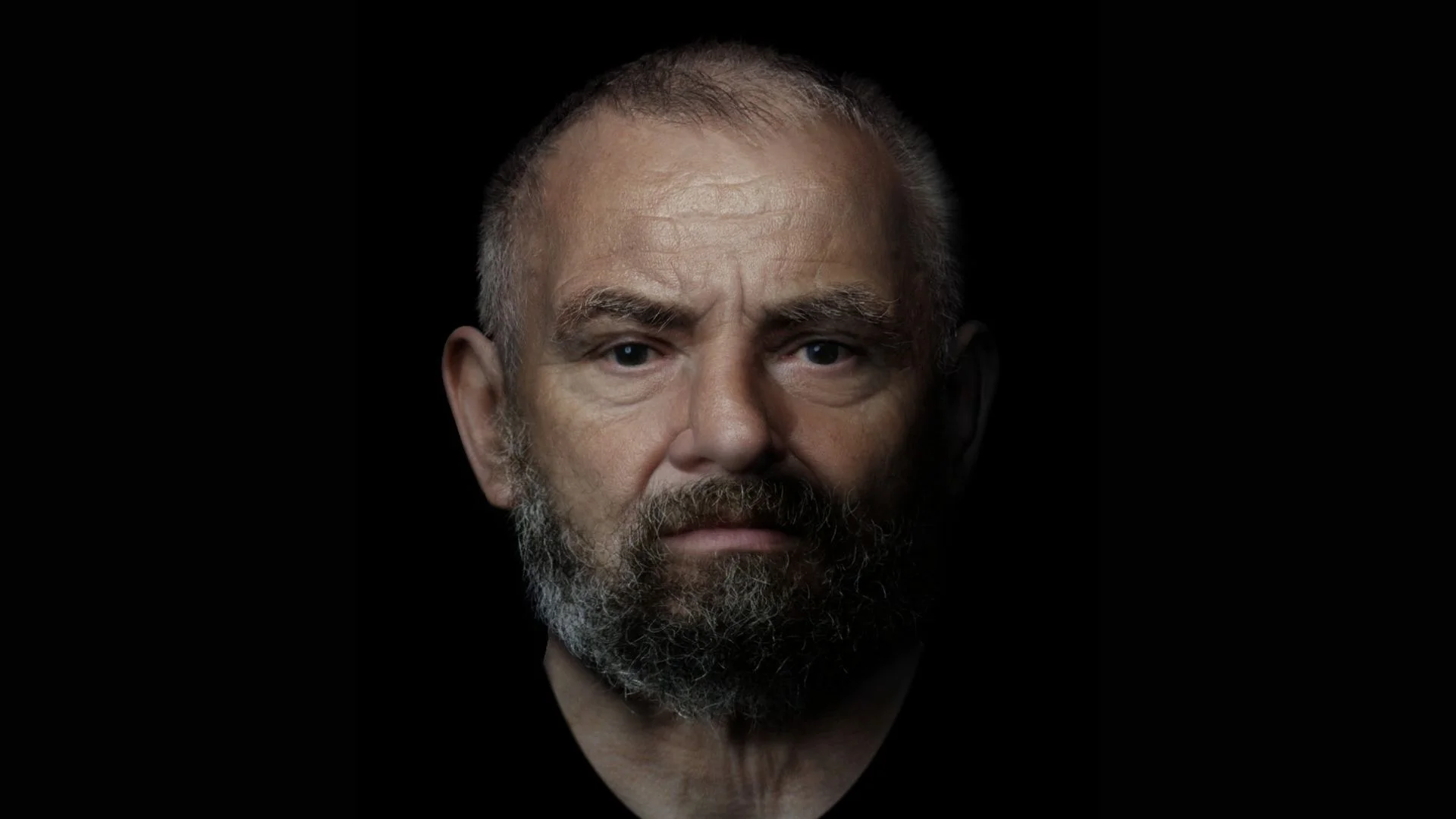
A reconstructed face offers a human point of entry into a Roman-era burial mystery: a man in his 50s, buried near Scotland’s Inveresk fort after being decapitated following his death. He likely came from southern Britain and may have worked for the Roman army, though an injury to his right arm makes frontline service less likely.
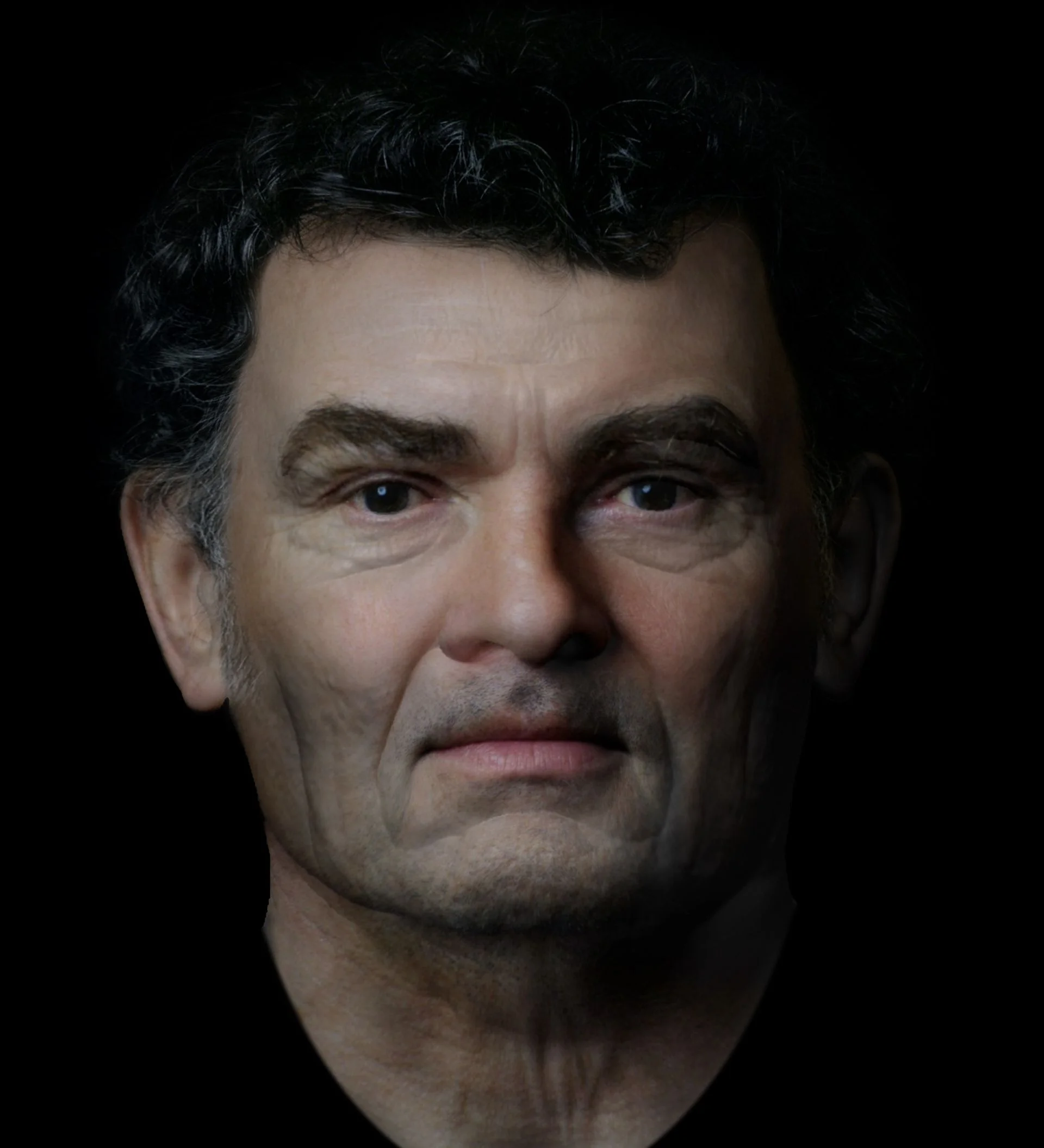
Researchers at National Museums Scotland and forensic anthropologist Christopher Rynn built the facial reconstruction from the man’s skull. His remains date to between A.D. 142 and 165. The reconstruction shows him without a beard, based on what was common at the time.
A burial that raises questions
The man’s grave was found near Inveresk, a Roman fort on Scotland’s east coast, southeast of present-day Edinburgh. His head had been separated from his body after death. Archaeologist John H. Reid, who wasn’t involved in the excavation, told Live Science that the burial’s other features suggest the man was treated with dignity. That makes it unlike the graves of executed criminals, who were often decapitated in Roman-era Britain.
Four of the six Roman-era burials found at Inveresk involved decapitated individuals, according to National Museums Scotland. Reid said similar burials found hundreds of miles away in southern Britain raise the possibility that posthumous decapitation was part of a little-known burial practice among some communities there. The reason for this man’s treatment remains unknown.
Chemical analysis of his remains points to a childhood in southern Britain. Reid cautioned that someone from a nearby area, including the coast of what is now the Netherlands, could have had a similar isotopic profile. Either way, the man had traveled a considerable distance to reach the Roman frontier.
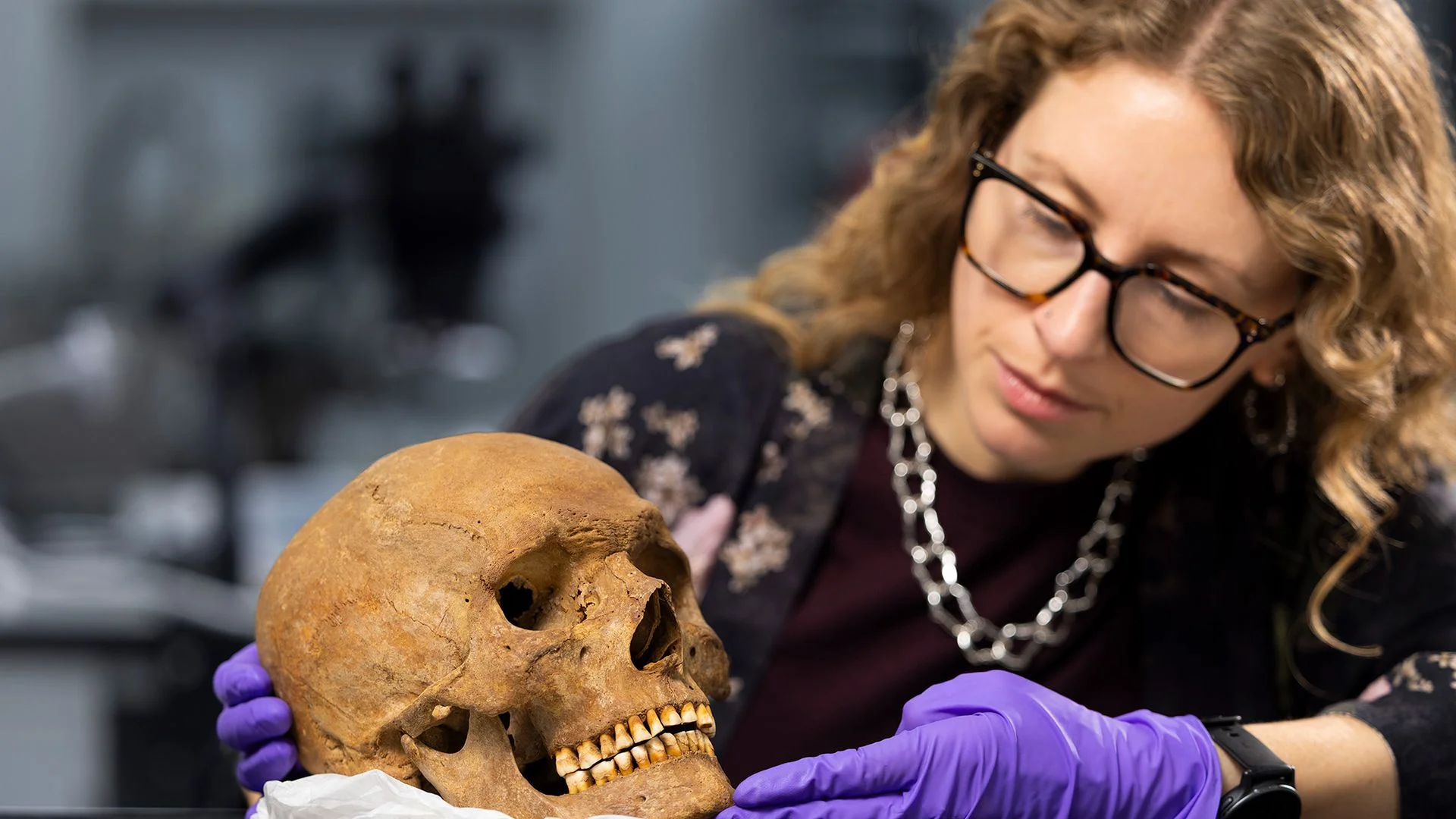
His skeleton records a physically active life. A broken nose had healed, and extensive bone growth around his right elbow may reflect arthritis or a past injury. The condition restricted movement in that arm, researchers said, making it unlikely he could wield a sword with it.
That limitation doesn’t rule out a connection to the army. Reid suggested he could have been left-handed or held a noncombat role, such as a clerk. Non-Romans also served as legionary servants or artisans, or as members of auxiliary units and citizen-based legions. By the time the Antonine Wall was built, few Roman troops in Scotland came from the Italian peninsula, Reid said.
Life on the Roman frontier
Inveresk was built around A.D. 140 as a command and supply base for forts along the Antonine Wall. The wall crossed the narrow stretch between Scotland’s west and east coasts, roughly along the route between today’s Glasgow and Edinburgh. Neither city existed when the fort was in use.
Rome’s occupation of Britain began with the invasion under Emperor Claudius in A.D. 43. After defeating a coalition of Caledonian tribes at the Battle of Mons Graupius, possibly near modern Perth, around A.D. 83, Roman forces sought control over Scotland. By about A.D. 120, they had withdrawn to Hadrian’s Wall, near the modern England–Scotland border.
The Antonine Wall marked a later attempt to hold southern Scotland. Rome withdrew to Hadrian’s Wall again after A.D. 162; Roman rule in Britain ended in the early fifth century.
Reid said human remains are uncommon finds in Scotland because the soil rarely preserves skeletons. The Inveresk burial therefore adds unusual evidence about the people who lived and worked at the frontier, even as the man’s decapitation and precise role remain unresolved.
At Burnswark in southern Scotland, Reid and colleagues have found extensive traces of the Roman army, including whistling sling bullets used against local opponents. Excavation at the site continues, adding context to the military presence that may have brought the man to Inveresk.
- The Romans and Vikings left few genetic traces of their occupations of Britain, research suggests
- Case of mysterious medieval skeleton buried in Roman-era sarcophagus at Westminster Abbey finally solved
- 'It's a portrait of their actual ancestor': Facial reconstruction of Indigenous man who lived in Ecuador 3,000 years ago shared with his descendants
What do you know about the Empire's conquest of the British Isles? Find out with our Roman Britain quiz!
Discussion
Sign in to join the discussion.