Einstein's theory of relativity transformed our view of time and space as relative concepts, revealing the complex interplay of motion and gravity on time measurement.
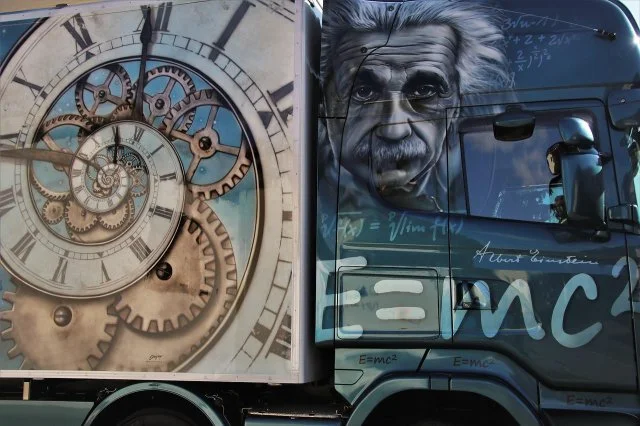
Einstein’s Paradigm Shift in Understanding the Universe
In 1905, a pivotal moment in science occurred that reshaped our understanding of physics: Albert Einstein introduced his special theory of relativity. Before this, the conventional scientific narrative relied on four simple coordinates to define any event in the universe: three spatial dimensions combined with one time component. This linear approach was effective, but it overlooked one critical insight: the nature of observation itself. Einstein revealed that every observer's experience of time and space could vary dramatically depending on their relative motion and position. This means that an event, perceived by one observer as occurring simultaneously with another, could be interpreted quite differently by a second observer in motion. Hence, space and time emerged as inherently relative concepts rather than fixed absolutes.Testing Time Dilation: A Misunderstanding Corrected
Einstein anticipated the practical implications of his theories, notably time dilation—the phenomenon where a moving clock ticks slower compared to a stationary one. He envisioned a practical experiment involving two clocks: one stationed at the equator, moving at about 1670 km/h, and another fixed at one of the Earth's poles. His expectation was that measurements from these two clocks would differ due to their relative velocities. However, Einstein’s initial assumptions missed one key aspect: the effects of gravity. Equatorial clocks experience a slight advantage due to their speed, but the stronger gravitational field at the poles counteracts this, leading both clocks to tick in sync. It wasn’t until 1971 that scientists adequately tested this concept, revealing that the interplay of gravitational effects and relative motion was far more complex than Einstein first outlined.Digging Deeper: Gravity’s Role in Time
As experiences with time and gravity deepened, it became clear how much gravitation influences temporal measurements. Near a massive body like Earth, where gravitational forces are intense, time indeed flows more slowly. Interestingly, the slight variations in gravitational pull between the equator and the poles—where the latter is about 0.4% stronger—lead to consequences that defy initial expectations. This gravitational time dilation perfectly counterbalances the time dilation from speed due to the Earth’s rotation. Thus, when analyzed correctly, both effects—relative motion through space and gravitational influence—must be combined to offer a full understanding of time across different observers.Empirical Evidence: The Need for Modern Precision
Initially, time dilation might have been a theoretical puzzle, but significant advancements in atomic clock technology provided a pathway to test Einstein's theories empirically. The changes in how time is measured reflect an ongoing journey to clarify concepts that were once abstract. Before the introduction of atomic clocks, earlier timekeeping methods lacked precision, leading to inaccuracies in this critical area of scientific inquiry. The development of atomic clocks in the mid-20th century marked a pivotal shift. Utilizing the vibrational energy of atoms to gauge time, these clocks unlocked a level of accuracy previously deemed impossible. In 1959, the groundbreaking Pound-Rebka experiment further validated some of these principles, showcasing the effects of gravitational time dilation with gamma rays emitted and absorbed at different heights on Earth.The Hafele-Keating Experiment: Bringing Theory to Reality
In the early 1970s, the Hafele-Keating experiment began to take shape, integrating atomic clock technology into a venture that would bring Einstein’s theories off the chalkboard and into the skies. Physicist Joseph Hafele, along with astronomer Richard Keating, proposed a flight experiment that flew atomic clocks around the globe, one while remaining stationary. This experiment not only tested the predictions of special relativity but also brought into play the intricacies of general relativity. By strategically choosing routes and clock placements, they aimed to illustrate exactly how time could vary under different velocities and gravitational influences. In a world where empirical data often lagged behind theory, this test represented not just scientific curiosity but a significant convergence of ideas and methodologies.As the experiment unfolded, it became clear that time isn’t just a construct; it’s intricately tied to the fabric of space and influenced heavily by motion and gravity. If your work involves anything related to physics or high-speed travel, understanding these dynamics is non-negotiable. The clock isn’t ticking uniformly across the universe, and the implications extend well beyond academic discussions. By acknowledging these complexities, we appreciate not only Einstein's brilliance but also the evolving landscape of modern physics.
Discussion
Sign in to join the discussion.