IBM's new modular quantum fridges may enable fault-tolerant quantum computing by 2029, overcoming key infrastructure challenges in the field.
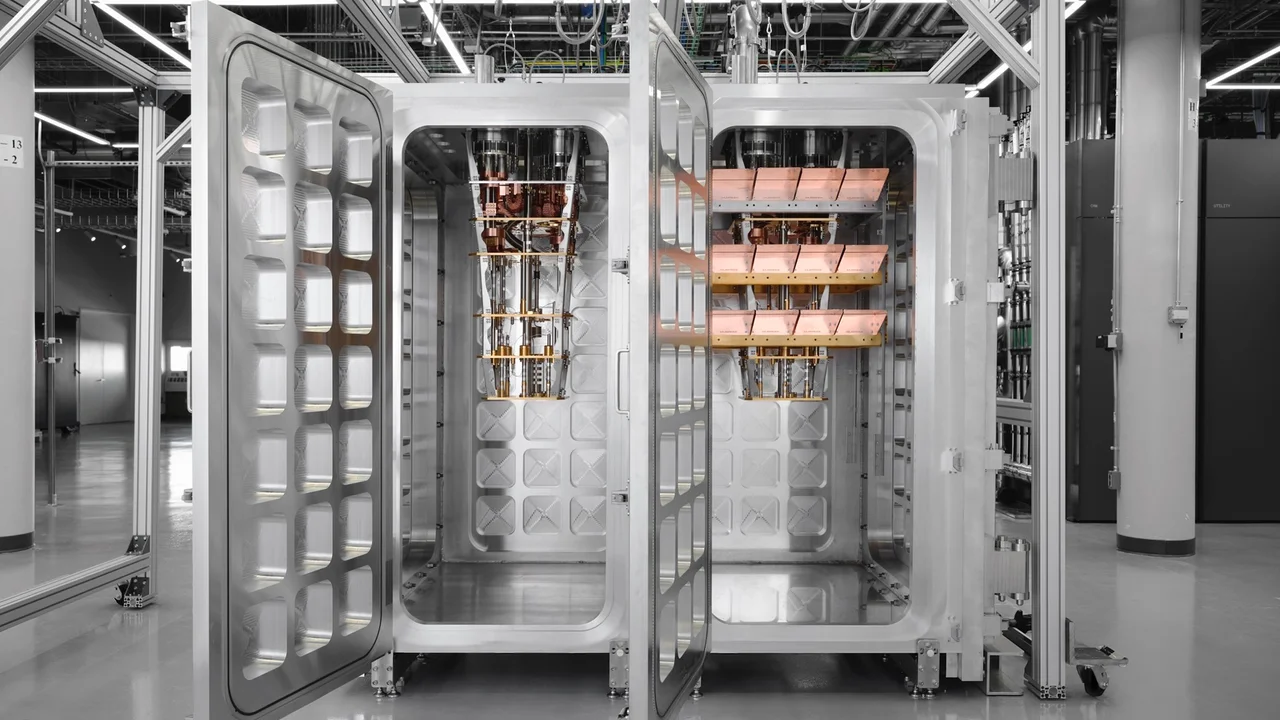
IBM has taken a significant step forward in quantum computing with the unveiling of a new modular ultracold system, designed to link multiple quantum computer chips effectively. Dubbed "quantum fridges," this technology aims to tackle one of the major infrastructure challenges that has hindered the development of stable and fault-tolerant quantum computers.
The company's ambitious timeline suggests that the world may see its first fault-tolerant quantum computer by 2029, leveraging advanced quantum error correction techniques to address noise in real-time. This capability allows quantum operations to be conducted without the typical interruptions that plague existing systems.
Impact on Research and Applications
The realization of fault tolerance in quantum computing could revolutionize research across various domains, including chemistry, materials science, and theoretical physics. Researchers would be able to perform quantum calculations that surpass the capabilities of modern supercomputers without worrying about error rates undermining their results.
Historically, transitioning from error-prone systems to fault-tolerant superconducting quantum computers has been stymied by the limitations of existing infrastructure. IBM's leaders are confident that its interlinked quantum fridges, described as modular and interconnected, will address these challenges by enabling higher operational efficiencies.
Design and Operational Efficiency
The new cryogenic systems feature individual units that are 8 feet (2.4 m) tall and 8 feet wide, with a usable inner capacity of approximately 9 cubic feet (0.25 cubic m). Comparable to traditional household refrigerators, these quantum fridges can reach temperatures as low as 10 millikelvins (−459.65 degrees Fahrenheit or −273.14 degrees Celsius), making them more than 180 times colder than deep space. Such low temperatures are essential for the proper functioning of IBM's superconducting quantum processing units (QPUs).
What differentiates these quantum fridges is their modular design, a significant upgrade that allows engineers to expand capabilities incrementally. This modular approach facilitates a scalable architecture and optimizes power distribution while simplifying maintenance.
IBM claims this bold innovation marks the first instance in which scientists have successfully demonstrated interconnectivity among QPUs across separate cryogenic modules. Components like helium cryo-compressors and commercial dilution refrigeration engines are used for cooling, while advanced thermal protection technologies—such as vacuum-sealed enclosures and multilayered insulation—help maintain these extreme temperatures.
Advancing the Modular Approach
In superconducting quantum computers, built-in circuits or gates facilitate processing operations. However, each chip has a finite qubit capacity and requires sub-15 mK cooling for optimal functioning within IBM's architecture. Tremendous care is necessary to minimize noise and maintain performance as qubits, being inherently noisy, are more prone to errors than their classical counterparts.
To address the infrastructure needed to house an expanding number of chips, IBM's quantum fridges connect modules through "L-couplers," superconducting cables up to about 3.3 feet (1 meter) long. "Normally when we conduct quantum operations between qubits, we do them on-chip," explains Oliver Dial, vice president of quantum operations at IBM. "What the L-couplers enable us to do is engage with known entanglement techniques over larger distances, which is vital for our modular designs."
Aiming for Fault-Tolerant Quantum Computing
IBM plans to launch its modular cryogenic architecture by 2027, initially supporting two to three cells configured to manage around 1,000 qubits overall. With the goal of achieving 100 million gates—equivalent to 100 million quantum operations—in a single session by 2029, the launch of its "Starling" quantum computer stands to redefine the capabilities of quantum systems.
However, the road ahead involves overcoming pivotal challenges, including conducting computations across multiple interconnected modules. So far, the interconnection of two cryogenic modules has been established, allowing for simultaneous cooling to operational temperatures. While initial operations have been conducted using basic gate operations with the "Flamingo" processor, more complex computations involving the current generation of Nighthawk processors are set to follow.
IBM representatives remain optimistic about achieving its vision for the "Starling," potentially claiming the title of the first fault-tolerant quantum computer. Yet, the competitive nature of quantum computing suggests that the race for this milestone will be intense, with other companies equally determined to reach similar breakthroughs.
With its advancements in modular quantum supremacy and the profound implications of fault tolerance, IBM is signaling its commitment to leading the next wave of quantum computing innovation. The integration of specialized engineering within their ecosystem is indicative of a broader trend that prioritizes not just theoretical modeling but practical execution in bringing about resilient quantum technologies.
For those awaiting developments in quantum computing, the conversation around fault tolerance, modularity, and the scientific advancements that follow will be ever relevant.
Discussion
Sign in to join the discussion.