Recent genetic findings challenge long-standing assumptions about women's power and status in prehistoric societies, revealing a more complex social structure.
In recent years, archaeological studies are reexamining the historical narrative surrounding women in ancient societies, driven by advances in genetic analysis. The revelation that a prominent grave near Stonehenge, long thought to belong to a man, actually contained the remains of a skilled goldsmith woman underscores a significant shift in understanding gender roles in prehistory.
This finding, announced in July, is emblematic of a broader trend. In 2017, the discovery of a female warrior leader's remains in a Viking burial in Birka, Sweden, also faced skepticism, with some academics hesitant to reinterpret traditional beliefs about gender hierarchy. For too long, the predominance of patriarchal assumptions has clouded the credibility of archaeological interpretations concerning women's contributions and status.
Challenging Historical Biases
Interestingly, the assumption of strict male dominance in historical societies mostly took root in the late 19th century. Scholars in the 1860s noted instances of powerful women in ancient texts but gradually succumbed to the notion that patriarchal societies had been the norm since the rise of the Greeks. This reversal in perspective marginalized women's roles for over a century.
For instance, David Clarke, a key figure in archaeology during the 1970s, characterized hillforts as "territorial centers for the exchange of lower order goods, stock and women," effectively reducing women to mere commodities. Similar sentiments echoed in the remarks of Peter Hinton, who dismissed grave goods buried with women as mere symbols of male wealth, insisting that high-status women had no historical precedent.
Emerging Evidence of Female Power
As archeologists in Germany began exploring Early Iron Age Europe, the narrative around female agency started to evolve. Excavations at sites like the Heuneburg hillfort led to discoveries of significant high-status women, challenging previous misconceptions.
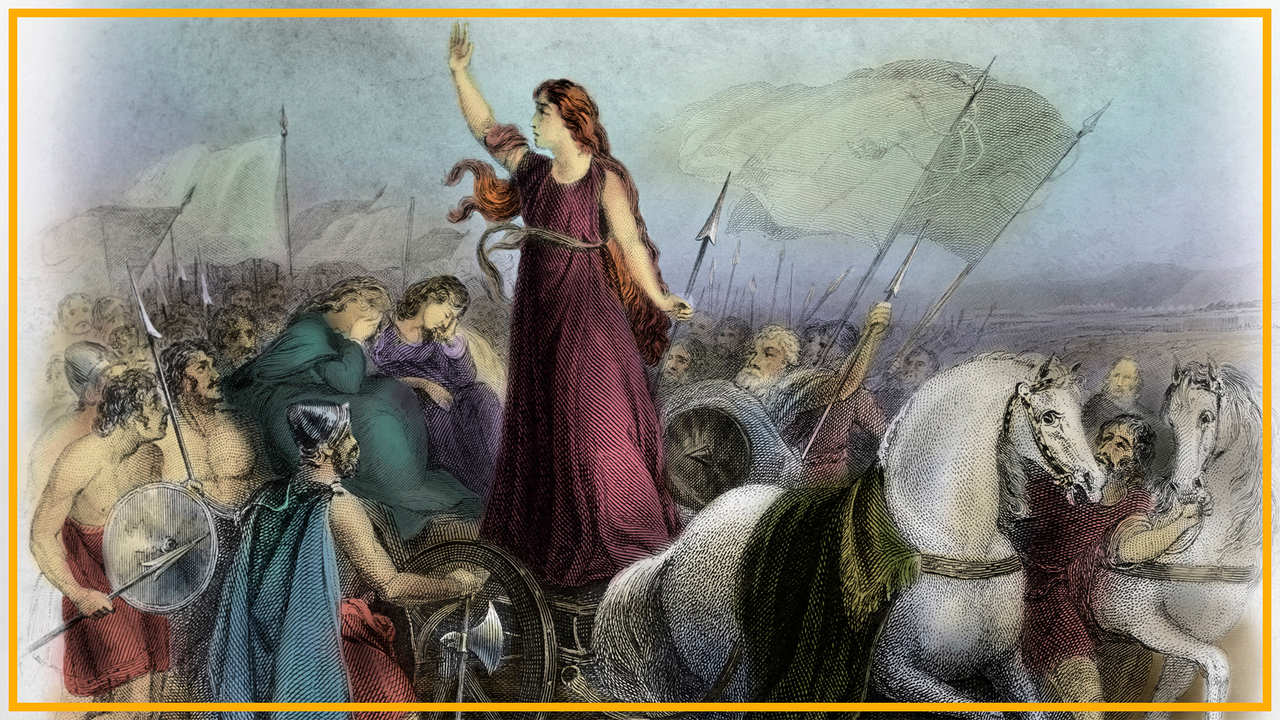
By the 2000s, research suggested a more equitable treatment of genders in burial practices across various cemeteries in France and Britain. Additionally, analysis of skeletal remains indicated that some women participated in warfare, supporting historical accounts like those of Boudica, who resisted Roman rule.
Genetic Analysis Reshaping Understanding
Fast forward to 2025: a comprehensive study at the Neolithic site of Çatalhöyük is shedding light on female lineage prevalence during the early agricultural era. This genetic evidence implies that inheritance norms could have favored women, pushing back against the narrative that women were relegated to a secondary role in lineage and societal contributions.
Throughout the 20th century, Marija Gimbutas proposed insights into matriarchal societies based on earlier archaeological findings, but her views were largely dismissed by subsequent generations. However, the new genetic evidence from Çatalhöyük revives her theories, suggesting that community organization during the agricultural revolution may have hinged on women’s roles and land rights.
Diverse Social Structures Across Regions
Notably, the dynamics among prehistoric communities were not uniform. Research conducted in 2022 on a long barrow in Gloucestershire, England, indicated instances of polygyny, highlighting alternate social structures where multiple women shared a single male partner. This contrasts with Bronze Age findings on Orkney, which suggested that descent—both social and familial—was primarily traced through the male line.
Meanwhile, evidence supporting matrilineal succession continues to accumulate. In 2024, findings from the Max Planck Institute highlighted dynastic succession patterns that emphasized female lineage—pointing to enduring hierarchies where women held significant power.
Looking Ahead
As more discoveries come to light, it becomes increasingly clear that the narratives of prehistoric societies are intricate and multifaceted. Archaeology is beginning to portray a tapestry where the social hierarchies based on gender were more complex than the historically male-centric view suggests.
As L.P. Hartley aptly noted, "the past is a foreign country; they do things differently there." Each region and era, from hillforts in England to agricultural hubs in Anatolia, seems to reveal diverse social norms that elude simple categorization. Acknowledging this complexity while striving for objectivity will be essential as the field moves forward. New evidence fosters a more inclusive understanding of humanity’s past and illustrates that the roles of women were far from peripheral.
The continuous unraveling of these narratives not only enhances our understanding of human history but also prompts us to reflect on contemporary discussions regarding gender roles today, ultimately reshaping our perspective on societal structure and influence throughout time.
Discussion
Sign in to join the discussion.