NASA's latest images reveal a 60-foot crater on the moon, formed by the impact of a SpaceX Falcon 9 upper stage following its launch in January.
NASA’s Latest Lunar Discovery
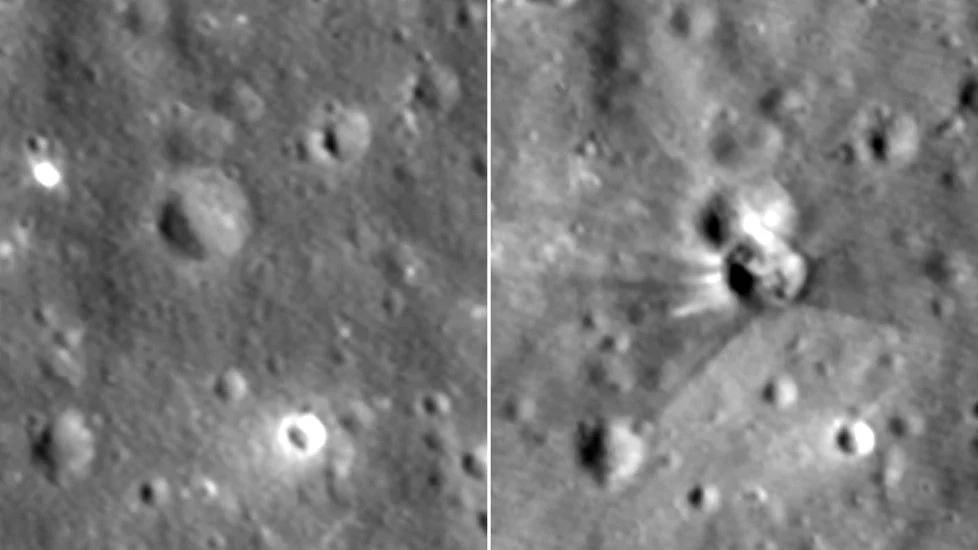
NASA has unveiled striking images of a new crater on the lunar surface, measuring about 60 feet wide, created by the upper stage of a SpaceX Falcon 9 rocket that crashed into the moon on August 5. Captured by the Lunar Reconnaissance Orbiter (LRO) between August 11 and 12, these images showcase the crater and the lunar debris scattered around it, a direct result of the high-speed collision.
Background on the Falcon 9 Mission
The Falcon 9 rocket, launched on January 15, 2025, was tasked with delivering two lunar landers to the moon. Unlike its reusable lower stage, which can return safely to Earth and be refurbished for future missions, the upper stage is intended to be discarded in space after use. As it approached the end of its operational life, the 4.4-ton upper stage was influenced by solar radiation and the moon’s gravitational field, propelling it on a collision course with our natural satellite.
This overlap of space engineering and planetary science raises interesting questions about the increasing presence of human-made objects on celestial bodies. As commercial space endeavors grow, the potential for such impacts may lead to not only new craters but also long-term effects on lunar geography and possibly even local ecosystems.
Challenges in Locating the Impact Site
Locating the exact site of the impact was no small feat. NASA reported that it required collaboration among global enthusiasts and experts—a testament to the active community engaged in lunar observations. The crash site is near Einstein crater on the moon’s northwestern edge, which was illuminated by the sun at the time of the strike. This lighting condition rendered the initial explosion invisible from Earth, complicating early tracking efforts.
The Physics of the Impact
Complicating the tracking efforts, the rocket stage hit the lunar terrain at an estimated speed of 5,400 mph. While it may seem fast, this speed is significantly slower than the typical meteoroid impacts on the moon. These meteoroids can collide at speeds ranging from 45,000 mph to over 160,000 mph. Consequently, this slower impact led to a smaller crater, making it more challenging to detect and study. You'll find that most lunar craters from natural impacts are far larger due to the extreme velocities involved.
However, the slower speed of the Falcon 9 stage still posed questions for scientists about impact mechanics. How does a human-made object interact with such an ancient, geologically stable surface? The relatively low-speed impact could become a point of reference for understanding future collisions from space debris.
Observations of the Impact Site
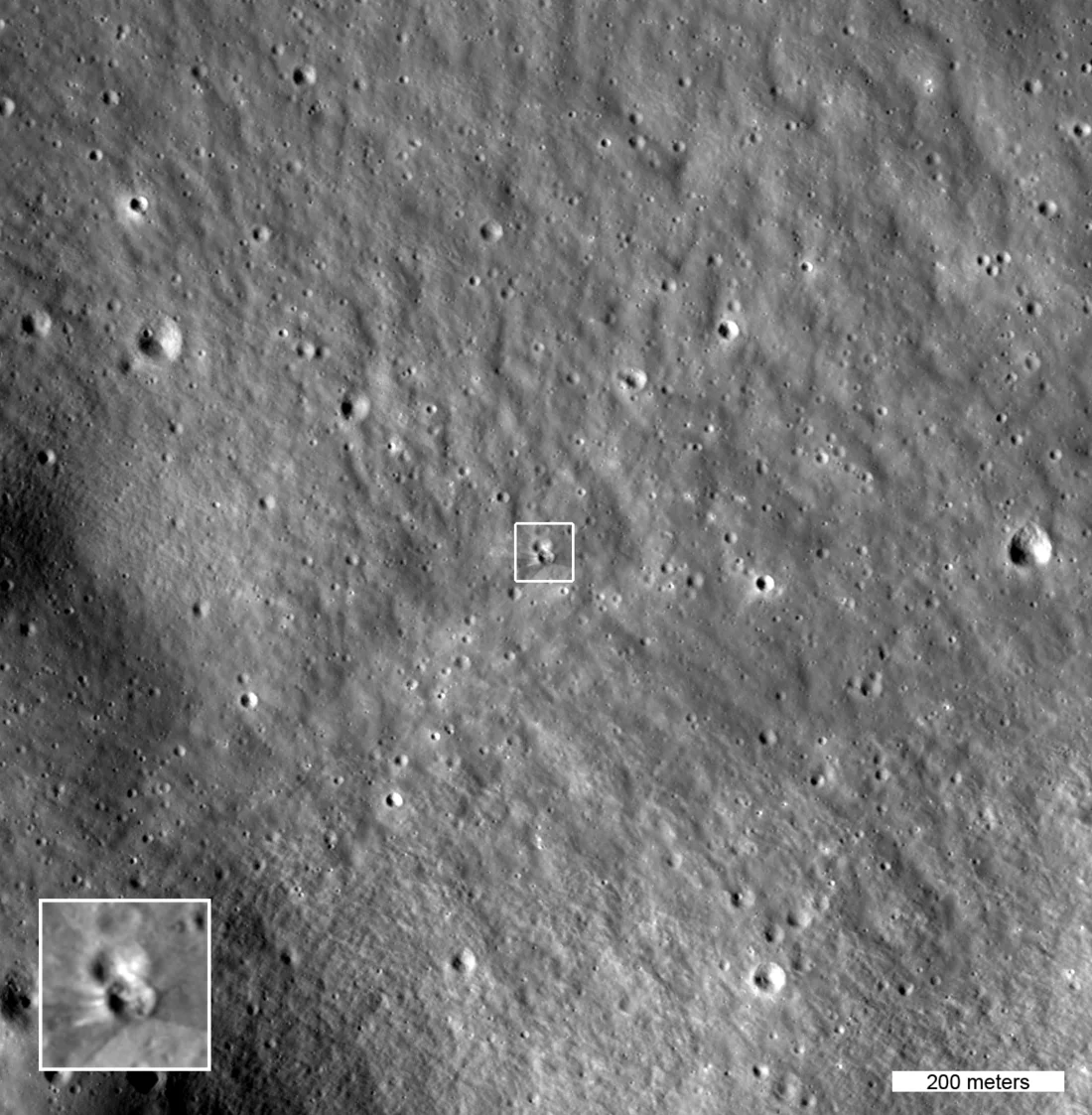
The first observations of the site occurred shortly after the impact, with South Korea’s Danuri lunar orbiter releasing initial images of the helmet-shaped crater on August 6. Subsequently, NASA's LRO revisited the site six days later to document the same area.
It's fascinating how multiple space agencies and entities are increasingly collaborating on lunar missions. This cooperation provides a broader understanding of how human activity affects celestial bodies. This partnership will likely become vital as lunar exploration intensifies.
High-Resolution Imaging Techniques
According to NASA, the LRO uses a Narrow-Angle Camera to capture detailed images of the lunar surface. This capability allows scientists to view the crater from multiple perspectives, refining their estimates of its size and characteristics. The images reveal that the crater extends roughly 60 feet wide and is less than 10 feet deep.
This data is significant for lunar geology. The precise measurements of crater dimensions help scientists understand the mechanics of impact processes. Assessing such craters adds to the existing database, allowing for better models of how impacts shape lunar geography.
The Implications of the Findings
Among the notable features captured in the images are lighter and darker streaks radiating from the crater, indicative of dust and rocks propelled outward during the impact. The darker materials represent freshly disturbed lunar soil, while the lighter-toned debris consists of older rocks from the subsurface, enhancing our understanding of the moon's geological history.
(and this is the part most people overlook) The implications of such findings are considerable; they inform not only scientific inquiry but also future missions to the moon. If you're working in this space, the data derived from impacts like this could influence design choices in spacecraft and landers aimed at the lunar surface.
Future Outlook on Lunar Exploration and Debris Management
As commercial and governmental lunar missions multiply, the impact of human-made debris will become an increasing concern. The Falcon 9's upper stage is not an isolated case but part of a broader trend of space traffic that requires careful management. The findings from this incident could inform future regulations regarding how and where to safely dispose of upper stages and other debris.
What this means for you, whether you're an aerospace engineer, a scientist, or someone interested in space policy, is that the conversation around space debris is likely to become more pronounced. As we go further into the moon's resources and environments, understanding the effect of our presence there is more important than ever.
Discussion
Sign in to join the discussion.