A stunning image of the Corona Australis Molecular Cloud showcases new star formations alongside some of the universe's oldest stars.
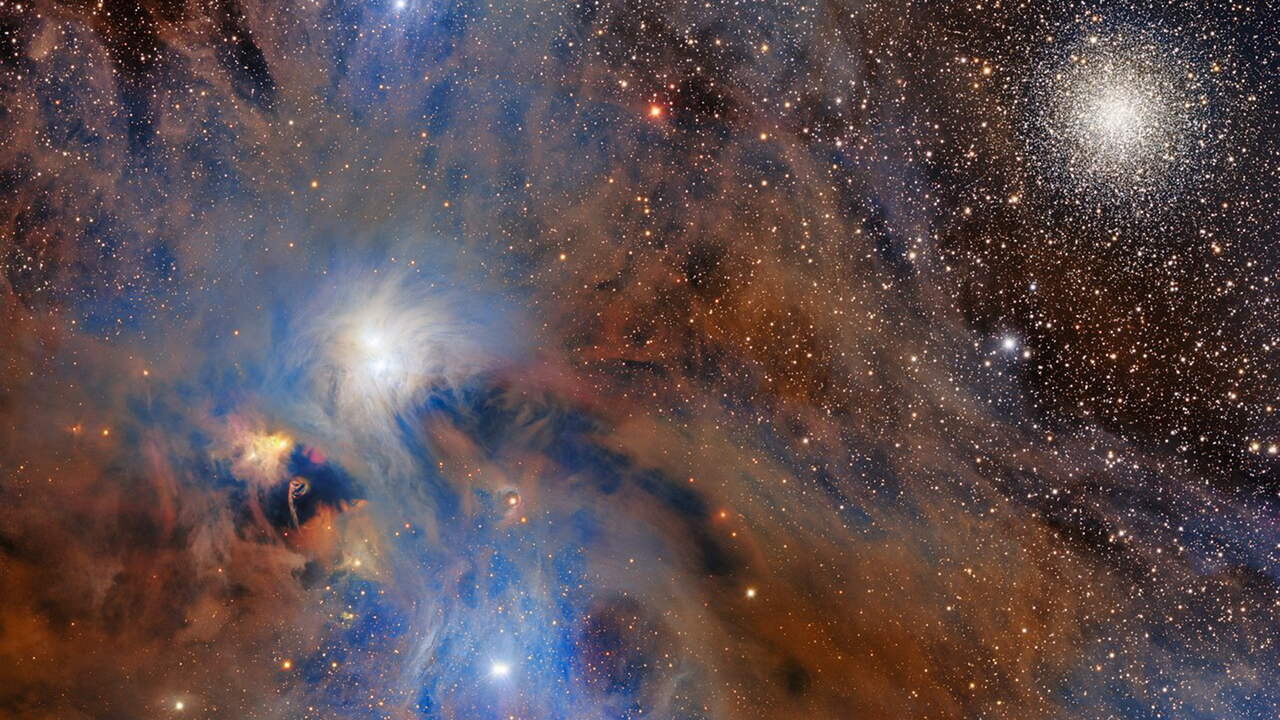
Scientists recently revealed a breathtaking image of the Corona Australis Molecular Cloud, captured by the Dark Energy Camera (DECam) on the Victor M. Blanco 4-meter Telescope in Chile. This extraordinary snapshot highlights swirling nebulae and star clusters, evoking the artistry of Vincent van Gogh's "The Starry Night."
Significance of the Corona Australis Molecular Cloud
Situated 430 light-years away in the constellation Corona Australis, this region stands out as one of the nearest active sites for star formation within our galaxy. The implications of such closeness are immense for astronomers. It means researchers can study star formation processes and stellar evolution in real time, offering richer insights into these fundamental cosmic phenomena. This area, with temperatures plunging to around minus 440 degrees Fahrenheit (minus 260 degrees Celsius), provides the necessary conditions for dense pockets of gas and dust to collapse, giving birth to new stars in this cosmic haven. Understanding star formation here helps scientists analyze how similar processes might have occurred in regions further away from Earth.
A Fusion of Old and New Stars
The image intriguingly contrasts both star-forming regions and an ancient globular cluster, NGC 6723, within a single frame. This cluster, also known as the Chandelier Cluster, lies approximately 29,000 light-years from our planet and contains stars that formed billions of years ago, with some nearly as old as the universe itself. What’s remarkable is how this juxtaposition exemplifies the dynamic processes of stellar life cycles. Hot young stars are emerging in the backdrop of relics from the universe's infancy. This duality not only fascinates astronomers but also raises questions about the lifecycle of stars and their eventual reincarnation into fresh stellar bodies. The ongoing dance between formation and extinction underscores the galaxy's perpetual transformation.
The Technical Marvel Behind the Image
Utilizing the remarkable capabilities of the 570-megapixel DECam, which boasts 74 detectors and a 1-meter-wide lens, astronomers can capture expansive views with impressive detail. Few instruments can match DECam's capacity for wide-field astronomical observations. Designed primarily for surveys, this camera is fundamentally altering how we approach celestial phenomena. It not only enhances detail but also accelerates the pace of astronomical discoveries. With its ability to observe multiple wavelengths of light simultaneously, DECam allows astronomers to paint a more vivid picture of the universe’s various components. The sheer scale and resolution of imaging made possible by such technology provide both a broader context and finer clarity, a necessity in modern astrophysics.
Key Features Captured
Within this image, the left side showcases NGC 6729, where two distinct types of nebulae emerge. The first is a blue reflection nebula caused by starlight reflecting off the dust. The second is an orange emission nebula formed through ultraviolet radiation from a young star, which ionizes the surrounding gas. This contrast not only adds depth to the image but also serves as a visual representation of different stellar processes at play. Central to NGC 6729 is R Coronae Australis, a binary star system completing its orbit every 43 to 47 years. This star system is particularly interesting because binary systems provide insights into stellar masses, compositions, and even potential planetary systems. Understanding these dynamics can inform theories about the formation of planets and their potential habitability.
A Cosmic Treasure for Enthusiasts
Despite its beauty, viewing NGC 6729 and NGC 6723 requires a Southern Hemisphere vantage point due to their location below Sagittarius. This limitation is a common frustration for amateur astronomers, who often find themselves reliant on others' astrophotographic works. Fortunately, astrophotographers and astronomy enthusiasts can explore this captivating area with a good backyard telescope. The richness of this area draws in both seasoned astronomers and new enthusiasts alike. The combination of newly formed stars and ancient stellar residents offers a fascinating glimpse into the universe’s ongoing story of creation and evolution. If you’re working in this space, you might want to consider investing your time in capturing these magnificent scenes. They reveal secrets about our galaxy’s history, all within reach.
Implications and Future Outlook
The image of the Corona Australis Molecular Cloud isn't just a stunning visual; it represents our ongoing quest for knowledge about the cosmos. Observations from such active star-forming regions can lead to significant breakthroughs in understanding how stars and planets are formed. As technology like DECam improves, we might uncover even more intricate details about the processes that govern our universe. The interesting dynamics captured in these images might even guide future missions and observatories aimed at unlocking further cosmic mysteries.
Moreover, as public interest in astronomy continues to rise, initiatives to make such astronomical phenomena accessible are increasingly important. Public observatories and citizen science projects give everyday people avenues to engage with the universe beyond mere visual admiration. The next generation of astronomers could well emerge from local astronomy clubs, inspired by images that once seemed limited to the professional realm. After all, these images represent not only art but a bridge to understanding our origins and potential futures.
Discussion
Sign in to join the discussion.