Research reveals that some animals may use distinct vocal labels similar to names, challenging our perception of animal communication.
Humans often identify themselves and others through names, a practice that extends to our pets as well. This leads to a compelling question: do other animals communicate with distinct identifiers akin to names? Recent studies suggest that some mammals and birds employ unique vocalizations that function similarly to names, although interpretations among scientists vary.
Dolphins and Their Signature Whistles
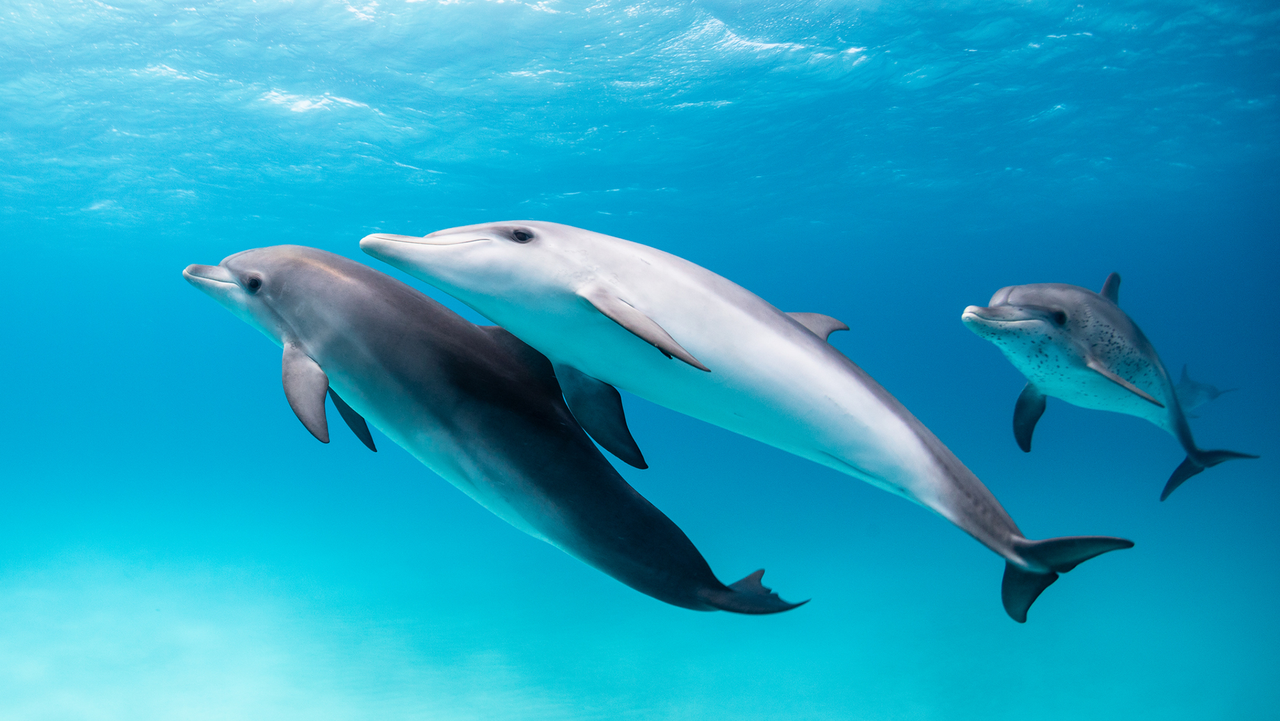
In a landmark discovery during the 1960s, researchers found that young bottlenose dolphins (Tursiops) create signature whistles that serve as individual identifiers. These distinctive sounds can be communicated and recognized by other dolphins, facilitating social interactions much like our use of names. Experiments have demonstrated that when one dolphin's whistle is played back to another, it responds and sometimes mimics the sound in an effort to initiate contact. Kelly Jaakkola, a cognitive psychologist from the Dolphin Research Center in Florida, asserts that dolphins seem to link these whistles with specific individuals, allowing them to identify friends and associates in their complex social structures.
Elephants and Their Unique Vocalizations
Another intriguing case is that of African elephants (Loxodonta), which have been shown to use specific low-frequency rumbling sounds unique to each individual. A preprint study published in 2023 has indicated that elephants respond more actively when their “name” is called through playback of these unique sounds. According to Michael Pardo, a behavioral ecologist at Colorado State University, elephants not only respond to their calls but display greater social engagement when they hear their individual sounds. This hints at the possibility of a naming system, although further peer-reviewed research is necessary to validate these findings.
Parrots and Social Naming
Similarly, research into spectacled parrotlets (Forpus conspicillatus) indicates they might utilize vocal labels for recognition among peers. In controlled environments, these small South American parrots seem to employ specific sounds to refer to each other. A survey of parrot owners found that many birds learned vocal labels for individual humans and pets, showcasing an understanding of social dynamics within their context. However, it remains a topic of debate whether these learned vocalizations extend to a true understanding of names or are merely mimicked behaviors.
Understanding Naming: Criteria and Challenges
The definition of what constitutes a “name” in the animal kingdom is complex. Jaakkola proposes that, to qualify as a name, a vocalization must reference an individual, signify that individual in the user's mind, and be mutually recognized among the group. While dolphins exhibit significant evidence aligning with these criteria, elephants, parrots, and marmosets require more investigation to substantiate naming behavior. In a study involving marmosets, it was observed that their vocalizations directed towards specific individuals were not consistently interpretable as name-like, indicating more research is needed to draw definitive conclusions.
The Evolutionary Implications of Naming
The capacity for animals to employ name-like calls seems to correlate with certain traits, particularly advanced vocal learning and sociality. These traits may have developed independently across various species, suggesting that the evolution of naming could offer insights into the complexities of animal communication and social interaction. Pardo suggests that names might serve practical purposes, especially in social groups where individuals frequently find themselves apart from one another.
Future Research Directions
Investigating the potential for naming among animals opens new avenues for understanding their cognitive abilities and the abstract mental processes involved in representing individuals. Jaakkola emphasizes that while it’s difficult to conclusively demonstrate naming in wild populations, the possibility shouldn’t be dismissed. Pardo shares this sentiment, suggesting that as research progresses, numerous species may yet reveal their capacity for name-like calls. Species such as baboons, giraffes, and crows, which exhibit complex social structures, might also possess similar vocal traits aligning with naming, although further studies are essential to explore these aspects thoroughly.
This ongoing exploration into whether nonhuman animals name one another can challenge our understanding of their cognitive abilities and the social frameworks they navigate. The implications of such findings could enrich our perspective on animal life and enhance our appreciation for the communicative complexities that exist beyond human language.
Discussion
Sign in to join the discussion.