Research reveals that the 'hobbit' species, known as Homo floresiensis, walked upright more like modern humans but retained primitive traits.
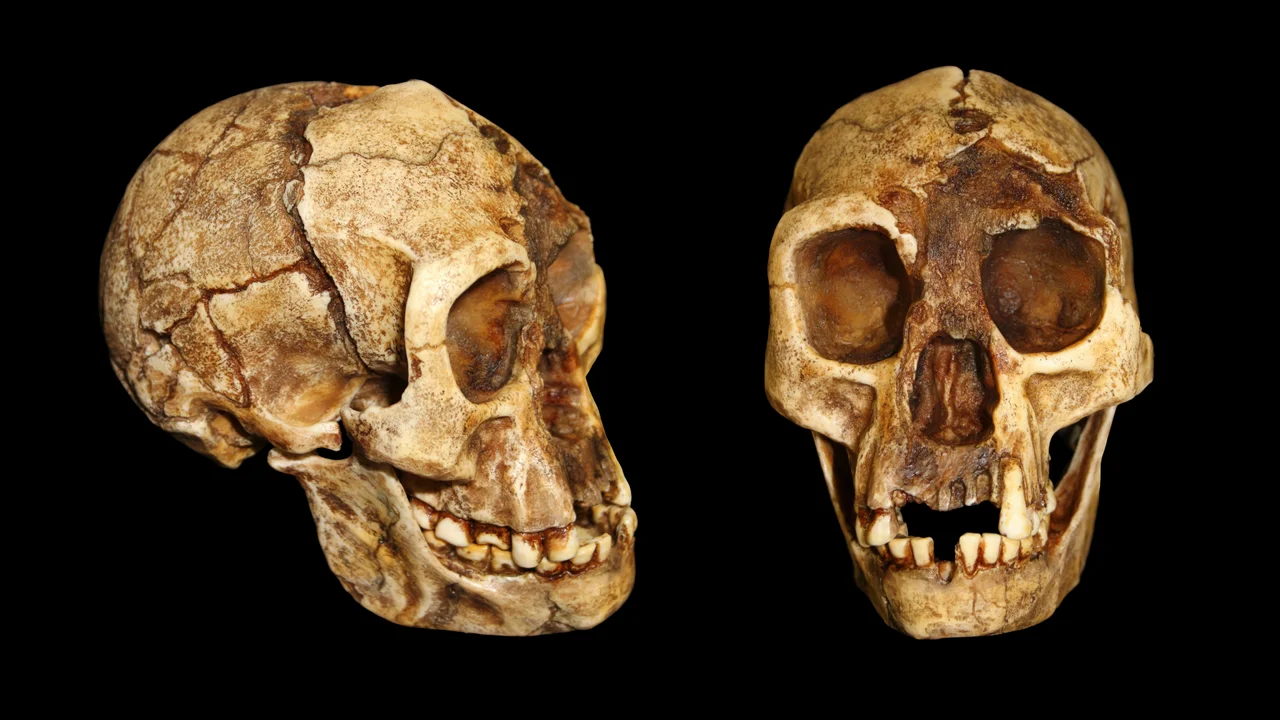
The intriguing extinct human relative, Homo floresiensis, popularly referred to as the 'hobbit,' had a more human-like physique than earlier assumptions suggest, particularly evidenced through a detailed analysis of their pelvic bones. This new understanding implies that while they walked upright, their movement was notably slower compared to modern humans.
Despite these similarities, distinct differences remain, especially regarding their hunting practices and dietary habits. The species did not engage in hunting or cooking, which contributes to the ongoing mystery surrounding their evolutionary lineage. "Based on the hip bones, H. floresiensis resembles both modern humans and other members of the genus Homo, indicating that their locomotion was somewhat akin to ours," explained Kristi Lewton, a biological anthropologist at USC. However, she pointed out that these hobbits were not swift bipeds and likely didn't cover long distances.
Lewton and her research team conducted a thorough examination of the pelvic bones belonging to LB 1, an adult female hobbit who stood around 3.5 feet tall and lived roughly 100,000 to 60,000 years ago on Flores Island, Indonesia. Their findings present an opportunity to reevaluate whether H. floresiensis is more closely related to contemporary Pleistocene human species or earlier groups like australopithecines, notably represented by the famous fossil Lucy.
Since H. floresiensis was first discovered in 2003, scholars have been puzzled over the reasons for the species' diminutive stature and its evolutionary background. The hobbits’ skeletal characteristics combine features from both human and australopithecine anatomies, complicating the determination of their ancestry. For instance, although the hand bones exhibit more traits typical of australopithecines, their shoulder structures and upper limbs align more closely with those of modern humans.
A key anatomical feature previously identified in H. floresiensis is known as iliac flare, which describes how much the hip bones extend outward from the center of the body. Greater iliac flare is generally associated with australopithecine body structure and less efficient bipedalism compared to that of modern humans. However, Lewton’s team found discrepancies in existing methods used to measure this trait across various human relatives.
The research involved a comparative analysis between the pelvic bones of chimpanzees, gorillas, australopithecines, and both historic and extant human species. Through this quantifiable approach, the team established that LB 1’s pelvic structure shares significant statistical similarities with other Pleistocene humans, diverging from both australopithecines and apes. "The findings indicate that H. floresiensis likely adopted a manner of walking that was substantially similar to humans," the study concludes.
Yet, this anatomical similarity doesn't imply their bipedalism mirrored our own. Their skeletal structure suggests a species that was not built for speed or extensive distances, possibly integrating some behaviors more common to tree-dwelling animals. "Our data aligns with previous research indicating that the LB 1 pelvis possessed predominantly human-like features," remarked Caley Orr, a paleoanthropologist who was not part of this study.
The implications of these findings point to significant variability in the physical traits of early human groups. However, as Orr aptly noted, "what this signals for the origins of the 'hobbits' remains unclear."
While the focus of the research was narrow, examining merely one area of the hobbit's skeleton, the results uphold two prevailing theories concerning their evolution. "Most evidence suggests one of two hypotheses," explained Lewton. "Either H. floresiensis descended from a population of H. erectus that arrived on Flores and underwent insular dwarfism, or it originated from a smaller-bodied, previously unidentified species of Pleistocene Homo." Essentially, they may represent a shrunk variant of H. erectus due to island conditions or a new evolution pathway altogether.
The resolution of these theories may eventually come through advances in genetic analysis, such as studies exploring ancient proteins. "However, it's likely we won't have a definitive answer for a while," Lewton added.
Test your knowledge of early humans with our human evolution quiz!
Discussion
Sign in to join the discussion.