A recent expedition in Egypt's desert revealed fossils from seven shark species, highlighting the region's rich marine history during the Cretaceous period.
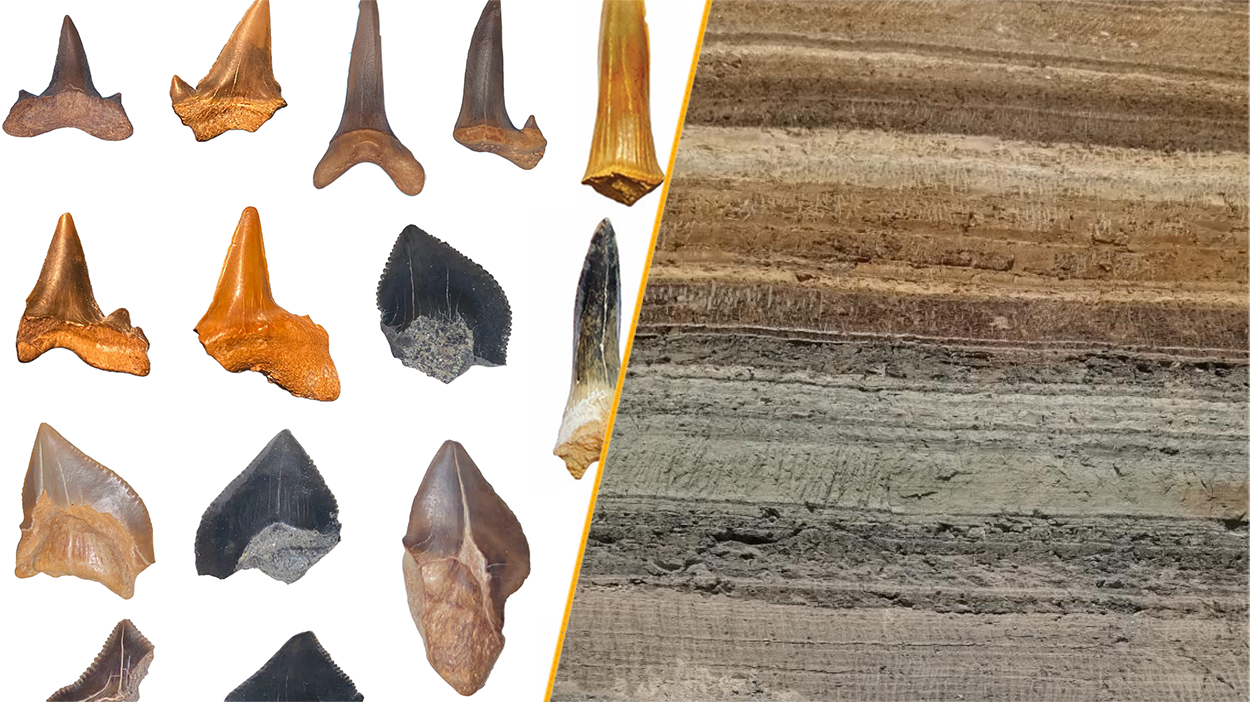
Researchers have made a significant discovery in Egypt's Western Desert, uncovering fossilized shark teeth that date back millions of years. During extensive fieldwork conducted between 2020 and 2022, scientists found remains from seven distinct shark species in the Abu-Tartur Plateau. This revelation sheds light on the area's ancient marine ecosystem, as detailed in a study published on August 18 in the journal Cretaceous Research.
According to Tarek Yassin, a paleontologist at Cairo University and lead author of the study, the findings suggest that the plateau was once submerged under a sea teeming with life. “The conditions were favorable for marine development, with suitable temperatures, light, and oxygen levels,” Yassin shared in an email with Live Science. The implications of this discovery reach far beyond a simple archaeological find; they open a window into a long-lost world, revealing the ecological dynamics of that ancient era.
The Cretaceous Context
The Cretaceous period, spanning from 145 million to 66 million years ago, was characterized by significantly warmer global temperatures and sea levels that were as much as 170 meters higher than today. Such conditions likely led to the formation of shallow seas in regions now recognized as arid deserts, including the area around the Abu-Tartur Plateau. This environment would have been ideal for diverse marine life to flourish, creating complex food webs. The relatively stable climate would have contributed to species proliferation, resulting in ecosystems rich in biodiversity. Understanding this context is essential, as it provides critical insights into how modern climates may also shape marine environments.
Geological Significance
The plateau lies along the Duwi Formation, a geological rock strata from the Late Cretaceous that extends across Egypt's Eastern and Western deserts. This area has long been a focal point for paleontological studies, revealing a layered history filled with marine fossils, including fish and reptiles. The existing research hints at a once-thriving underwater ecosystem, suggesting that regions now recognized as deserts were once dynamic habitats. This geological context is further enriched by the presence of phosphorite, a mineral derived from marine organisms' remains, which indicates nutrient-rich waters were prevalent in the ancient seas.
"We targeted phosphate-rich areas for our expeditions and were thrilled to discover shark fossils," Yassin stated about the unexpected find. This targeted approach highlights the methodical nature of modern paleontological research, where knowledge of geology directly informs strategies for fossil hunting.
New Shark Discoveries
Initially, Yassin's team identified fossilized teeth from two species of mackerel shark. However, additional expeditions uncovered a total of 14 further teeth from at least five additional species. Notably, one shark, Scapanorhynchus raphiodon, which is an ancient relative of the modern goblin shark, had never before been documented in Africa. This discovery is significant not only for its novelty but also for what it suggests about shark evolution and distribution patterns. The team also identified Serratolamna serrata and Squalicorax bassanii, species that had not previously been recorded in Egypt. These findings challenge existing assumptions regarding the range and diversity of shark species in prehistoric ecosystems, inviting further scrutiny into their evolutionary pathways.
Ecological Implications
The presence of seven shark species in such proximity suggests that this area supported a rich, diverse ecosystem, likely filled with smaller prey to sustain these apex predators. Such an assemblage reflects the ecological complexity that can exist even in environments considered inhospitable today. However, the authors caution that the coexistence of these sharks isn’t guaranteed; their remains could have been intermixed in sediment over time. This point highlights the complexities in paleontological interpretations; it raises the question of whether these species truly inhabited the same waters concurrently or if they simply drifted together in the sedimentary processes of the past. This uncertainty complicates our understanding of ancient food webs and predator-prey relationships.
Future Research Plans
The findings are just the beginning. Yassin and his team plan to pursue further research in the Abu-Tartur Plateau and adjacent areas, believing there is still much more yet to uncover in this fascinating exploration of ancient marine life. Continued excavation and analysis of sediment layers could yield further insights into this ecosystem, potentially revealing more about climate impacts on marine biodiversity through time. If you're working in this space, keep an eye on this ongoing research—it's likely to unveil even more intricate stories embedded in the rocks.
Implications for Modern Science
The discovery of fossilized shark teeth in the Abu-Tartur Plateau isn't merely an academic exercise; it poses vital questions about how ancient ecosystems adapt to changing environmental conditions, which may parallel contemporary concerns in marine biology. As modern oceans face unprecedented challenges from climate change and pollution, understanding these past adaptations could offer lessons on resilience and sustainability. The relationship between ancient marine species and their environment acts as a mirror, reflecting the consequences of climate shifts on biodiversity. This is more significant than it looks—insights gained today can help inform conservation strategies for modern species under threat due to anthropogenic impacts.
Think you know sharks? Test your knowledge with our engaging shark quiz!.
Discussion
Sign in to join the discussion.