The Health Risks of Wildfire Smoke and Its Growing Impact on North America
Published
Aug 27, 2026
Views
1,113
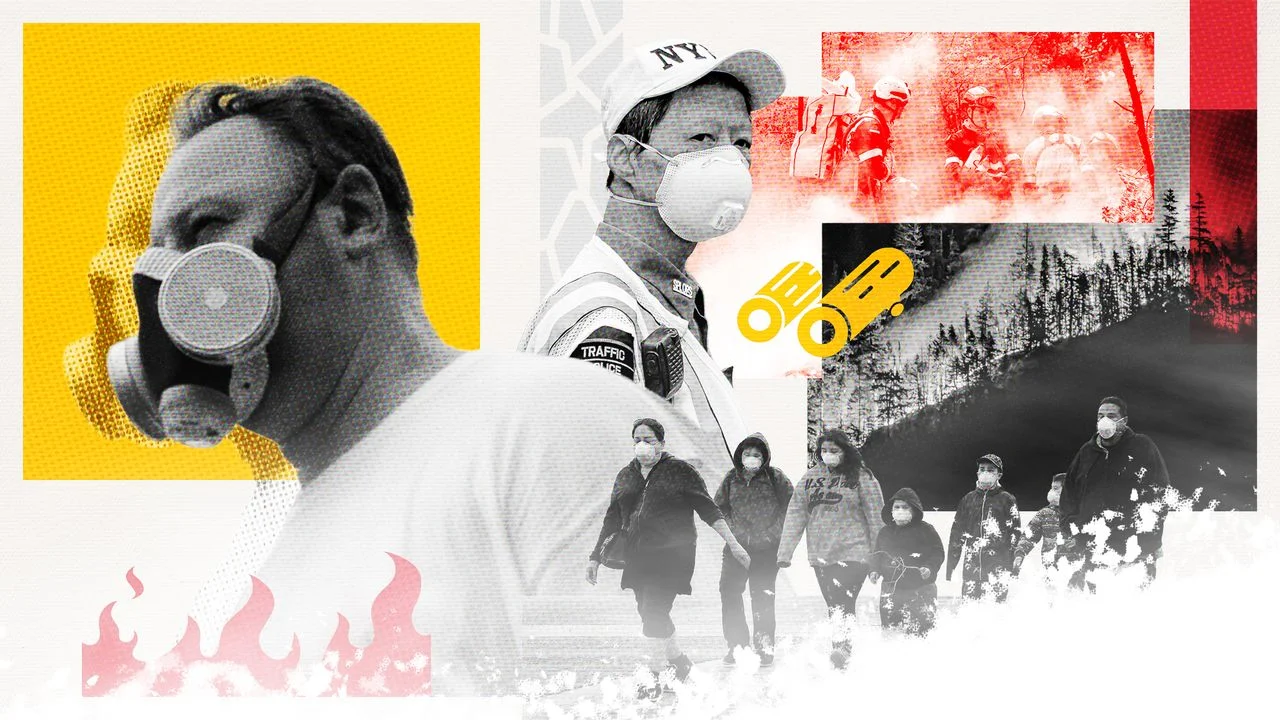
Wildfire smoke has emerged as a significant health threat, linked to increased respiratory issues and thousands of premature deaths globally.
Impact of Wildfire Smoke on Health
In mid-July, Ontario wildfires unleashed a cloud of smoke that spread across vast regions of North America, leading to hazardous air quality conditions. Just look at Grand Rapids, Michigan, where the air quality index skyrocketed to an alarming 616 on July 16, shattering its previous record of 350. Such levels are not just alarming; they signal a public health crisis. Air quality indices above 301 are classified as hazardous, putting countless lives at risk.
The health implications of smoke from these wildfires cannot be overstated. Beyond the immediate threat of flames to life and property, the smoke itself carries serious health risks. It can instigate heart conditions, exacerbate asthma, and even lead to premature births. The fallout isn't localized; it's a widespread issue that echoes as far as the East Coast, affecting millions who may not even be near the source of the fires.
A study released in 2025 estimates that the 2023 Canadian wildfire season—one of the worst on record—could shorten the lives of 87,000 individuals worldwide due to smoke exposure. Similarly, researchers found that between 2011 and 2020, wildfire smoke was responsible for 41,380 excess deaths annually in the U.S., with projections suggesting this could rise to around 71,420 by 2050 if we fail to curb greenhouse gas emissions. The severity of this issue is growing, and the data points to an alarming trend that we cannot afford to ignore.
“Wildfire smoke is the fastest-growing environmental threat [to health] in the U.S.,” noted Marshall Burke, a professor at Stanford University and a principal author on one of the pivotal studies. The implications of increasingly intense wildfire seasons reach beyond the western U.S., extending into areas that have historically been insulated from such events.
Longer and More Intense Wildfire Seasons
The evidence shows that even drastic cuts in greenhouse gas emissions will not halt the anticipated rise in wildfire activity. Greenhouse gases linger in the atmosphere for decades, leaving us with a future prone to wildfires. Mary M. Johnson, an environmental health scientist at Harvard University, lamented, "No one foresees changes in the near future that will result in decreases in wildfire." The projection isn't promising; larger, more frequent fires are on the horizon.
Globally, the concern is similarly dire. Without effective climate change mitigation, wildfire activity is projected to escalate across various vegetation types by the end of this century. For instance, data shows that from 1984 to 2015, large wildfires in the U.S. West have doubled, and the changing seasons only exacerbate the trend. A recent study highlighted that in places like Alaska and Canada, the fire season is creeping earlier as winter snow melts sooner, while the West experiences a later and prolonged season due to persistent summer drought.
How Wildfire Smoke is Poisoning the Air
With the intensification and frequency of fires comes heightened air pollution, a grim scenario for public health in the U.S. A 2020 analysis indicates that particulate pollution levels could potentially double or triple in areas like Northern California by the century's end if we continue on our current trajectory. Alarmingly, the smoke doesn't remain confined to the West; it infiltrates the East Coast and Midwest, raising serious air quality concerns nationwide.
As climate change changes weather patterns, severe events like strong winds will facilitate the spread of smoke particles over vast distances. The influence of the smoke can be felt globally; particles from the 2023 Canadian wildfires even reached Europe and Asia, illustrating the widespread nature of this problem. Mary M. Johnson emphasizes that there is no longer a safe zone to escape smoke exposure.
The composition of wildfire smoke is particularly insidious. Fine particulate matter known as PM2.5 can penetrate deeply into the bloodstream, leading to severe health issues such as heart attacks, stroke, and even cancers. Between 2006 and 2020, wildfire smoke exposure accounted for an average of 24,100 deaths each year in the U.S. alone. The link between smoke exposure and various health conditions—including neurological diseases—illustrates the long-lasting consequences of these environmental disasters.
In summary, as wildfires become an omnipresent threat, the health implications for populations in and far beyond fire-prone regions make this an urgent public health crisis. The figures surrounding excess deaths and health risks are staggering. However, there remain strategies that could help mitigate this looming disaster. Research from Burke's team indicates that controlled burns could help manage fuel loads more effectively, reducing the intensity and frequency of devastating wildfires. It's a critical intervention that could save lives and protect public health.
Discussion
Sign in to join the discussion.