New Hubble observations of the Chandelier Cluster indicate complex stellar evolution, challenging previous assumptions about globular star formation.
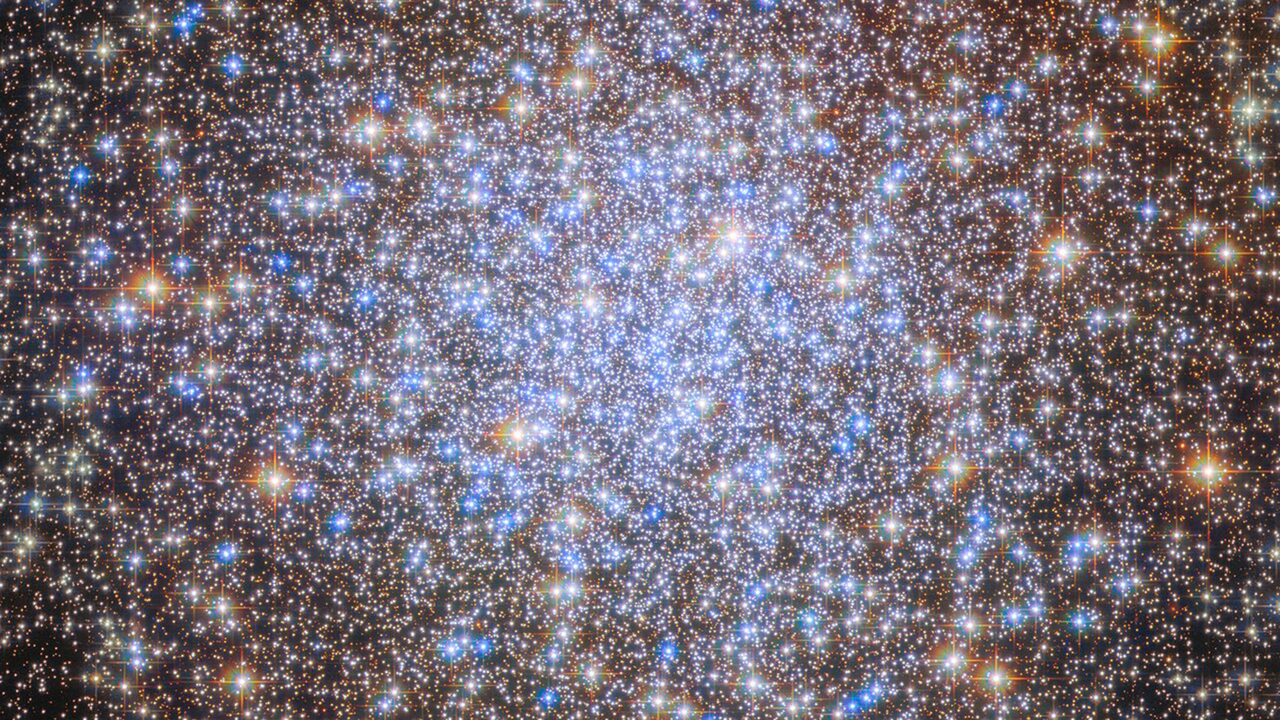
Recent high-resolution imagery from the Hubble Space Telescope provides fascinating insights into NGC 6723, commonly referred to as the Chandelier Cluster. Located approximately 27,000 light-years from Earth in the constellation Sagittarius, this globular cluster contains vast numbers of stars, possibly reaching into the millions, all bound together by gravity.
The Ancient Nature of Globular Clusters
Globular clusters like NGC 6723 are ancient, foundational structures of the Milky Way. They're more than just collections of stars; they represent some of the earliest astronomical events following the Big Bang. With many of their stars estimated to be over 10 billion years old—some potentially originating almost at the universe's dawn, around 13.8 billion years ago—these clusters hold keys to understanding cosmic history. They formed shortly after the first galaxies coalesced, preceding the development of the thin disc in which our own solar system resides. This temporal context is significant as it places these stars into a broader narrative of stellar evolution that informs our knowledge of galaxy formation itself.
A Shift in Understanding Star Groupings
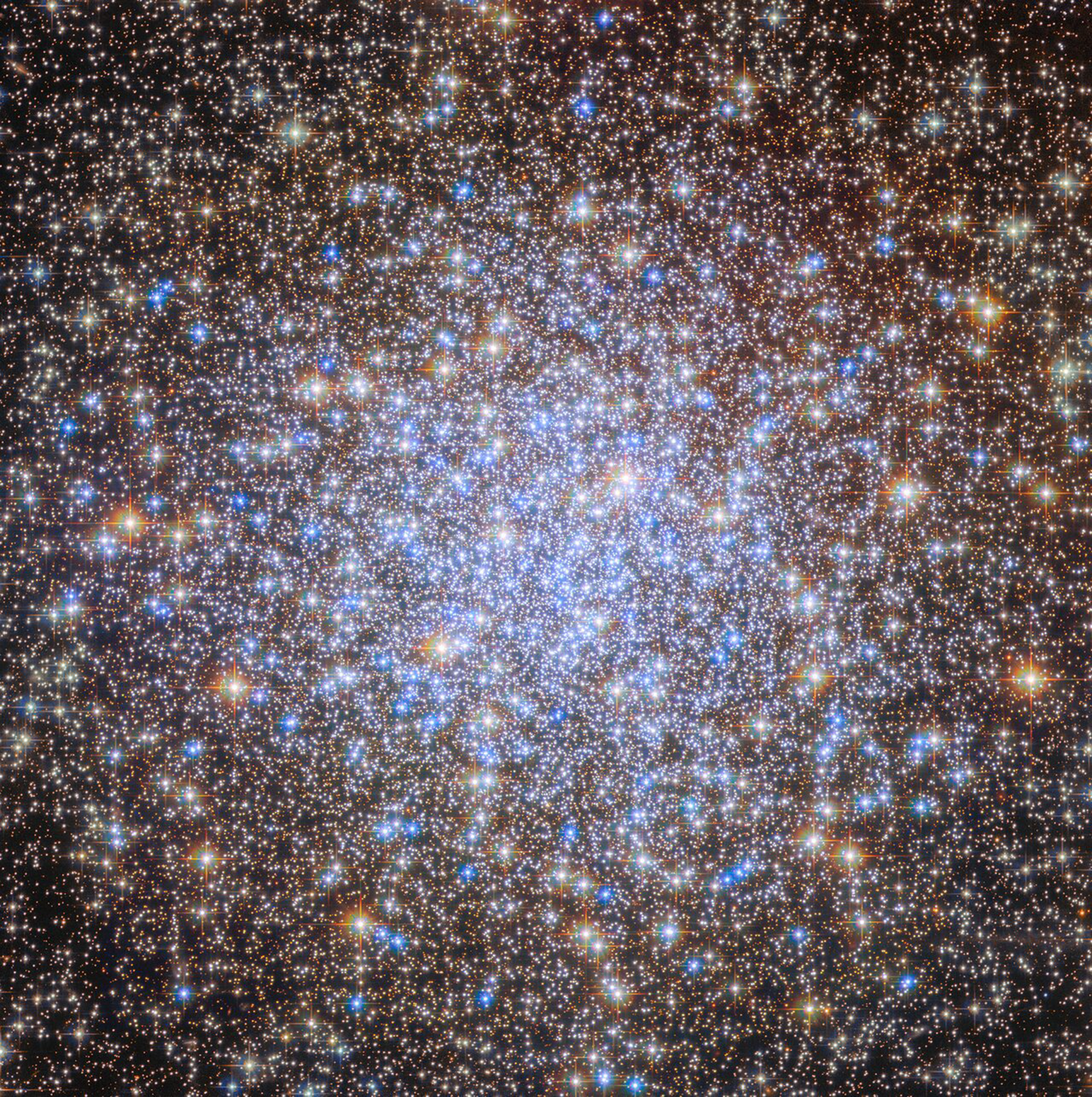
Previously, astronomers believed that all stars within a globular cluster were born simultaneously from the same material, resulting in a homogenous age and composition. However, Hubble's latest observations have unveiled a more complex reality. The core of NGC 6723 displays a high concentration of bright blue stars, starkly contrasting with older orange stars in the outer regions. This dichotomy suggests varying histories for these stellar populations, indicating that NGC 6723 experienced multiple formation periods and differing chemical compositions among its stars.
What does this imply for our understanding of star formation? Traditionally, models of star formation within clusters suggested uniformity. This new complexity indicates that conditions in early star formation were not as conducive to uniform outcomes as previously thought. The presence of both young and old stars raises questions about the processes that govern star birth and evolution, and also highlights the potential for chaotic environments within these clusters.
Migration Patterns and Stellar Evolution
Images from Hubble reveal that the structure of the cluster isn’t uniform. Research indicates massive stars tend to migrate inward over time, accumulating at the center, while less massive stars venture outward. This migration is critical to understanding the life cycle of these stars and the dynamics within globular clusters. For instance, the accumulation of massive stars at the center can create conditions ripe for further stellar interactions and subsequent formation of exotic objects, including black holes. Additional studies conducted between 2013 and 2014 showed that NGC 6723 has at least two distinct periods of star formation, with a second wave occurring about 634 million years post the initial burst. Each burst likely released energy that not only influenced nearby stellar environments but also contributed to the cluster's evolution.
Theories of Formation and Galactic Interactions
This complexity in star formation may link back to how globular clusters initially formed. One prevalent theory contends that they originated from massive gas clouds that collapsed quickly in the early universe. However, more recent simulations suggest a different mechanism: these clusters might be remnants of ancient dwarf galaxies, which have lost their outer stellar layers due to gravitational interactions with larger galaxies. This suggests that the galactic relationship between larger and smaller structures isn't just a one-way street; rather, it highlights a more nuanced interplay between galaxies that can dramatically affect their evolutionary paths.
Globular Clusters Beyond the Milky Way
Globular clusters aren’t exclusive to the Milky Way. Numerous galaxies possess similar structures, enhancing the relevance of studies like those of NGC 6723. For instance, the Andromeda galaxy is estimated to house around 460 globular clusters, while the giant elliptical galaxy M87 might contain around 15,000. This indicates that globular clusters could be both a common and significant feature in understanding the structure and evolution of other galaxies. By studying these clusters in different galactic environments, astronomers can build a more detailed portrait of how galaxies interact and evolve over cosmic time.
Implications for Cosmic Understanding
Hubble's observations continue to bridge the gap in our understanding of the universe’s formation and evolution, providing invaluable insights into the intricate histories encapsulated within clusters like NGC 6723. These discoveries enhance our grasp of the cosmos and underline the multifaceted nature of star formation processes—beckoning further investigation. If you're working in this space, consider how these findings shift our comprehension of not just individual stars but the genesis of galaxies themselves.
There's still much to learn. What does this mean for future research? As more data emerges, especially from advanced telescopes expected to come online, we might redefine our models of stellar and galactic evolution. The findings from NGC 6723 may well be just the tip of the iceberg in revealing how interconnected our universe truly is.
Discussion
Sign in to join the discussion.