After 15 years of collaboration, mathematicians have designed a set of five 60-sided dice to ensure fairness in gaming, with unique numeric arrangements.
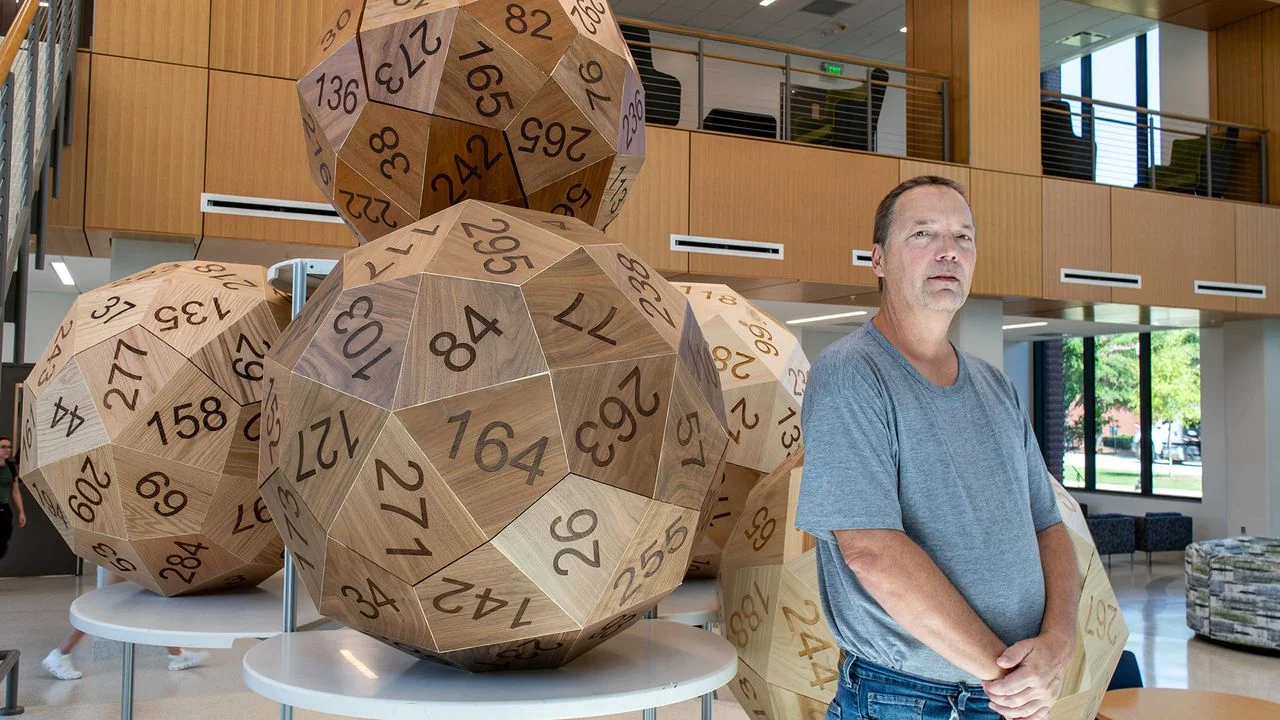
In 2010, board game designer James Ernest posed a challenging question to his friend, mathematician Eric Harshbarger, during a dinner at a gaming convention: Could they create a fair set of dice that guaranteed every player had an equal chance to go first, irrespective of the number of participants? The clarity of the requirement was straightforward—roll to determine who plays first—but achieving it presented significant complexities.
The essence of the problem was that there should be no ties or need for rerolls. Harshbarger didn't arrive at an immediate solution. Yet, that question lingered and unfolded into what is now recognized as the "go first dice" problem, with a development period spanning 15 years and encompassing collaboration with mathematicians and enthusiasts alike.
The Challenge of Equal Chances
The challenge went beyond merely ensuring that players rolled different numbers. As Harshbarger articulated, "The simple part is avoiding ties; it's the specific distribution of those numbers across the dice that becomes tricky." His task was to ensure that every possible subset of players, regardless of how many engaged, could roll and maintain equal odds.
Initially, Harshbarger teamed up with his childhood friend Robert Ford from Dalton State College, leading to a three-player solution using standard six-sided dice. Soon after, they crafted a four-player solution with 12-sided dice. By 2012, Harshbarger was presenting their work at math conferences and even began producing handmade sets, gaining a surprisingly enthusiastic market response. His passion resulted in shipping sets globally, with up to thirty packages at a time dotting his post office trips.
As they delved deeper, they revealed something even more significant: the dice configuration could determine not only the first player but the entire order of play. This property, termed "permutation fairness," became the standard against which every new set of dice was measured.
The Impossible Task
Though achieving fairness for four players was already a sizeable feat, extending this fairness to five players introduced another layer of complexity. As Harshbarger pointed out, "We're looking at more combinations than there are atoms in the universe—over 10 to the 128th power." A brute-force approach was impossible within reasonable timeframes; they needed mathematical strategies to compress the overwhelming number of possible combinations.
Despite meticulous investigation, the team often faced the same barrier: configurations were impractically large or not manufacturable. Harshbarger’s aim was to create a five-player set not only mathematically sound but also tangible enough for board gamers to use comfortably. Complex shapes like 180-sided dice simply wouldn’t meet that criteria.
Then, in mid-2023, a serendipitous email changed everything. Canadian software engineer Paul Meyer reached out after analyzing data on Harshbarger’s existing work. His algorithm managed to spotlight patterns and shorter paths to a solution that surprised even Harshbarger. Meyer successfully discovered a configuration of five 60-sided dice that met every requirement for fairness.
From Creation to Display
Previously, Harshbarger had seen his four-player sets rolled out by storefronts like Maths Gear in the U.K. and Math Art Fun in the U.S., marking a departure from handmade production. The advent of the five-player version brought another wave of excitement, especially since it presented a real opportunity for mass production.
Auburn University, which was constructing a new mathematics building, sought creative installations for the space. Harshbarger proposed oversize wooden replicas of the new five-player dice. The department embraced the idea, allowing the visualization of mathematics in an engaging manner. These wooden sculptures, crafted from five types of wood—pine, poplar, oak, walnut, and mahogany—now stand prominently in the university’s new facility.
Harshbarger emphasized the significance of making mathematics visually appealing: "The goal is to pique curiosity and provoke thought. When people encounter giant dice or small ones, they’re captivated by the shapes. We want them to realize that math is everywhere and can be exciting through such easily comprehensible yet challenging problems."
Discussion
Sign in to join the discussion.