The recent World Humanoid Robot Games in Beijing showcased remarkable advancements, with robots breaking multiple men's athletics records previously held by humans.

Humanoid robots made headlines at the 2026 World Humanoid Robot Games held in Beijing, where they surpassed numerous men's athletics world records, including those in the 100-meter sprint, 400 meters, 1,500 meters, and high jump. While these achievements don't officially replace human records due to distinct competitive categories, they spotlight the significant progress since the first such games last year.
The five-day event took place from August 22 to 26 at the National Speed Skating Oval, featuring an impressive turnout of 2,056 robots from 666 teams across 16 countries. Participants showcased their capabilities in various disciplines, spanning traditional sports like football and martial arts to practical tasks that included warehouse logistics and assembly operations.
Breaking New Records
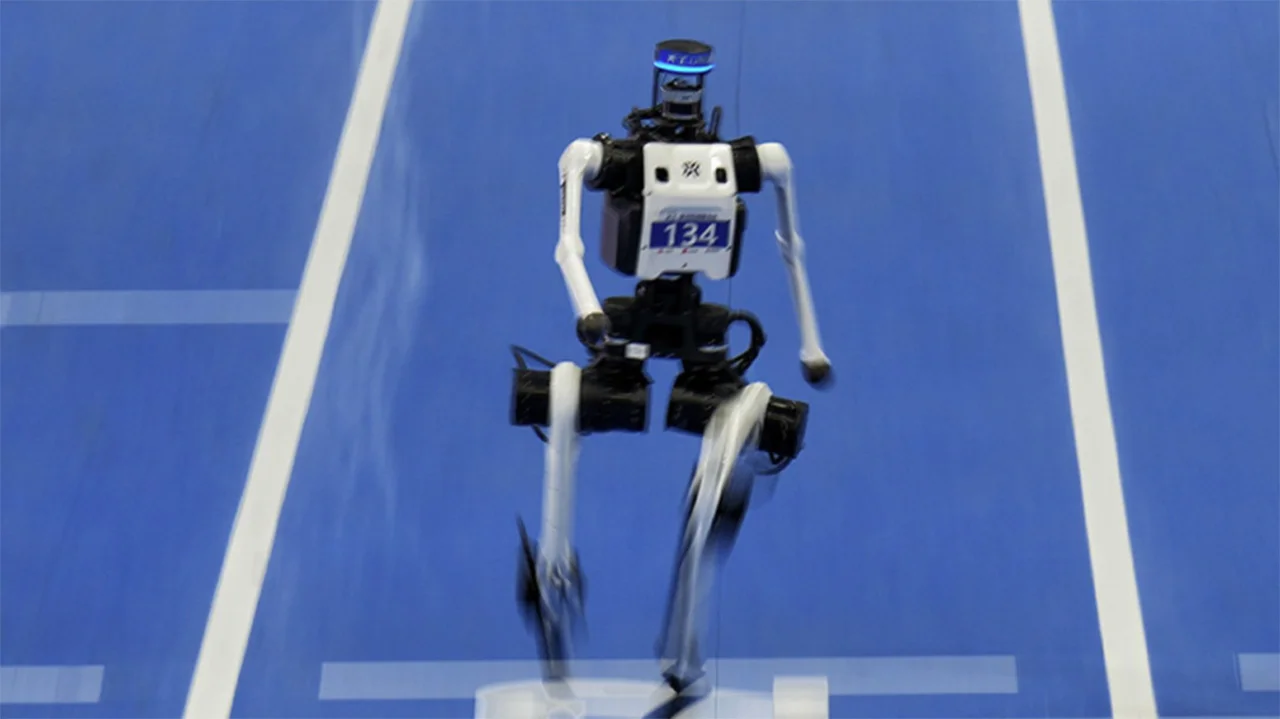
100 Meters: Tiangong Ultra clocked in at 8.64 seconds.
Human Benchmark: Usain Bolt’s record of 9.58 seconds set at the 2009 World Athletics Championships.
Robot Result: Tiangong Ultra, developed by the Beijing Humanoid Robot Innovation Center, dominated the 100m event. Starting with a time of 9.39 seconds, the robot gradually improved its performance, culminating in an outstanding 8.64 seconds in the final round—trumping Bolt’s legendary record by 0.94 seconds.
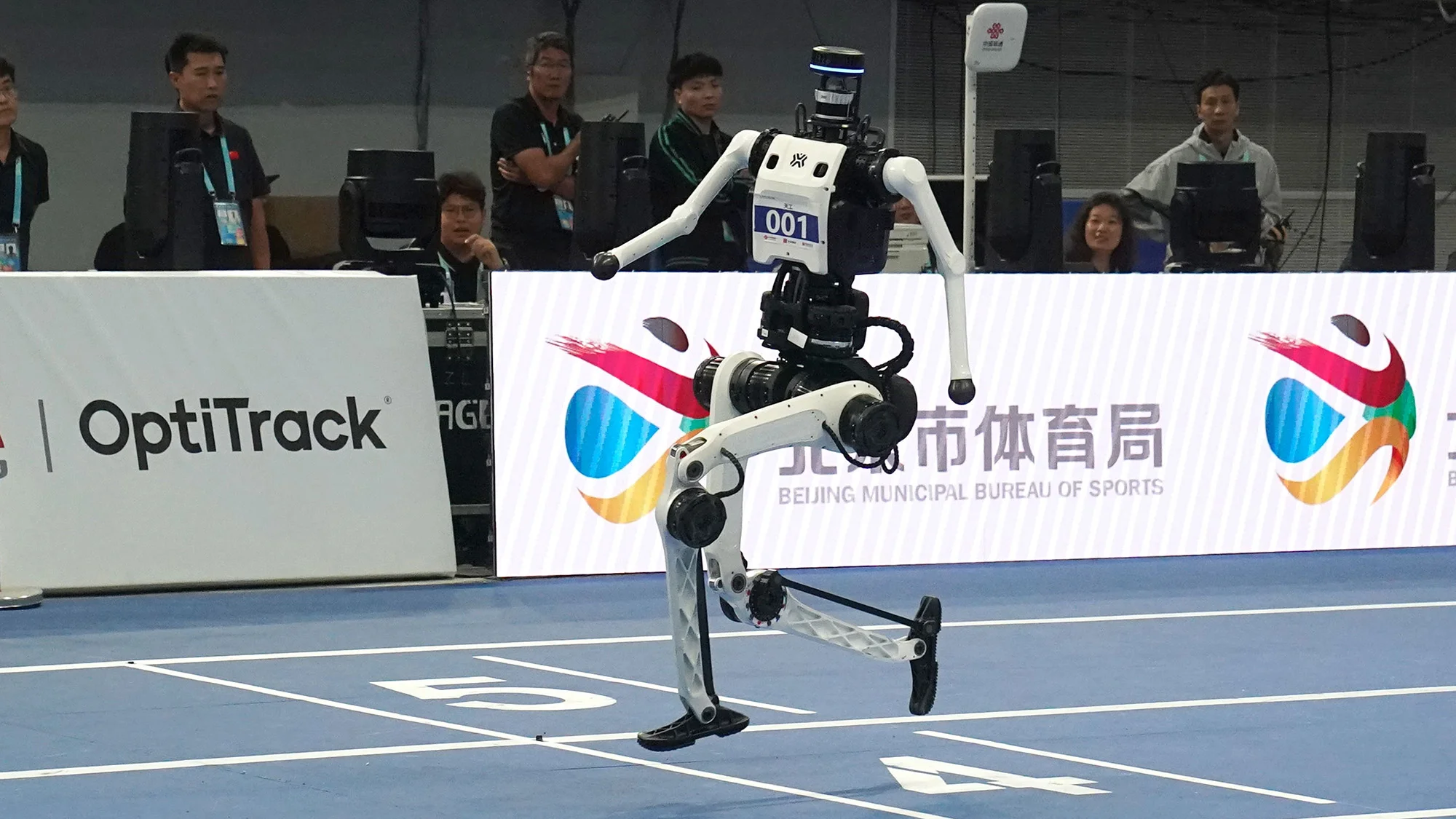
400 Meters: Tiangong Ultra finished in 38.15 seconds.
Human Benchmark: Wayde van Niekerk’s 43.03 seconds set at the 2016 Rio Olympics.
Robot Result: Continuing its stellar performance, Tiangong Ultra also dominated the 400m race, finishing nearly five seconds faster than van Niekerk's world record.
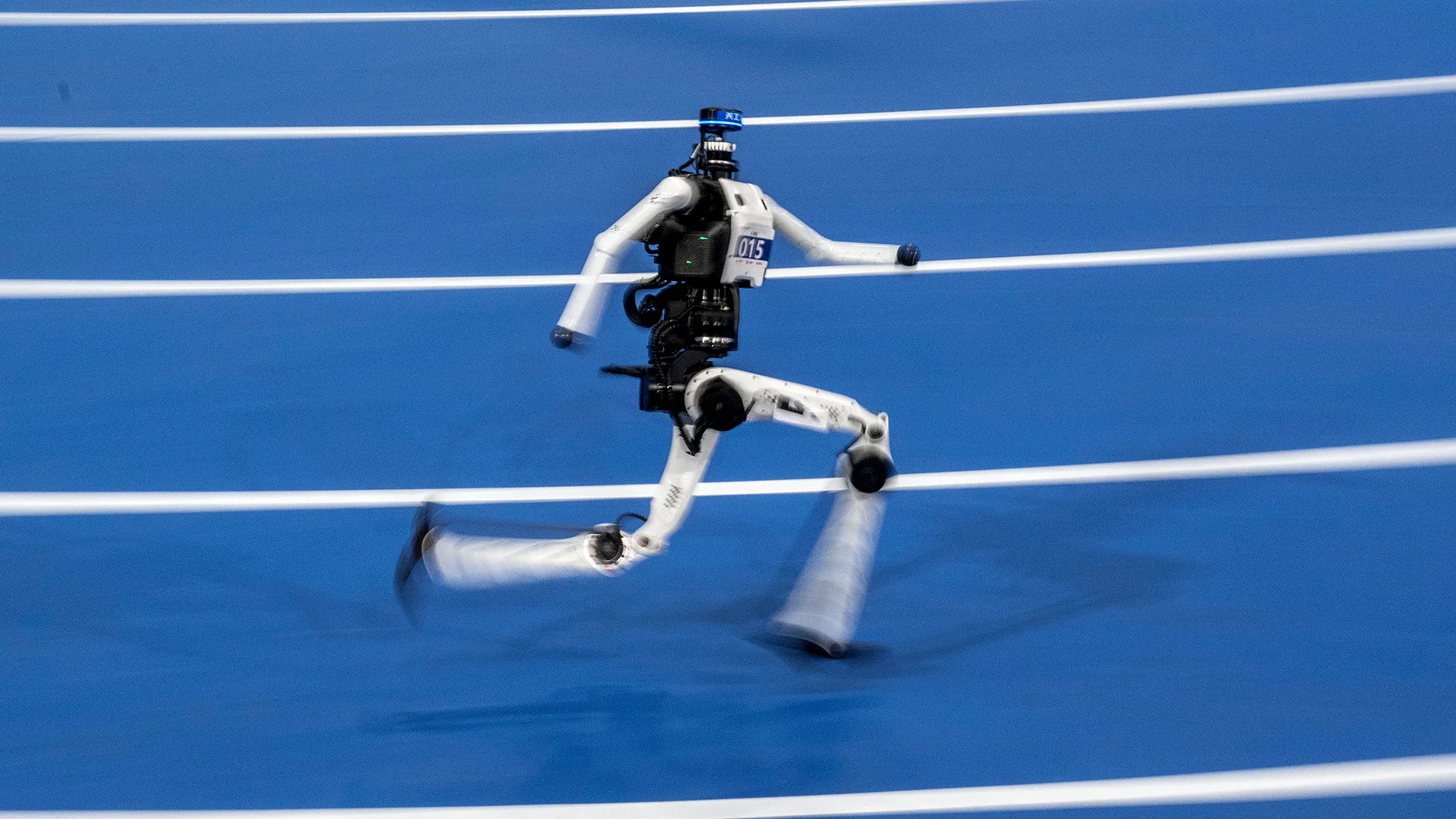
1,500 Meters: Tiangong Ultra completed the race in 2 minutes, 21.6 seconds.
Human Benchmark: Hicham El Guerrouj's 3 minutes, 26 seconds set in 1998.
Robot Result: Tiangong Ultra achieved another record by winning the 1,500m race, with the next two finishers also beating the human benchmark.
High Jump: A standing jump of 2.88 meters (9.45 feet).
Human Benchmark: Javier Sotomayor's 2.45 meters (8.04 feet) clearance in 1993.
Robot Result: A robot by X-Humanoid achieved a vertical leap of 2.88 meters, surpassing earlier robot performances but remains distinct from the human running jump, which entails different mechanics and tends to yield higher clearance heights.
Implications of the Records
The records achieved during these games signal remarkable advancements in humanoid robotics. Events demanding agility, balance, and precision, especially in extended races and high jumps, require cutting-edge actuators, rapid stabilization measures, precise foot placement, and advanced software capable of real-time error correction.
Scott Walter, the director of Robotics Research Diligence at RoboStrategy, offered insights into these achievements. He noted the application of the 'Best Part is No Part' principle, where mechanical optimization minimizes complexity, allowing these robots to execute tasks with high precision. “Locomotion is primarily addressed, but these optimizations play a significant role,” he emphasized in a communication with Live Science.
Walter pointed out that the simplification of design helps reduce potential failure points and increases coordination. Stripping down the functionalities of components such as arms and knees had a significant impact on efficiency, allowing more effective movement.
However, it’s critical to understand that excellence in these specific events doesn't necessarily translate into versatile performance. Walter cautioned that these robots aren't fully humanoid; thus, they face limitations in diverse maneuverability and adaptability. "The bots could only straight-line accelerate and were unable to navigate turns or stop without losing control," he observed. Post-competition, these robots lacked the robustness necessary for awards ceremonies or relay events due to missing hands to coordinate baton exchanges in a relay.
Moreover, the competition revealed reliability issues, with some robots experiencing malfunctions, including collisions and even catching fire. Alongside athletic competitions, these robots also took on practical tasks such as threading charging cables, manipulating objects, and performing in simulated environments, showcasing the dual focus on speed and functionality.
As the events demonstrated, the real challenge lies not just in speed or power but in the robots’ ability to reliably interact with their environment, correctly gauge object locations, apply suitable force, and recover from unexpected outcomes. Over 40% of the competition tasks required autonomous operations, free from direct human oversight.
“Manipulation remains the toughest challenge,” Walter added, highlighting the ongoing struggle for robust and dexterous robotic hands. The next potential milestone may lie in achieving excellence in the decathlon, which tests a broader spectrum of capabilities.
Walter suggested that we might see attempts to break human decathlon records in the future, given the significant progress showcased at this event. This could signal a turning point in how we think about the capabilities of humanoid robots in multifaceted tasks.
Discussion
Sign in to join the discussion.