Recent research indicates Mercury has contracted up to 30% more than previously thought, challenging our understanding of its geological evolution.
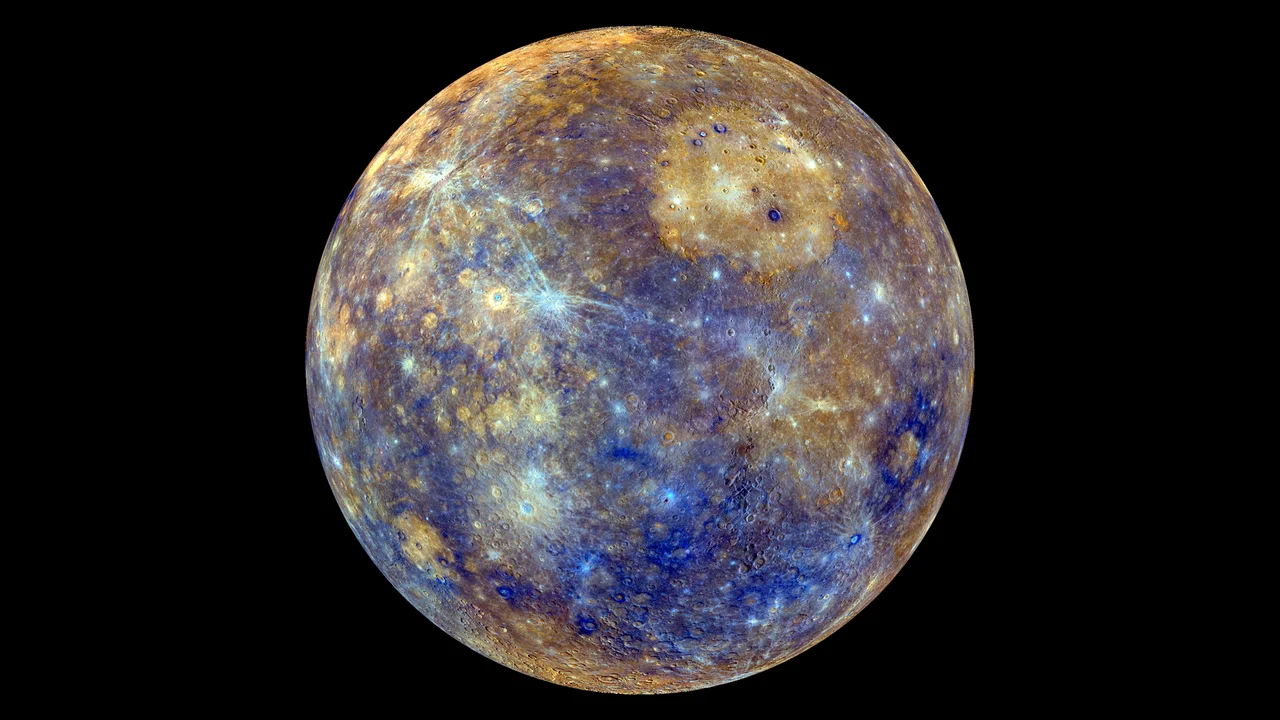
Recent studies are transforming our understanding of Mercury, revealing that this small planet has likely contracted significantly more than earlier estimates suggested. Researchers now believe that Mercury's diameter has shrunk by as much as 12 miles (19 km), a contraction possibly ranging from 10% to 30% beyond prior models.
A pivotal study released on September 10 in Geophysical Research Letters argues that previous observations failed to capture the full extent of Mercury's shrinkage. The dense layer of impact-crater debris blanketing the planet’s surface obscured the evidence necessary for these conclusions. Gaku Nishiyama, a planetary scientist with the German Aerospace Center Institute of Space Research and one of the study's authors, emphasized the significance of this contraction as an indicator of the planet's cooling history.
"The extent of contraction serves as a key component in understanding the cooling process that drives Mercury's evolution," Nishiyama noted in correspondence with Live Science.
Implications for Composition
This research also raises questions about Mercury's internal composition. Greater shrinkage may suggest a proportionately larger metallic core and a lower presence of lighter elements such as silicon. This perspective aligns with theories that posit Mercury as a planet influenced heavily by its core, potentially offering insights into the early differentiation of planetary bodies in the solar system.
Investigating these aspects can yield vital clues about the early conditions under which our solar system formed. "The interior characteristics of Mercury can offer clues about its formation and our solar system’s development," Nishiyama asserted. Understanding core composition and thermal conditions at the time of Mercury's formation, therefore, becomes vital for broader solar system insights. If you're working in this space, this research could reshape how we think about planetary evolution across different celestial bodies.
Mercury's Geological Background
The formation of Mercury and other planets resulted from the gradual accumulation of rock and gas through repeated collisions with asteroids and comets. These violent impacts released substantial heat, initiating a slow cooling process for Mercury, which in turn has led to its gradual internal shrinkage. Though it sounds like a simple sequence of events, the complexities involved in this cooling and contraction are numerous and not fully understood.
As Mercury’s surface landscape evolved, impact craters masked earlier geological features. This phenomenon complicates the observation of ancient geological signs, as subsequent impacts have altered the topography, leaving a patchwork of fresh craters and debris that obscures deeper historical layers. And this is the part most people overlook: the very processes that shape a planet often erase its past.
Nishiyama’s team utilized data from NASA’s MESSENGER mission—operational from 2011 to 2015—to compare geological maps of Mercury. They assessed one set illustrating features of contraction against a surface roughness map, unveiling a striking detail: the most rugged terrains correlate with less evidence of shrinkage, suggesting up-to-date impact debris concealing older geological history. This interplay of newer and older formations complicates any attempts to create a cohesive narrative about the planet's evolution.
Looking Ahead
With ongoing research, further verification of these contraction estimates could be on the horizon. The European Space Agency's BepiColombo spacecraft commenced its mission towards Mercury recently, poised to enhance our understanding with high-resolution imagery that surpasses MESSENGER’s capabilities. This new data is expected to capture smaller craters and additional surface features like scarps and ridges, which will refine our measurements and insights further.
"Stay tuned for future topography measurements by BepiColombo," Nishiyama advised. The upcoming laser altimetry data will be instrumental in yielding a clearer picture of planetary contraction through precise topographic assessments. Without this next phase of exploration, our understanding will remain limited and possibly flawed—new technology can lead to revelations we haven't even considered yet.
Implications for Planetary Science
The implications of these findings extend beyond Mercury itself. As we adjust our understanding of one planet's contraction, it may influence how scientists view the thermal histories of other bodies in the solar system, particularly those with similar geological features. The estimated shrinkage also raises questions about how heat dissipation and core characteristics differ among terrestrial planets. What this means for you is that if you’re involved in planetary science, the methodologies you use to interpret data may need a reevaluation.
Understanding Mercury's geological and compositional history might shift scientific dialogue in unexpected ways. The research community could find parallels with other planets or moons, prompting a reassessment of long-held theories. With BepiColombo on its way and the promise of more detailed data, this discourse will likely only grow.
As researchers make new discoveries, expect an ongoing dialogue about planetary formation, evolution, and the myriad processes influencing these celestial bodies. Keeping an eye on this emerging field could yield valuable insights years down the road.
Discussion
Sign in to join the discussion.