NASA and IBM's new AI model enhances lunar surface mapping, offering valuable insights for safe landing zones and resource detection on the Moon.
NASA and IBM have collaboratively developed a new AI model that significantly enhances the ability to map the Moon's surface using a wealth of existing data. This initiative aims to process decades' worth of lunar exploration data to facilitate future missions with higher accuracy.
Historically, a variety of robotic missions have yielded a large, often fragmented dataset regarding the Moon's characteristics. Past attempts to analyze this information primarily relied on basic transformer models like SwinV2-B, which, although helpful in general image recognition, lacked the specificity needed for such complex datasets collected from diverse sensors aboard multiple lunar missions.
The new Lunar Foundation Model (LFM) tackles this challenge head-on, designed to combine data collected from various high-resolution optical cameras, laser altimeters, radar systems, and spectrometers. By marrying these different data types, the LFM aims to create a comprehensive picture of the lunar surface—a task historically plagued by the restrictions of computational power and the sheer scale of the data involved.
Creating a Unified Data Model
The LFM is structured to serve as a versatile AI framework accessible to researchers through the open-source AI repository Hugging Face. The open-source nature allows other scientists to adapt and fine-tune the model to delve into specific exploration queries, making it an invaluable tool for lunar exploration.
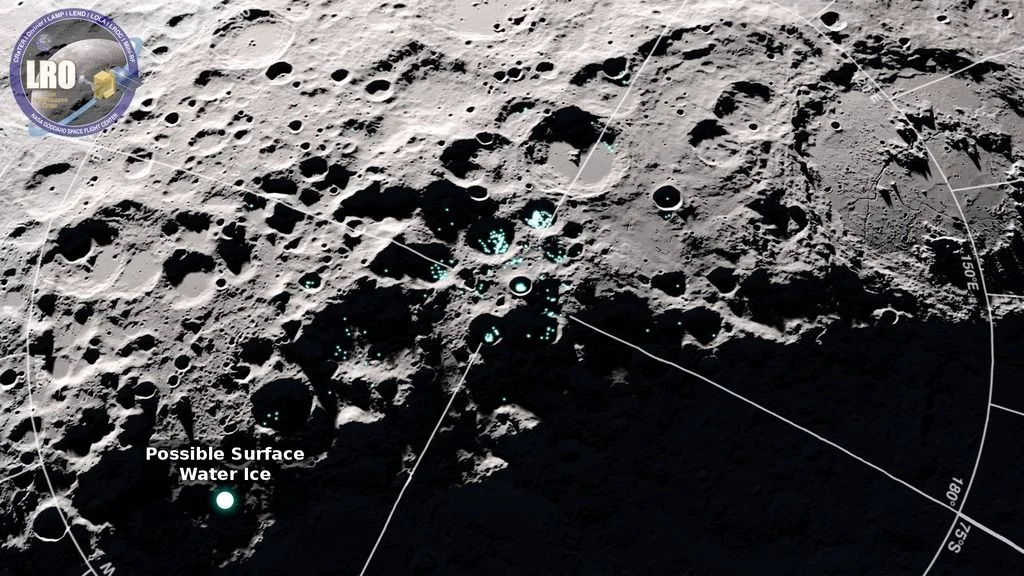
Key applications for the model include generating reliable crater maps that pinpoint safe landing zones and investigating the chemical composition of the Moon's surface features. The model also helps detect hidden areas that may contain subsurface ice, which is crucial for establishing long-term lunar bases.
Moreover, the LFM is capable of identifying volcanic activity, allowing scientists to map unstable terrains, which aids in planning future missions. This could provide critical insights into the Moon's thermal history and volcanic activity.
Addressing Computational Challenges
The development of the LFM is a response to the unique challenges posed by lunar observation. Different spacecraft missions, including the Lunar Reconnaissance Orbiter, collect data across a wide range of spatial scales, from broad regional maps down to intricate terrain details. The absence of an atmosphere on the Moon introduces issues with lighting that further complicate data interpretation.
To address these problems, the team assembled a layered benchmark dataset, known as SomBench, comprising nearly 2 million overlapping map tiles. This innovative dataset organizes measurements across various instruments to align with segments capturing the same features. By integrating data from diverse sources, LFM can generate layered models that provide a holistic view of the Moon.
Advanced Learning Techniques
At its core, the LFM employs masked-token learning, a technique where portions of data are obscured, compelling the model to predict missing information. During its training phase, the AI learns relationships between various lunar features by analyzing multiple instances of data to enhance its predictive accuracy.
This training is refined further by incorporating metadata about light angles and spacecraft positions, allowing the AI model to differentiate real terrain features from shadows that can mislead interpretations. This level of detail helps ensure that LFM accurately understands and represents the Moon's complex geographical nuances.
Performance Metrics and Applications
Evaluations of the LFM indicate that it excels across multiple tasks. Notably, the model outperformed existing models in crater detection by nearly 19%, all while utilizing fewer training labels. In assessing potential polar ice deposits, it also demonstrated a reduction of up to 22% in error rates compared to its predecessor.
Researchers can further customize the LFM through techniques like low-rank adaptation, which allows for specific adjustments without the resource-intensive need to retrain the entire model. This paves the way for specialized lunar exploration projects while minimizing operational costs.
The model's adaptability, combined with its initial success in crater and ice prospectivity assessments, positions it as a critical tool for upcoming lunar investigations. Researchers can leverage LFM to tackle various tasks more efficiently, including detailed crater mapping and detecting signs of past volcanic activity.
Future Implications for Lunar Missions
Although the LFM serves primarily as a pattern-recognition tool, researchers caution that it won't replace direct measurements from physical observation. Nevertheless, it marks a significant advancement in processing and interpreting the extensive data collected over the years on the Moon.
In the near future, scientists will utilize the LFM as a foundational tool for lunar remote sensing tasks. Its fine-tuning process will likely enhance its efficacy in crater detection, mapping volcanic landforms, and identifying ice deposits by integrating various data layers pertinent to terrain and illumination.
This marks a defining moment for lunar studies, as the insights derived from the LFM could shape the next steps in human exploration, offering pathways to better understand the Moon's features and potential resources vital for sustaining long-term missions beyond Earth.
Discussion
Sign in to join the discussion.