A remarkable 4,500-year-old fire-flame vessel from Japan's Jōmon period reveals the sophisticated artistry and cultural significance of ancient ceramics.
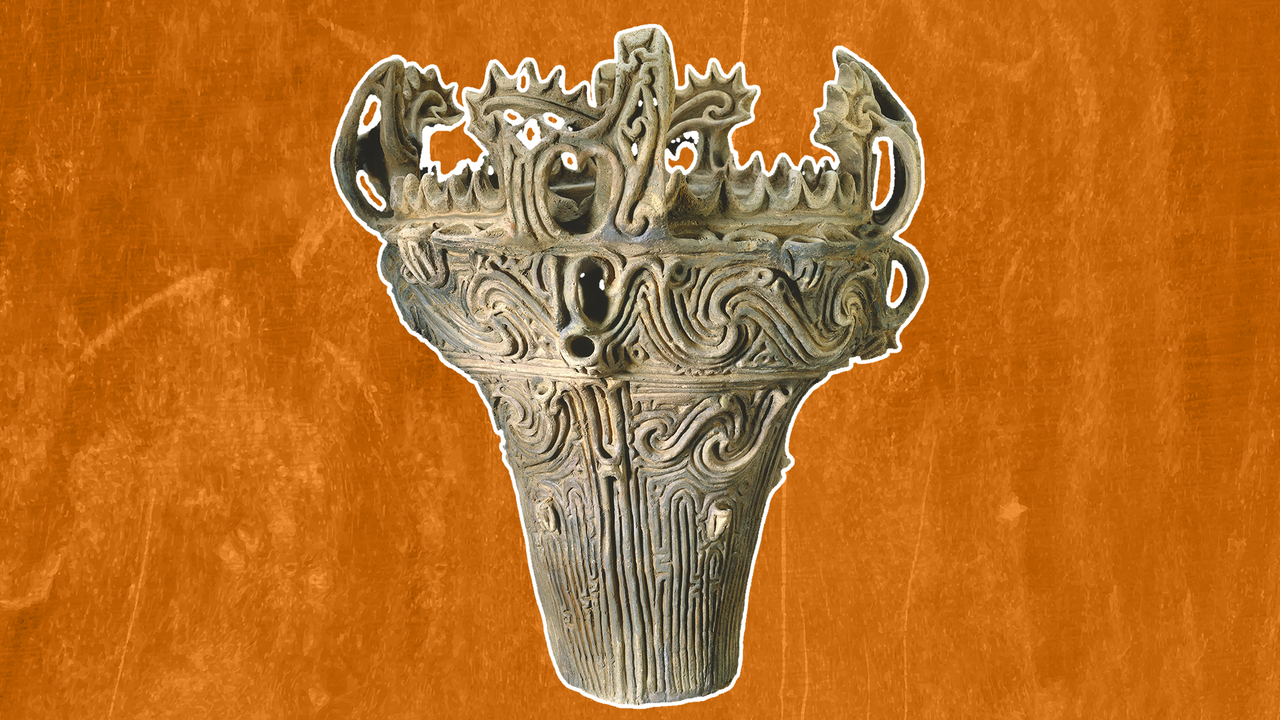
This ancient ceramic creation, known as a fire-flame vessel or "ka'en doki," hails from Japan's Jōmon period, specifically around 2500 B.C. Found on Honshu, this piece stands out for its striking flame motifs at the rim, yet its exact purpose remains elusive. The version housed in the Cleveland Museum of Art is noted as the largest and most well-preserved of its kind.
Understanding the Jōmon Period
The Jōmon period, spanning from about 14,000 to 300 B.C., is characterized by its early sophisticated hunter-gatherer society. While many cultures across the globe were only beginning to experiment with agriculture, the Jōmon people had already established a rich tradition of pottery that highlights their artistic aspirations. Their ceramic works, especially the fire-flame vessels, illustrate a deep understanding of materials and techniques. Such cultural maturity is notable given their lifestyle, which revolved around foraging and fishing rather than farming.
This context is essential, as it positions the Jōmon people among the earliest known potters in human history. Fire-flame vessels serve as tangible links to a time when aesthetic expression was not merely a luxury but an integral aspect of daily life. The creation of these vessels required expertise and time commitment, factors indicating that such artistry held significance beyond the purely utilitarian.
Craftsmanship and Artistic Techniques
Measuring approximately 24 inches (61 centimeters) in height and 22 inches (56 cm) in diameter, this vessel is a remarkable example of the period's pottery techniques. Studying the piece closely reveals fascinating construction methods; part of the base actually belongs to a different vessel, hinting at an intriguing history of modification or repair. This alteration speaks to a potential practice among the Jōmon people of repurposing their ceramics, reflecting a culture that valued longevity and utility even in its art.
Crafting these pots was a meticulous process. Each was made coil by coil, a technique that demanded patience and skill. Decorative elements were added through surface treatments and additional clay, culminating in the distinctive flame-like projections at the rim. This showcases a mature aesthetic sensibility, suggesting that the Jōmon people had a sophisticated understanding of beauty, which challenges the perception that such societies were solely pragmatic.
The Mystery of Function
Yet, despite the craftsmanship, the function of these vessels raises questions. Their heavy design made them impractical for everyday use, as the flame-shaped handles are insufficient for lifting. Scholars like Seema Rao from the CMA suggest that the vessel might have been set into the ground for cooking purposes, a theory supported by findings of soot in similar artifacts. Cooking vessels typically need to be lighter and more functional, so this vessel’s design is doubly perplexing.
The mystery doesn’t end with its physical attributes. The scarcity of definitive evidence about the vessel's intended use fuels speculation about its role within Jōmon society. Was it purely ornamental, perhaps utilized in ritualistic settings? While some suggest it was a cooking vessel, the mechanics of its design imply other uses.
Cultural Implications of Artifacts
This particular vessel's exquisite preservation might suggest it held ritualistic significance rather than serving as an ordinary cooking tool. James Ulak, former senior curator of Japanese art at the Smithsonian Institution, posits that its dramatic form likely played a role in religious ceremonies, perhaps as a container for ceremonial offerings. However, the absence of definitive evidence keeps much of its meaning shrouded in mystery.
If you're working in this space, the implications of such artifacts extend beyond mere historical curiosity. They're windows into the social and spiritual lives of the Jōmon people. The design and craftsmanship reflect a community that valued not just functionality but beauty, indicating a culture with nuanced beliefs and practices.
Symbolism and Ongoing Research
The existence of fire-flame vessels indicates that the Jōmon people had a sophisticated approach to pottery long before many other civilizations. Rao emphasizes that this appreciation for beauty in earthenware reflects a cultural depth beyond mere functionality. The recurring flame motifs provoke speculation about their symbolic meanings within Jōmon society. What did these flames represent—life, death, spirituality? Or perhaps a blend of concepts that offer insight into their worldview? This remains a topic of ongoing research.
There’s something captivating about these motifs. They suggest a belief system possibly intertwined with natural elements, perhaps evoking notions of fire as both a giver and taker of life. The continuing investigation into such artifacts hints at deeper layers of meaning that historians are yet to unravel. And this is the part most people overlook: the connection between art, culture, and the symbolic frameworks that govern societies.
Future Outlook: Ongoing Archaeological Interest
As archaeologists continue to study such artifacts, the allure of the fire-flame vessel lies not only in its craftsmanship but in the cultural narratives it embodies, making it a significant piece of Japan's prehistoric heritage. This ongoing research could reshape our understanding of not just the Jōmon people but of early societies worldwide. Modern technology, including digital analysis and comparative studies with other civilizations, could potentially unveil new interpretations or uses for these fascinating pieces.
The questions surrounding the fire-flame vessels also encourage interdisciplinary dialogue between archaeologists, historians, and artists. What this means for you as a reader or a researcher is the potential to engage with a rich tapestry of early human experience that extends far beyond clay and vessel construction. The Jōmon artifacts represent a quest for beauty and meaning that resonates across time and cultures.
Discussion
Sign in to join the discussion.