Research into a 14th-century skeleton at Stirling Castle suggests he may be the earliest known victim of a trebuchet impact.
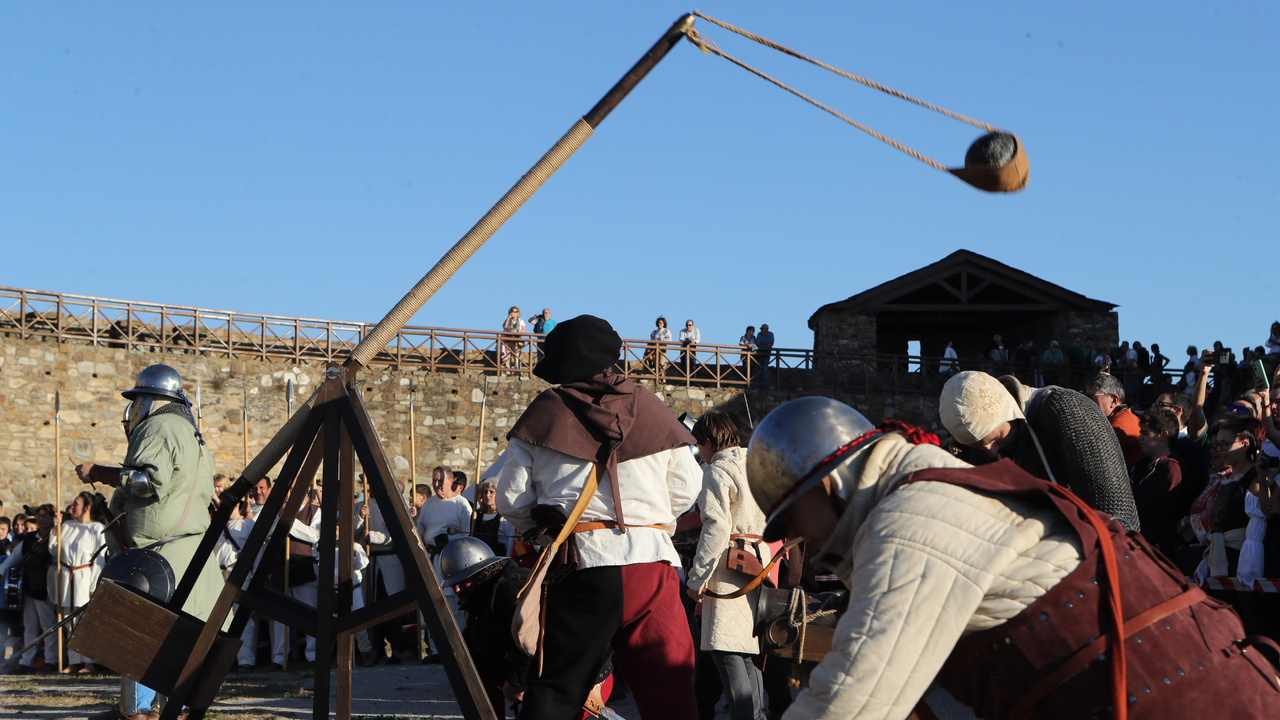
New investigations into a skeleton dating back to the 14th century could mark a significant moment in understanding medieval warfare. Discovered within Stirling Castle, Scotland, researchers describe the individual, known as Skeleton 150, as potentially the earliest recorded victim of a trebuchet strike—a siege engine that played a key role in the military conflicts of that era.
Context of the Find
Skeleton 150 was unearthed in 1997 during excavations that revealed eight medieval burials beneath the royal chapel of Stirling Castle. These excavations were a part of a larger archaeological initiative aimed at uncovering the history associated with the castle, a site of pivotal significance in Scottish history. Typically, individuals from that period were interred in parish church graveyards, making this particular finding intriguing. Jo Buckberry, a biological anthropologist at the University of Bradford, unveiled these findings at the 25th European Paleopathology Association meeting held on August 5. The context of each burial site provides a glimpse into the practices and beliefs surrounding death during the Middle Ages, often linked to social status and war-related deaths.
Intriguing Evidence of Trauma
All eight skeletons exhibited signs of trauma consistent with violent deaths, including blunt force injuries and lacerations from edged weapons. The sheer number of injuries on Skeleton 150 is striking; he exhibited an astonishing 167 fractures. This includes 61 skull fractures and 57 rib fractures, as well as breaks in various other bones. The unusual zigzag pattern of these injuries raises critical questions about how such extensive damage could occur. This isn't just a pile of injuries; it’s a portrait of violence and chaos, likely reflecting the horrific realities of medieval combat.
Assessing the Causes of Injury
Buckberry and her team conducted thorough analyses of the fractures, comparing them to forensic injury data. They discovered that these zigzagged rib fractures are typically associated with high-impact events, akin to severe accidents. However, it’s hard to imagine a horse-drawn cart causing such trauma in medieval Scotland, leading Buckberry to focus on a more plausible scenario: a high-velocity projectile fired from a siege engine. The nature of the evidence leans toward a violent encounter rather than an unfortunate accident, acting as further validation of the lethal capabilities of siege weaponry at the time.
A Historical Connection
The timeline of Skeleton 150 aligns closely with significant military actions during the First War of Scottish Independence. Carbon-14 tests date his remains to around 1300, precisely when King Edward I of England was diligently testing siege technologies against Scottish strongholds. Edward's military campaigns are well-documented, featuring various siege devices like the enormous trebuchet known as the "War Wolf." This machine was notorious, capable of launching massive stone projectiles with lethal force against fortified positions. Such historical context adds essential weight to the theories surrounding Skeleton 150's cause of death.
The Likely Scenario
While it’s challenging to establish definitively that Skeleton 150 was killed by projectiles from the War Wolf, Buckberry suggests his death likely resulted from similar siege engines employed during that turbulent time. The fractures indicate he was likely standing when struck, reinforcing the notion of an instantaneous and catastrophic death. Buckberry pointed out, "He certainly had his back to whatever was going on. He went from standing to the floor extremely rapidly." This detail paints a vivid picture of the chaos that could ensue during a siege—how quickly a life could end amid the mayhem.
Reassessing the Original Findings
Initially, researchers presumed the skeletal injuries were postmortem, perhaps caused by accidental trampling during excavation. However, with advancements in techniques such as micro-CT and 3D scanning developed over the last three decades, Buckberry clarified that the injuries likely occurred around the time of death. This significant tech development offers clearer insights into this individual’s tragic end over seven centuries ago. The evolution of research methodologies is transforming our understanding of archaeological finds and illuminating past lives in ways that were previously unattainable.
“If there's something there that intrigues you, you keep following that question,” Buckberry stated, highlighting the expansive possibilities for further historical discoveries. The quest doesn’t end with this find. Researchers will undoubtedly continue to probe deeper into the life and death of this individual and what it reveals about the societal norms and military practices of medieval Scotland.
Implications and Future Outlook
This discovery is more significant than it looks. It doesn’t merely add another layer to our knowledge of medieval battle tactics; it has the potential to redefine how historical narratives are constructed around warfare in Scotland. Each fracture of Skeleton 150's remains tells an important story about the casualty of war and how conflict shaped human lives. As archaeological technology advances, we can expect more revelations that challenge our historical understandings. The forensic examination, combined with historical records, may lead historians and archaeologists alike to reevaluate other finds in different locations, possibly unearthing further evidence that could reshape medieval military history.
Historians and archaeologists are left pondering not just the life of Skeleton 150, but also the deadly efficacy of medieval warfare, with each fracture telling a story of conflict and the catastrophic toll of battle strategies employed during one of Scotland's most turbulent eras.
For those interested in exploring more about historical warfare, a weapons of the world quiz awaits to test your knowledge.
Discussion
Sign in to join the discussion.