The Hubble Space Telescope's latest image reveals the complex dynamics of star formation and destruction within the nebula LHA 120-N44.
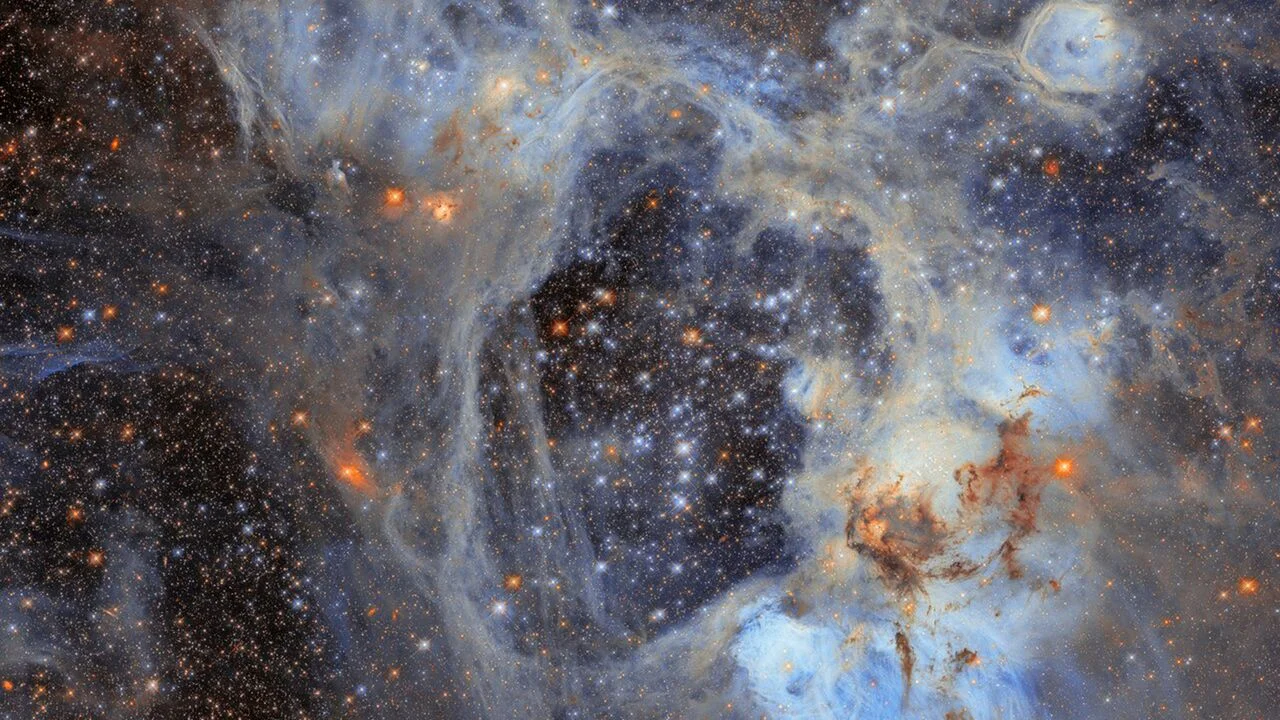
A Closer Look at LHA 120-N44
The latest striking image from the Hubble Space Telescope showcases the nebula LHA 120-N44. This isn't just another beautiful cosmic picture; it highlights a fascinating and complex cycle where star generation plays a dual role in both creation and destruction. Located approximately 160,000 light-years away in the Large Magellanic Cloud, this celestial body is found in the constellation Dorado and spans about 210 by 140 light-years. The sheer scale of LHA 120-N44 leaves one in awe, not just of its physical dimensions but of the cosmic processes it initiates and witnesses.
What Makes a Nebula a "Superbubble"?
Visually, LHA 120-N44 resembles a giant void within a cloud, leading astronomers to label it a superbubble. This term describes the expansive cavity formed by an assembly of massive, hot stars at its core. These superbubbles are significant not merely because of their sheer size but because they indicate active stellar phenomena. Unlike smaller, denser nebulae, superbubbles represent regions where massive stars have formed, evolved, and influenced their surroundings on a significant scale. The data collected from such phenomena provides insights into stellar life cycles and the fate of galaxies.
As these massive stars evolve, they profoundly affect their environment. Like our Sun but on a much grander scale, these stars emit powerful solar winds that push material away, sculpting the nebula's structure. If you're working in this space, it's crucial to recognize that the material ejected from these stars doesn't just disappear; it contributes to an ongoing cycle of cosmic interaction. This interaction can clear out regions of space but also lays the groundwork for future star formation.
The Dual Role of Stellar Dynamics
These massive stars are not just passive players; they actively shape their surroundings and influence the birth of new stars. When these stellar giants reach the end of their lifecycle, they explode as supernovas. This cataclysmic event serves multiple purposes: it clears away gas and dust while simultaneously dispersing the materials necessary for new stars to emerge. What's fascinating is the concept of "stellar feedback." This process involves the energy and radiation emitted by massive stars heating and ionizing surrounding gases, often making immediate star formation impossible in close proximity.
However, this feedback doesn't just inhibit star formation; it can stimulate it as well. The winds generated by these stars compress neighboring gas clouds to the point of collapse, igniting new stellar births in a remarkable twist of fate. The intricate dynamics at play create a dense shell of gas and dust around LHA 120-N44, which acts as a cradle for new stars. And here's the thing: this interaction between destruction and recreation is fundamental for understanding the lifecycle of not just individual stars but entire galaxies.
Insights from Hubble's Latest Image
The recent Hubble image of N44 is not just a visual delight; it harbors nearly half a million stars within its frame. This includes both those located within the nebula and many others along the same line of sight. Among them, about 30,000 are young protostars, still in the early stages of combustion and yet to begin hydrogen fusion at their cores. This presence of nascent stars offers astronomers a unique opportunity to investigate the timeline of star formation in this particular environment. It's fascinating to consider how these young stars will evolve and how their energy will, in turn, impact their surroundings.
What this means for you, the science enthusiast or aspiring astronomer, is that each spectacular image from Hubble is laden with stories. These aren't just pretty pictures; they are records capturing the dynamic processes of the universe. Analyzing this stellar population helps scientists make educated guesses about the conditions that favor star formation under various cosmic circumstances. You can almost feel the excitement radiating from researchers as they dig into these data sets, knowing they’re on the brink of uncovering secrets that could redefine our understanding of the cosmos.
The Implications of Stellar Feedback
LHA 120-N44 serves as a vivid reminder of the celestial forces at play in the universe. Stars formed from a nebula's gases contribute to its eventual transformation. This cycle of creation and destruction has implications for galactic evolution. Understanding it helps refine models of how galaxies form and evolve over billions of years. This isn't just an academic exercise; such knowledge could one day inform our understanding of where we fit in the universe. When we learn about elements ejected by supernovae enriching areas that will give birth to new stars, it touches on fundamental questions about the origins of complex life, including our own.
As we observe phenomena like LHA 120-N44, we're not just looking at an astronomical object; we’re witnessing the vast complexities of the universe unfold. Each discovery sheds light on the processes governing star formation, cosmic interactions, and the intricate relationships among celestial bodies. Keep your eye on Hubble's ongoing data releases; there's a lot more to learn.
Discussion
Sign in to join the discussion.