Recent laser experiments reveal that diamond melts at significantly lower temperatures than previously believed, shedding light on its atomic behavior.
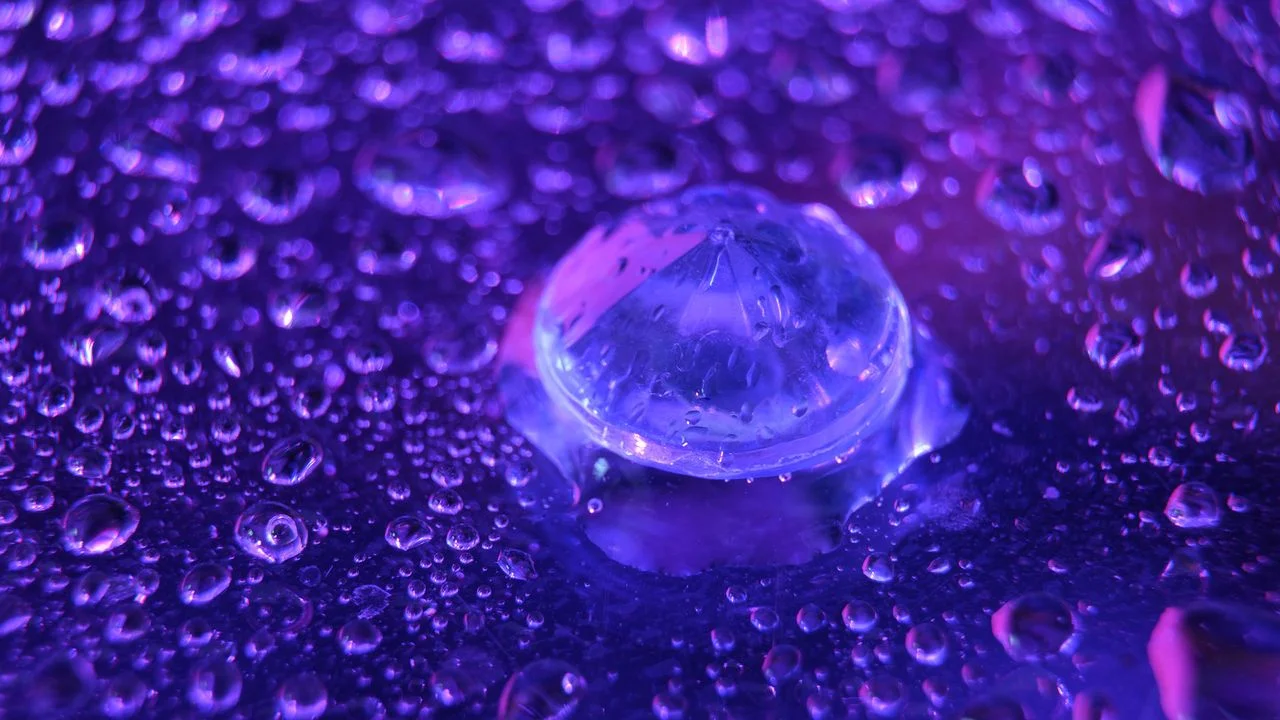
Recent studies have advanced our understanding of diamonds by accurately determining their melting point through high-intensity laser experiments. Researchers found that previous estimates were off by over 1,300 degrees Fahrenheit, aligning experimental values with theoretical predictions.
Revising Established Science
Traditionally considered the hardest natural material, diamonds have fascinated scientists not just for their beauty but also for their intriguing behavior under extreme conditions. When exposed to high-energy lasers, diamonds exhibit unexpected physical changes, challenging longstanding scientific assumptions. Researchers are particularly concerned with how materials like diamonds interact under extreme pressures and temperatures because this knowledge can significantly inform developments in nuclear fusion research, a field that urgently requires an accurate understanding of material behavior in harsh environments. Understanding the interaction of diamonds with such extreme conditions is essential—not just to affirm existing theories but to potentially pave the way for breakthroughs in energy generation that could affect us all.
The New Experiment
In a study published on August 13 in Nature Physics, a team of scientists reported on their successful experiment where they subjected synthetic diamond plates to ultraviolent lasers. These laser pulses generated shockwaves powerful enough to change the diamond’s optical properties from transparent to mirror-like, directly signaling melting. This experiment is a significant advancement as it provides tangible evidence backing theoretical models that many scientists have debated for years. Study co-author Marius Millot from Lawrence Livermore National Laboratory remarked on the precision achieved in measuring temperature, pressure, and structural changes during these extreme conditions, stressing how these measurements could reshape our understanding of solid-state physics.
Understanding Melting Behavior
The revised melting point discovered by the team is now consistent with theoretical models, providing clarity on the long-standing disparities in diamond research. Researchers utilized X-ray diffraction to examine atomic structures, concluding that diamonds do not transition to another solid phase before liquefying. This observation suggests a higher energy threshold is required to reorient the diamond’s atomic arrangement compared to what previously assumed. For those less versed in material science, this is striking because it fundamentally alters our understanding of how diamonds behave under extreme heat and pressure. These insights could lead to new material designs that better withstand such conditions, which might have applications beyond what we currently consider.
Implications for Nuclear Fusion
The research highlights how multiple shock waves could influence the phase transitions of diamonds. Such knowledge is pivotal for nuclear fusion efforts, which often involve creating conditions akin to those found within stars. Specifically, experiments utilizing laser-induced pressures above 30 petapascals and temperatures exceeding 180 million Fahrenheit aim to develop the conditions necessary for fusion. This study implies that diamonds could be viable materials for constructing components in fusion reactors or even containment vessels that withstand extreme environments. The implications of this kind of research could reshape current thinking in energy production, pushing the boundaries of what's possible.
The Behavior of Carbon Under Pressure
The team further explored diamond’s fate under varying pressures ranging from 660 to 1,060 gigapascals at temperatures of roughly 12,140 Fahrenheit. They discovered that diamonds can exist alongside liquid carbon, a material with metallic properties that can conduct electricity. This raises fascinating questions about the state of carbon in extreme environments. Under these circumstances, solid diamond could float in liquid carbon, similar to how ice floats on water. (And this is the part most people overlook: the interconnectedness of carbon phases could provide insights into carbon behavior in other extreme environments, such as planetary interiors.) Understanding these phases is not just a scientific curiosity; it could have tangible implications for materials science and planetary exploration, highlighting the need for ongoing research in less understood areas.
Broader Planetary Implications
This research not only enhances our understanding of diamonds but also has broader implications for planetary science. Insights into diamond behavior help refine models of ice giant planets like Uranus and Neptune, where hypothetical diamond rain occurs and liquid carbon oceans may exist. The complexities of these models are informed by past observations from the Voyager 2 spacecraft and recent lab experiments. Understanding the conditions under which diamonds form and behave sheds light on potential diamond-rich environments that may exist deep within these distant worlds. What this means for you, if you're even marginally interested in planetary science, is the possibility of rewriting textbooks on planetary formation and evolution.
Future Outlook
As researchers continue to unpack the complexities of diamond under extreme conditions, the implications for both material science and planetary exploration become increasingly significant. The accuracy in measuring extreme conditions will likely fuel advancements not just in academic circles but could also translate into practical applications in industries such as energy and materials manufacturing. If you're working in this space, the insights gained from such diamond studies should be on your radar. The more we learn about the behaviors of materials at extreme conditions, the closer we get to advancements in technology and energy solutions that could benefit society at large.
Discussion
Sign in to join the discussion.