A new study proposes a method to find microscopic alien tech fragments on the Moon, potentially revising the search for extraterrestrial evidence.
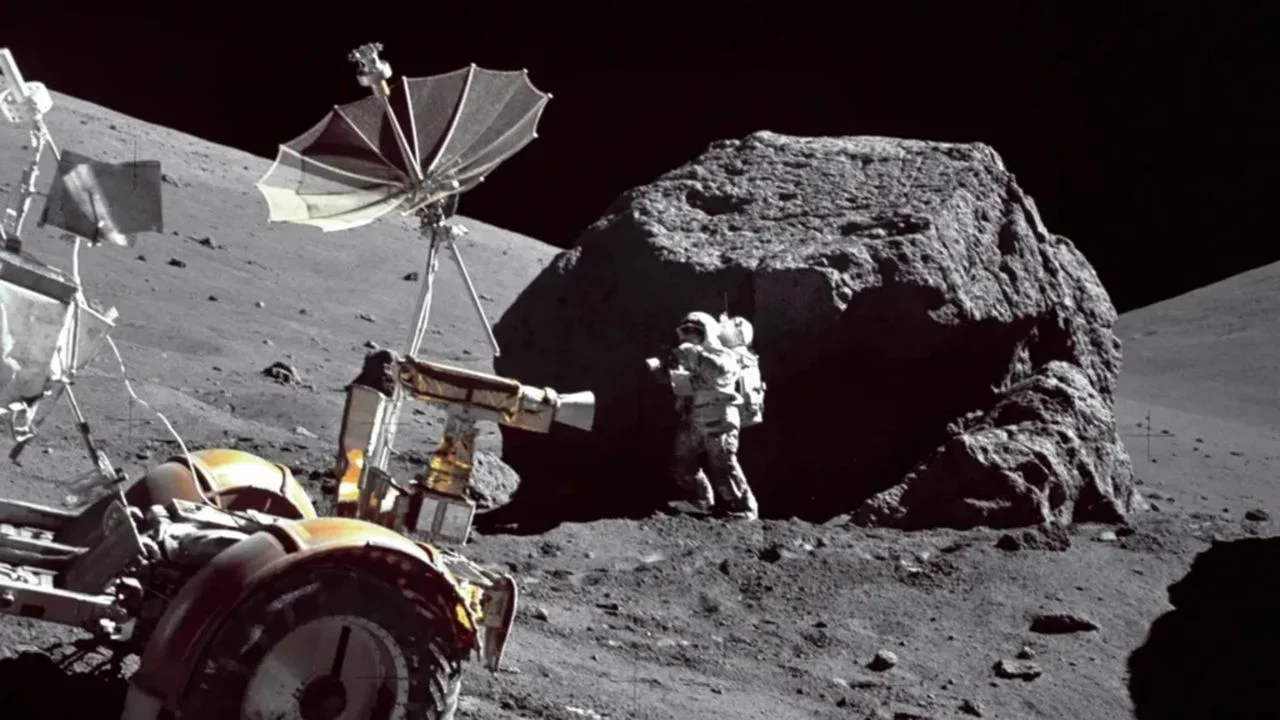
Tiny fragments of technology from ancient civilizations could be scattered across the lunar surface, according to recent research. This theoretical framework, while not claiming to have discovered evidence of extraterrestrial life, outlines a novel approach for searching for signs of advanced civilizations that may have existed long before humanity.
The Moon's unique environment makes it an attractive location for this investigation. Unlike Earth, the Moon is devoid of a significant atmosphere and magnetic field, leaving its surface entirely exposed to the rigors of space. This exposure results in a constant bombardment of meteorites and a flow of microscopic particles filtering in from the solar system and beyond. The absence of water and tectonic activity means that these particles remain undisturbed, accumulating over billions of years.
A paper published on June 23 to the preprint server arXiv presents a compelling hypothesis: some of this accumulated dust may stem from distant star systems, potentially containing remnants of technologies from civilizations long gone. The authors, led by planetary scientist Lewis Pinault from University College London and the SETI Institute, suggest an experimental framework to identify these micro-fragments within lunar samples collected over the next decade or so.

Investigating Minuscule Technosignatures
The search for extraterrestrial evidence, typically focused on detecting radio signals, misses the possibility of long-extinct civilizations. Traditional methodologies primarily seek active signals from current civilizations or megastructures, like Dyson spheres, which may not be representative of past technological life forms.
The new study posits that remnants of technologies could survive the demise of a civilization, shedding materials into space due to asteroid impacts or the decay of structures. These tiny remnants, potentially as small as 3 micrometers, could traverse interstellar space for billions of years, eventually reaching our solar system. The analysis emphasizes the likelihood of these fragments landing on the Moon, given its pristine environment and constant bombardment of space materials.
Interestingly, scientists have previously detected interstellar dust within samples from the asteroid Bennu, illustrating that cosmic materials can indeed penetrate our inner solar system. This supports the theory that similar materials could find a resting place on the Moon.
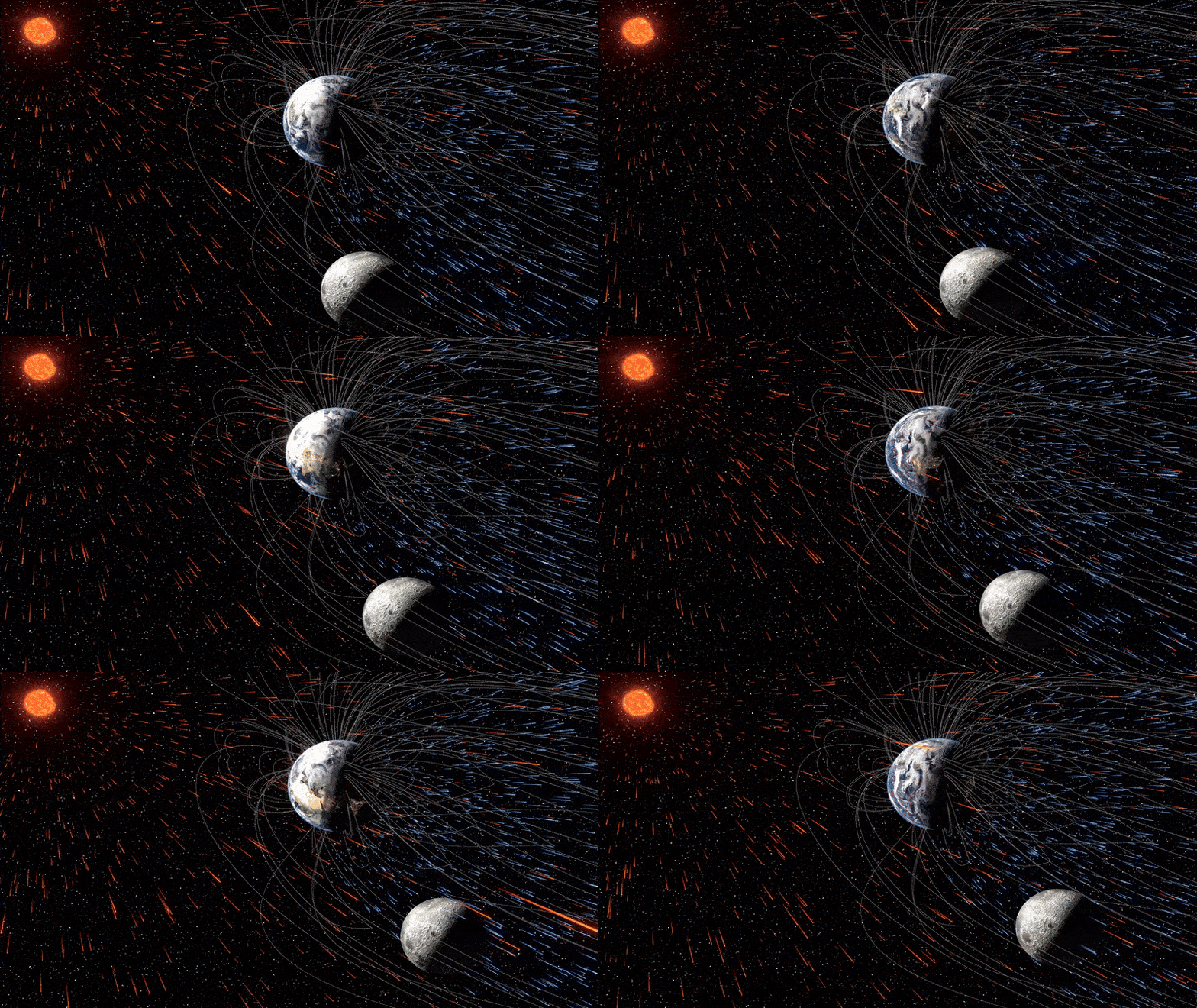
No lunar samples analyzed thus far have revealed technosignatures, which may be due to a lack of focused searches or the diminutive size of possible fragments. The researchers surmise that a single collection of lunar regolith, roughly 35 cubic feet, could yield at least one piece of technological evidence. To detect these minute pieces, methodologies like microscopy, materials analysis, and AI-driven imaging techniques will be essential.
Endorsement of the Hypothesis
The implications of null results from these sample analyses wouldn't necessarily invalidate their hypothesis. Instead, it could indicate a need for larger sample sizes or refinement of their detection models. As future missions aimed at lunar exploration get underway, including China's Chang'e-7 and NASA's Artemis missions, sample collection will become increasingly viable.

The anticipated volume of regolith collected by these missions may still fall short of the researchers’ proposed 35-cubic-foot target. Thus, the establishment of a permanent lunar base may be necessary to ensure sufficient material is gathered for a thorough investigation. Both the U.S. and China are moving toward developing lunar bases within the next decade, which could facilitate on-site analysis of samples rather than transporting them back to Earth.
The leadership at the SETI Institute, prominent in the search for technosignatures, views this new approach as a significant addition to the field. Bill Diamond, the president and CEO, praised the concept. "This is a novel addition to the search methodologies applied to seeking evidence of technology as a proxy for life and intelligence beyond our solar system, and we are excited about the potential to bring this to fruition," he remarked.
This study opens a new chapter in our endeavor to comprehend whether we are alone in the universe, tapping into lunar resources for signs of past intelligences that have left their mark in ways we might finally be able to reveal.
Discussion
Sign in to join the discussion.