Researchers have made strides in understanding brain development by transplanting human neural tissue into genetically modified mice, paving the way for novel insights into neurodevelopmental disorders.
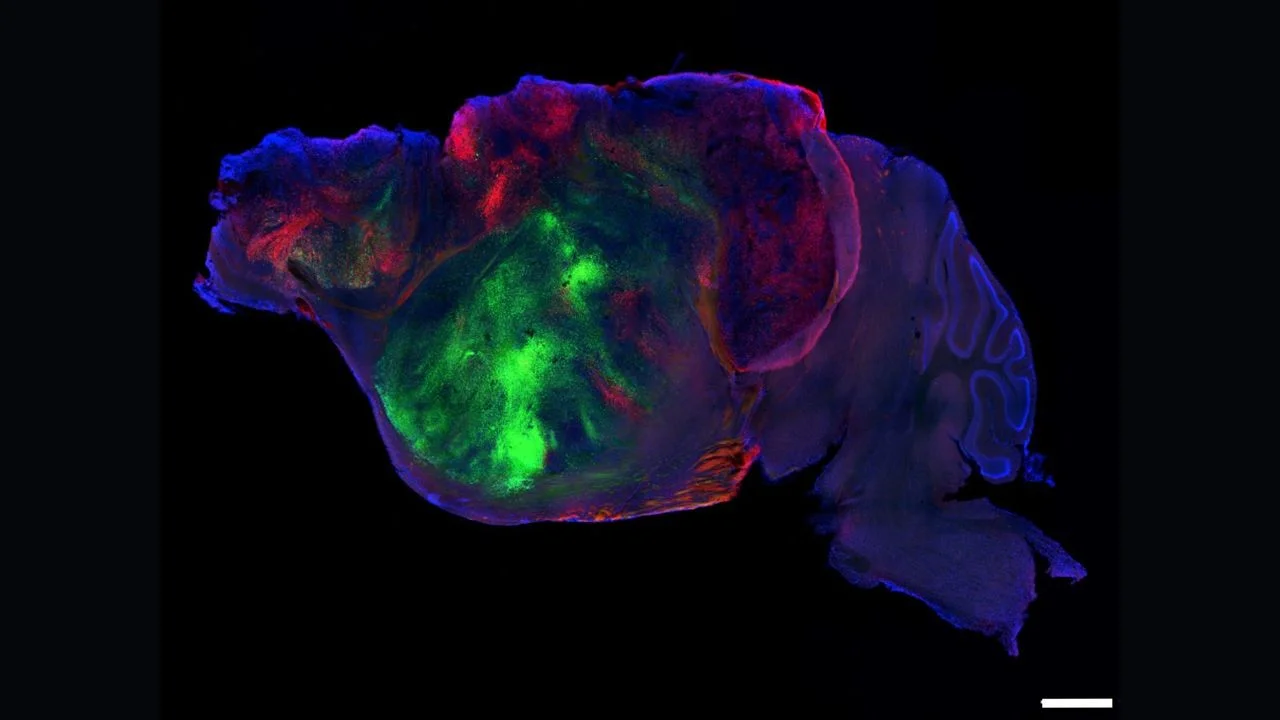
Recent research has taken a fascinating turn by introducing human neural tissue into specially modified lab mice, illuminating new avenues in the exploration of human brain development and associated disorders. This novel approach utilizes brain organoids—tiny models of human brains derived from stem cells—to replace missing sections of murine brains, showcasing the potential for better understanding of neurodevelopment and disease mechanisms.
Dr. H. Isaac Chen, an associate professor in neurosurgery at the University of Pennsylvania's Perelman School of Medicine, recognized this advance as significant, reflecting the evolving capabilities within the field, albeit with caution about the complexities involved. His previous work with rodent models has involved the transplantation of human brain organoids, which have provided critical insights into brain function and abnormalities.
Transplanting Human Organoids into Mice
Scientists have long observed that organoids developed in controlled lab environments do not replicate the physiological conditions found within living organisms. The study, published in the journal Nature, addresses this limitation by leveraging the unique biological interactions that occur in vivo. Human organoids tend to mature and integrate more effectively within the biological context of mice compared to traditional lab conditions.
However, transplanting human brain cells into mouse systems does come with its own set of challenges. One of the primary hurdles is the fundamental difference in brain developmental timelines between species. While human cells mature at approximately one-twentieth the rate of murine neurons, this temporal disparity complicates the integration of foreign tissue, as mouse brain cells quickly form dense networks that can outcompete and overshadow their human counterparts.
The Genetically Modified Mouse Model
To tackle the issue of spatial competition between human and mouse brain cells, the research team developed a genetically modified mouse that has only 2% of its original cerebral cortex. This diminished capacity allows for an available environment where human neural tissue can thrive. Within days of birth, the researchers transplant human neural tissue into the vacant space, achieving around 90% successful integration.
Dr. Sergiu Pașca, a professor of psychiatry and behavioral sciences at Stanford University, explained that the transplantation process is straightforward: “We just took cortical organoids, about four of them, and transferred them with a syringe into that vacant space.” The human neural tissue subsequently flourished, often forming complex cellular connections with existing mouse brain tissue.
Comparative Observations and Functionality
The research also involved comparisons between the modified mice receiving organoid transplants, those missing the same brain regions without transplants, and unmodified control mice. Surprisingly, the mice missing significant portions of their brains exhibited relatively normal behavior in many aspects, although some deficits in fine motor skills, working memory, and social interaction were evident upon closer inspection.
Dr. Chen pointed out that, unlike humans, a mouse's cortex constitutes a smaller percentage of their overall brain. This anatomical difference implies that mice can function adequately without sizeable portions of cortical tissue, which has notable implications for the ethical considerations of such experiments. The transplantation process is unlikely to cause significant distress or cognitive impairments, at least within this species.
Implications for Future Research
This experimental setup might be invaluable for developing models to study how external factors, such as toxins or prenatal influences like hypoxia, affect brain development. Researchers can manipulate the genetic makeup of the human organoids to observe various developmental outcomes, providing insights into conditions like cerebral palsy or autism spectrum disorders.
Despite the successful integration of human cells, the study was conducted in consideration of ethical implications surrounding such experiments. Pașca engaged with ethics consultants to deliberate on the potential cognitive ramifications of integrating human brain cells into animal models. However, as of now, there has been no evidence of emergent properties that might lead to enhanced sentience in these modified mice.
Both Dr. Pașca and Dr. Chen acknowledge the limitations inherent in this research, noting that the implanted organoids represent a relatively early stage of human brain development, equivalent to that of a six-month-old human fetus. While these organoids do not achieve the layered complexity of an adult human brain, their integration into the modified mice offers a promising platform for further investigation into the developmental processes that lead to various neurological conditions.
As scientists push the boundaries of organoid research, this study sets a precedent for using mixed-species models to unlock the mysteries of human neural development, though careful consideration will be needed to guide future research directions involving more complex organisms.
Discussion
Sign in to join the discussion.