Lenovo's concept AeroBlade laptop utilizes innovative AirJet Mini cooling technology for efficient, silent operation, redefining portability without compromise.
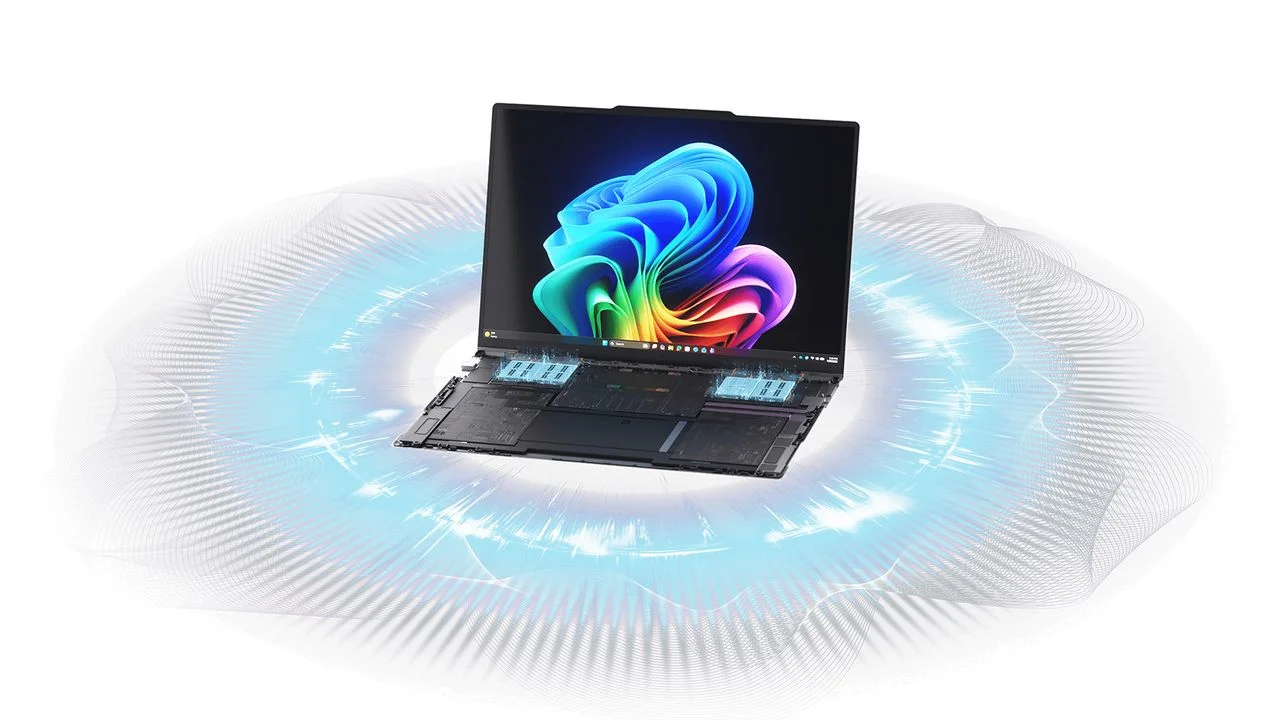
At Lenovo Innovation World '26, the tech giant revealed the AeroBlade, a concept laptop that reimagines traditional cooling systems. Instead of using noisy fans or bulky heat sinks, the AeroBlade employs advanced cooling chips that fit easily between your fingers. This shift isn't just about aesthetics—it's a fundamental change that could impact how laptops perform, especially in a world increasingly dominated by demanding applications and mobile multitasking.
Core Technology Inside AeroBlade
Central to this design are four low-power AirJet Mini chips, developed by Frore Systems. These chips operate as "solid-state" components with no moving parts, employing an active cooling mechanism rather than merely relying on passive thermal dissipation. Each chip contains membranes that vibrate at ultrasonic frequencies, generating 2,000 pascals of back pressure. This pressure pushes ambient air through tiny jets at an impressive speed of 124 miles per hour (200 kilometers per hour), effectively transporting heat away from the laptop's CPU and GPU. The speed and pressure of the airflow generated by these chips are significant enhancements over traditional cooling options. This is more significant than it looks, as effective thermal management is crucial for performance, especially in portable devices.
Design and Portability of the AeroBlade
The unveiling occurred during the IFA 2026 event held in Berlin from September 4 to 8, 2026, showcasing a paradigm shift in laptop design. With a 14-inch OLED display, the AeroBlade measures under 0.39 inches (10 mm) thick and weighs just 1.8 pounds (830 g). This makes it significantly slimmer and lighter than comparable laptops, which typically range from 2.2 to 2.86 pounds (1 to 1.3 kilograms) for similar screen sizes. The AeroBlade's design appeals to professionals and creatives who often find themselves working on the go, as it combines power with portability like few others.
The Next Step in AI Processing
Both Lenovo and Frore Systems position this technology as an essential upgrade tailored for next-generation laptops that will support on-device artificial intelligence (AI). Currently, most devices branded as "AI PCs" only incorporate basic neural processing units (NPUs), which facilitate minor tasks like real-time webcam enhancements. However, the future may see laptops capable of executing robust AI algorithms directly without an internet connection. This marks a shift away from the reliance on cloud computing for AI functions, which can be hindered by latency and connectivity issues.
For instance, Nvidia's upcoming RTX Spark laptops aim to enable users to run extensive language models and AI agents locally, raising the demand for advanced cooling to manage the additional heat produced by high-performance GPUs. Traditionally, laptops employ fans to cool their components, but these can often be loud and intrusive. Alternative designs, such as those featuring passive heat sinks, absorb heat through metal plates but may experience throttling, a reduction in performance as chips reduce operation to avoid overheating. This creates a frustrating barrier for those who need consistent high-end performance.
The AirJet Mini's approach is refreshing. It uses high-velocity jets to push hot air out more efficiently than typical fan designs. With an operational sound level of just 21 decibels—akin to a whisper—it effectively dissipates up to 30 watts of heat when all four chips are integrated. This performance aligns well with conventional laptop fans, but offers a quieter alternative, which could be a boon for those in noise-sensitive environments, like libraries or offices.
An interesting aspect of the AeroBlade is its impressive 2,000 pascals of back pressure. This figure far exceeds the typical 100 to 200 pascals produced by standard laptop cooling fans, showcasing its ability to manage airflow effectively. This capability could alter thermal strategies in high-performance laptops, enabling designs that are both thinner and quieter while matching or surpassing current cooling solutions.
Potential Challenges Ahead
While the technology behind the AirJet Mini has existed for some time—with its initial announcement in December 2022—AeroBlade marks its first full incorporation into a laptop. Previously, the chip found a home in the ZOTAC ZBOX PI430AJ Pico mini PC in 2023. Yet, there's still no news on when commercially available laptops featuring this cooling technology will hit the market, leaving the AeroBlade as an exciting but tentative offering. If you're working in this space, you have to wonder about the actual deployment of this tech in everyday devices. Early promises often face delays, and consumer expectations can quickly shift.
Implications for the Future
The introduction of the AeroBlade and its innovative cooling technology signals a potential shift in laptop performance standards. As more applications depend on AI and other demanding processes, efficient thermal management becomes vital. Conventional fan systems are reaching their limits; the AeroBlade could provide an avenue for laptops to handle increased workloads without resorting to cumbersome designs or high noise levels. This reflects a broader trend where advancing technology meets user demands for both efficiency and quiet operation.
As the market also shifts toward lighter and thinner laptops, the success of products like AeroBlade will likely influence design philosophies across the industry. If this concept lives up to expectations, companies will have to rethink not just cooling strategies, but also how they engineer various internal components to accommodate new expectations for device efficiency. And this is the part most people overlook. Cooling isn’t just about comfort—it’s about what laptops can do, pushing the boundaries of performance expectations.
Can you match these ancient devices to their pictures? Find out with our computing quiz!
Discussion
Sign in to join the discussion.