A new cosmic object, MoM-BH*-1, hints at the existence of black hole stars, potentially unraveling the mystery of "little red dots" observed in the universe.
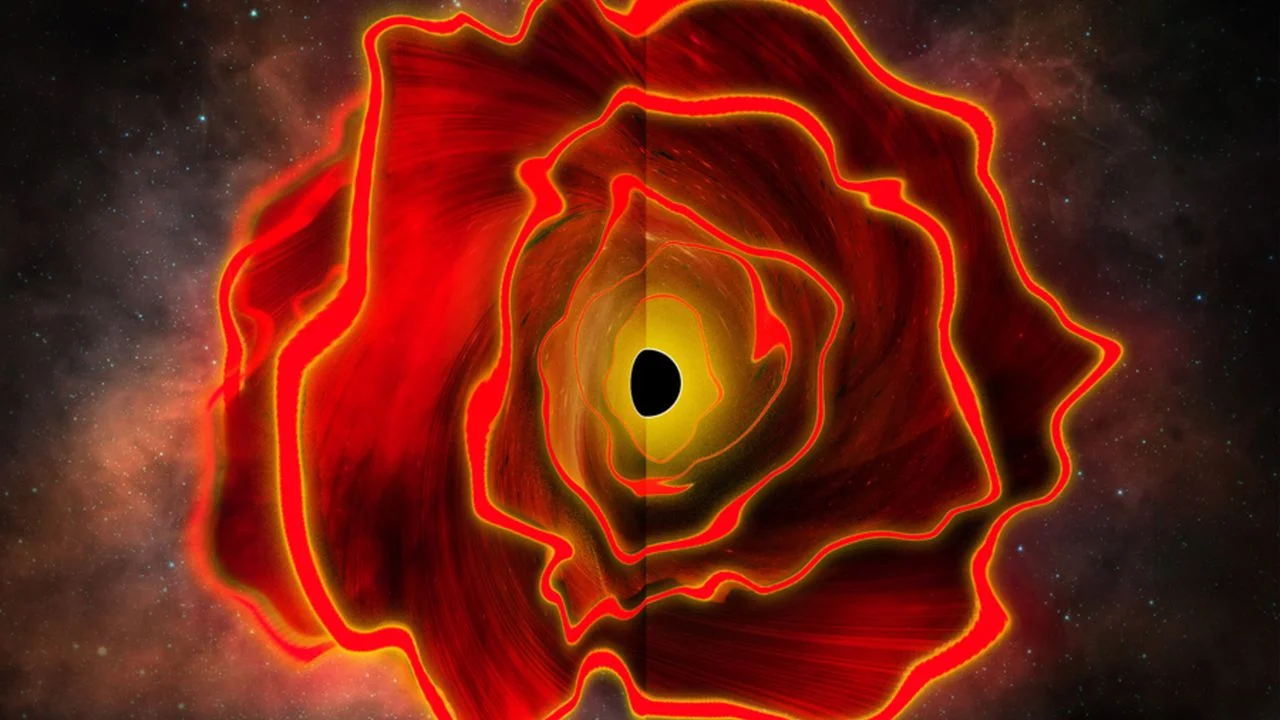
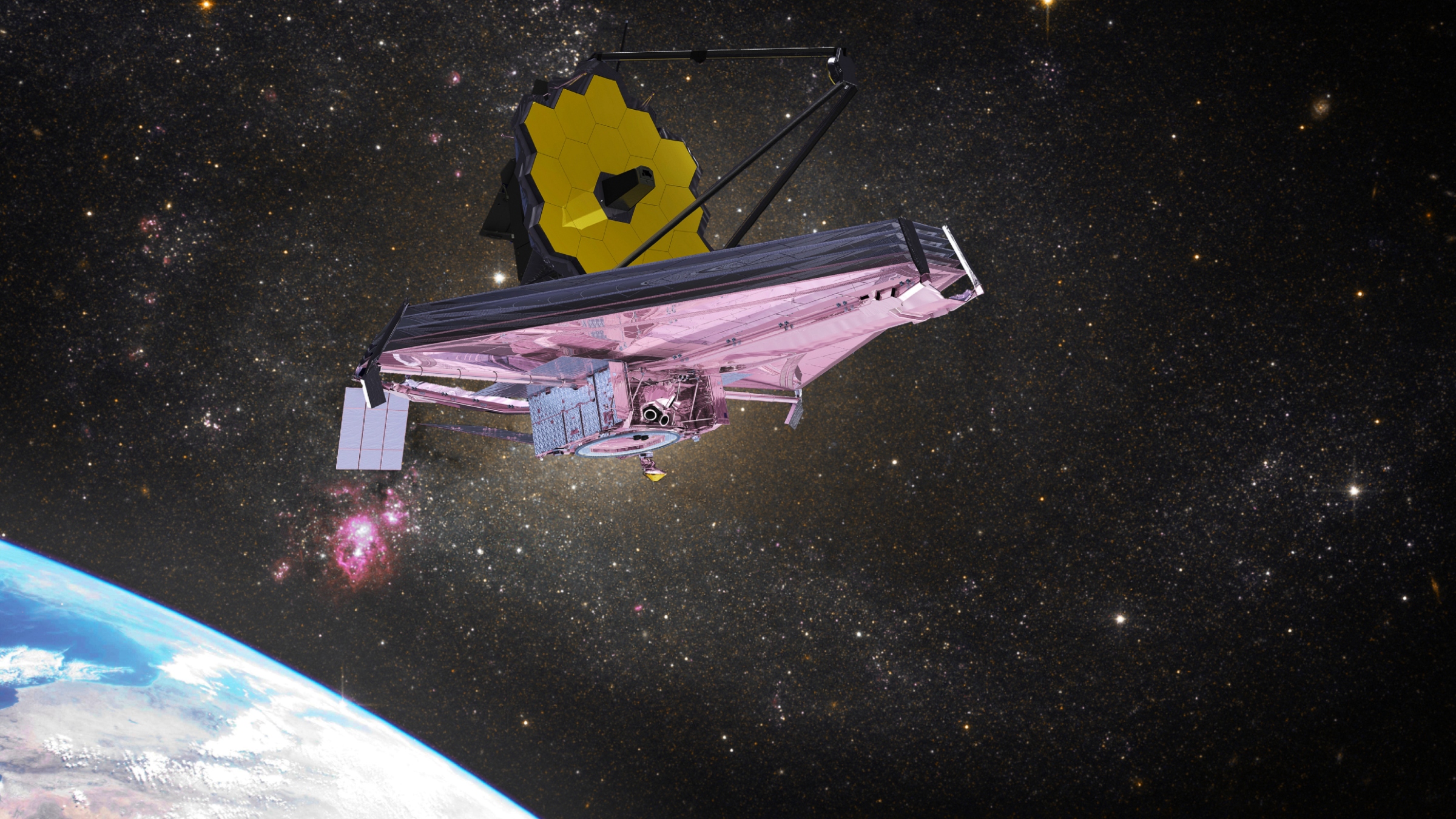
Astronomers have made a significant breakthrough in our understanding of celestial objects with the identification of MoM-BH*-1, a prime candidate for a new class of astrophysical entity posited as a "black hole star." This discovery emerges from the in-depth analysis of data collected by the James Webb Space Telescope (JWST) during its Miracle or Mirage survey, designed to probe the farthest reaches of the cosmos.
MoM-BH*-1 is particularly intriguing as it was located roughly 660 million years after the Big Bang, at a time when the universe was still in its formative stages. This object is estimated to be about the size of our solar system and boasts luminosity around 100 billion times greater than a standard star. These striking characteristics could provide the keys to unlocking the mysteries behind the so-called "little red dots" (LRDs), enigmatic cosmic bodies that have puzzled astronomers due to their overwhelming brightness yet insufficient mass to classify as galaxies.
The findings were detailed in a study published in the journal Nature on August 12. Researchers suggest that MoM-BH*-1 might not be an ordinary celestial body but rather an immense gas ball encasing a supermassive black hole. According to Rohan Naidu, the lead author and an astronomer at the University of Hawaii, the emerging comprehension of this object is rapidly evolving, presenting an unparalleled opportunity to delve deeper into early universe phenomena.
Analysis of MoM-BH*-1's Characteristics
The distinctive ruby hue of MoM-BH*-1 sets it apart from many other LRDs. Astronomers often attribute such colors to the presence of dust that obscures shorter wavelengths of light. However, the electromagnetic spectrum of MoM-BH*-1 reveals a phenomenon known as the Balmer break, indicating that significant portions of light are being blocked by an incredibly dense gas shell rather than dust alone. This suggests a gas composition rich in hydrogen and helium, reminiscent of early stellar formations.
Notably, Naidu emphasized that the depth of the Balmer break observed in MoM-BH*-1 is unprecedented, effectively ruling out ordinary stars as a potential source. The ongoing mystery revolved around the gas dynamics, leading researchers to simulate gravitational interactions that implied the presence of an obscured black hole at the core of this massive gas formation. Such simulations point to a scenario where a large and rapidly spinning black hole may exert dominance, pulling gas into an accretion disk while simultaneously generating beams of energy that can alter surrounding gas dynamics.
Revisiting the Little Red Dots Phenomenon
LRDs have become a focal point in modern astrophysics due to their perplexing nature—too dim to be entire galaxies yet too bright to be conventional stars. Traditionally, quasars, which lie in a grey area between stars and galaxies, were seen as potential explanations for the novel red dots. However, the lack of detectable high-energy radiation from these objects has complicated the quasar hypothesis.
MoM-BH*-1 stands out in this context, as its dense gaseous exterior could effectively mask emissions typical of quasars. This points to a fascinating possibility that black hole stars might constitute a substantial portion of LRDs, acting as the luminous cores around which smaller galactic structures are forming. The research team proposes that these black hole stars could interact with primitive star clusters, potentially leading to the formation of larger galaxies over cosmic time.
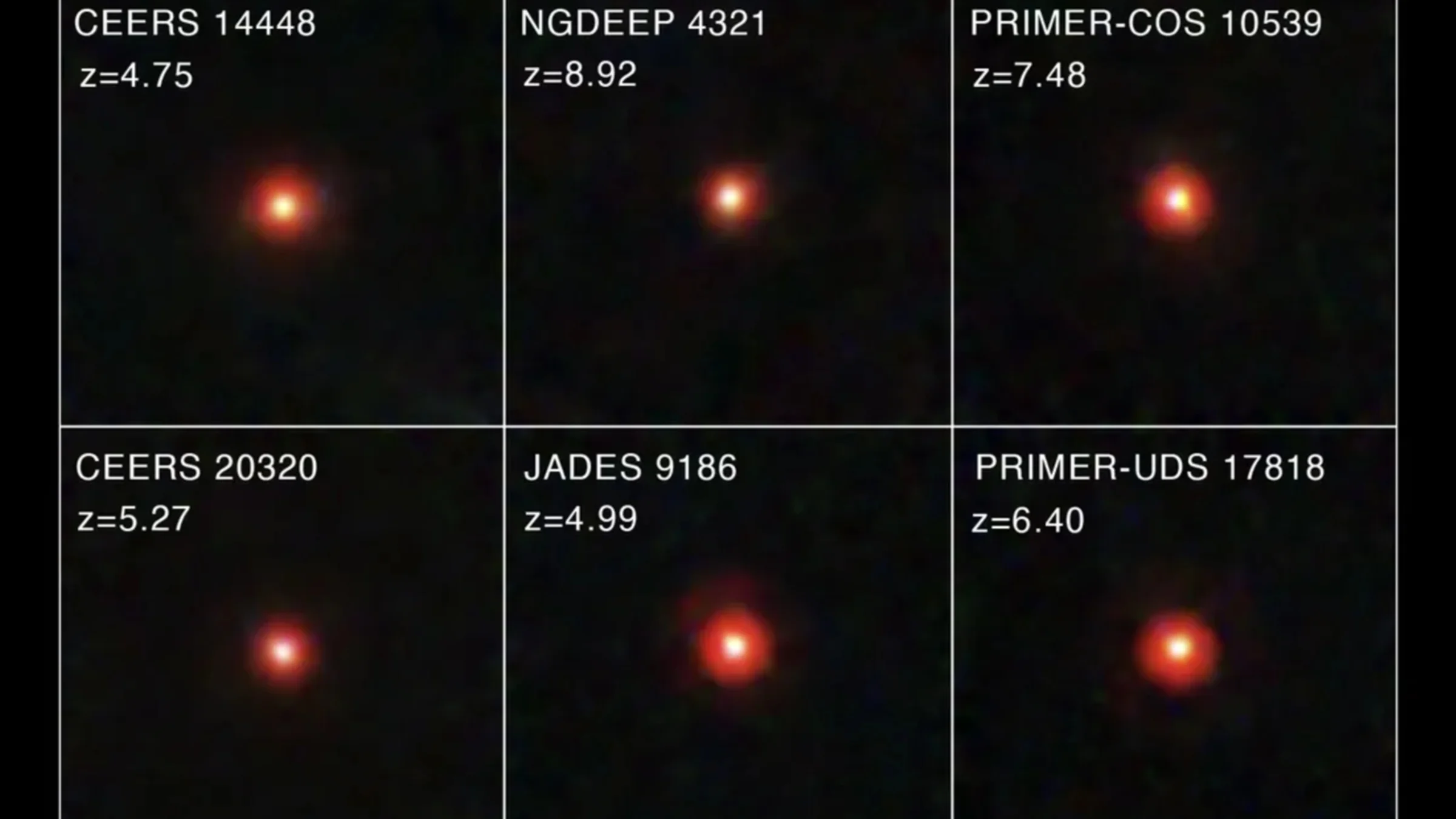
The ongoing investigation into LRDs suggests that they may not be mere astronomical anomalies but intricate components of the early universe's fabric. While some of the observed LRDs appear larger than MoM-BH*-1, understanding the implications of these objects requires further exploration. Scientists are refining theoretical frameworks to account for potential size variations in black hole stars and their respective role in galaxy formation.
As the JWST continues its mission to unveil the secrets of the cosmos, MoM-BH*-1 stands as a beacon of promise for astrophysics, potentially leading to a profound rethinking of black holes' roles in the early universe and beyond. Future observations will be critical, linking these cosmic phenomena to the grand narrative of galaxy evolution and early cosmic formation.
Discussion
Sign in to join the discussion.