Recent discoveries reveal the presence of life's essential molecules in space, with ongoing missions poised to uncover even more complex ingredients.
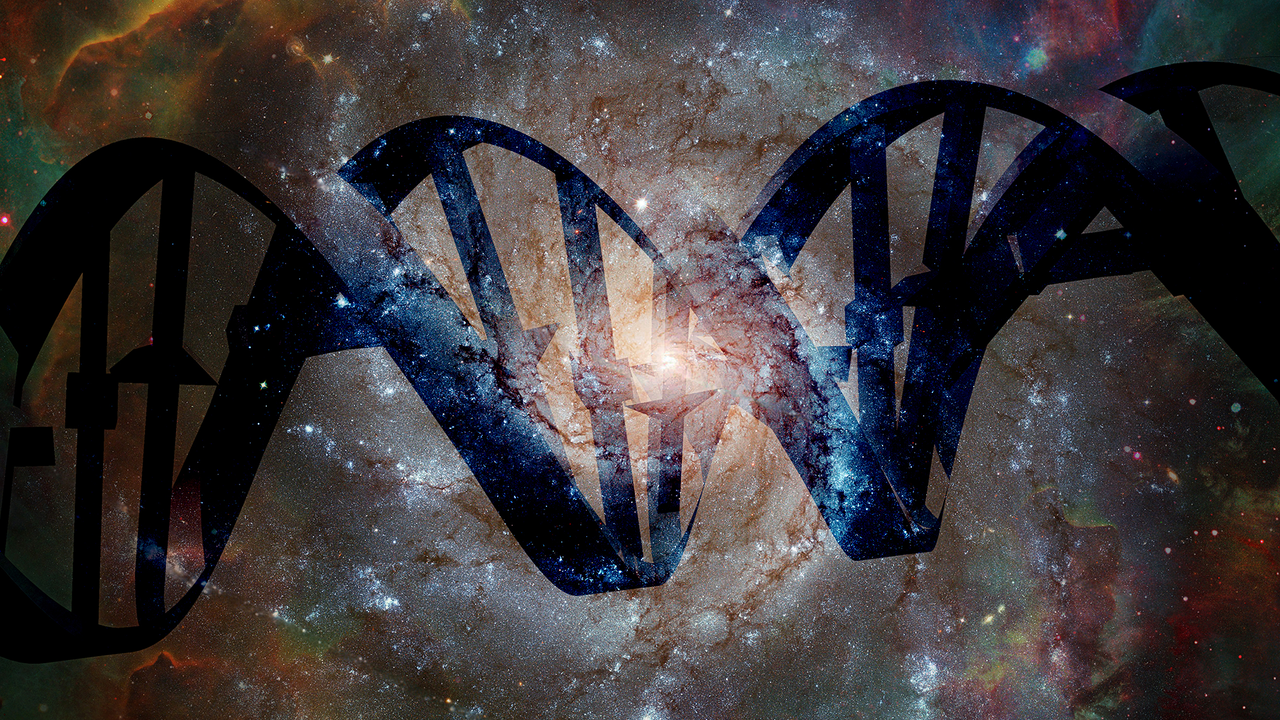
Recent research reveals an intriguing reality: essential ingredients for life have been identified not just on Earth but in asteroids, meteorites, and even in the cosmic dust of our galaxy. The evidence continues to grow, with recent sample-return missions shedding light on molecular structures vital to life as we know it.
To clarify what we mean by "building blocks of life," scientists are primarily on the lookout for specific types of molecules that mirror those found in terrestrial organisms—these include proteins, ribonucleic acid (RNA), and lipids, which form cellular membranes. A significant breakthrough came with the asteroid Bennu, which returned samples to Earth in 2023. These samples contained all five nucleobases critical for DNA and RNA as well as 14 out of the 20 amino acids that are fundamental to life.
Continuing this trend, the sibling asteroid Ryugu also yielded all five nucleobases including uracil, a key component of RNA. Such findings underscore a plausible link between celestial bodies and the origins of life on Earth.
Understanding the Cosmic Chemistry
A deeper understanding comes from astronomers who survey complex organic molecules (COMs) in space using radio astronomy techniques. Out of approximately 350 molecules discovered so far, around 180 qualify as COMs—a classification determined by their molecular complexity, or lack thereof. According to Sergio Ioppolo, an astrochemist at Aarhus University, the criteria for defining complexity might be more operational than fundamental.
Within the broader category of COMs lies a group of prebiotic molecules, which scientists believe could provide insights into the origins of life. Ioppolo estimates the count of these prebiotic candidates at around 30, but this figure can vary based on the definitions applied.
Molecular clouds, dense areas rich in gas and dust located throughout the galaxy, serve as lucrative hunting grounds for these vital molecules. Iza Jiménez-Serra, an astrochemist in Spain, and her colleagues recently detected over a dozen prebiotic molecules in the molecular clouds near the Milky Way's center. Notably, they identified erythrulose, a four-carbon sugar—marking the first detection of a sugar in space.
The Limits of Detection
However, the search has its challenges. The size and complexity limit the detection capabilities of astronomical surveys. Detection involves analyzing light from these molecular clouds to find corresponding spectral lines—essentially unique fingerprints of each molecule. Binary complications arise when larger molecules produce overlapping absorption bands, making it challenging to distinguish between species.
This limitation leads many to conclude that while the prebiotic molecules already found are numerous, countless others likely remain undiscovered. Despite the frequency with which researchers find these molecules, Ioppolo argues that each discovery retains its significance. The challenges of star and planet formation, such as exposure to high temperatures and cosmic radiation, can obliterate complex molecules—a fact that makes findings like amino acids on Mars impressive in their own right.
Future Exploration
A looming question in this cosmic exploration is whether the abundance of life's ingredients in space hints at life's commonality throughout the universe. Jiménez-Serra cautions that although these small molecules don't equate to finding life itself, they add to the rich tapestry of conditions under which life could potentially evolve.
Her enthusiasm is palpable regarding the possibility of more complex forms forming under extreme conditions in space. She emphasizes the significance of continuing to probe for larger complex molecules such as ribose, a sugar crucial for RNA. Discovering ribose in space would offer compelling evidence that life's fundamental ingredients might form even prior to the birth of stars and planets.
Upcoming missions are pivotal in this quest. Nearly ten sample-return missions are either in progress or planned, aiming to collect samples from rocky bodies in space. Japan’s Hayabusa2, which previously retrieved samples from asteroid Ryugu, is on a trajectory towards two additional asteroids, while China's Tianwen-2 mission, launched in 2025, intends to gather samples from the near-Earth asteroid Kamoʻoalewa.
As Ioppolo aptly states, the pervasive presence of prebiotic molecules in star-forming regions indicates a substantial likelihood that life could arise elsewhere under the right conditions. Yet, while we’re assured of our existence, the question remains whether the ingredients that led to life on Earth have also catalyzed life elsewhere in the cosmos.
Discussion
Sign in to join the discussion.