A newly found 9 million-year-old capybara tooth in northern Chile suggests the Atacama Desert wasn't always as dry as previously believed.
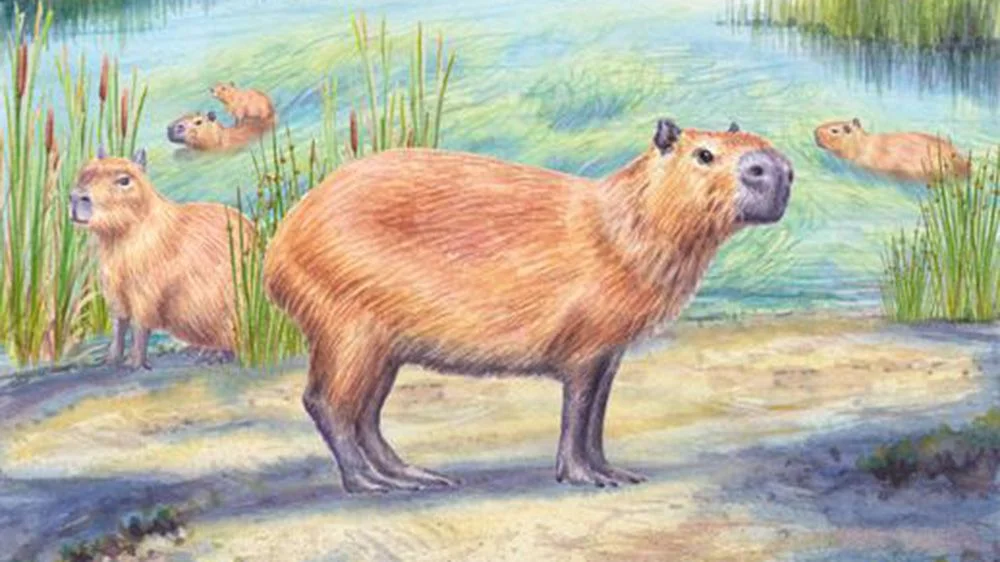
Recent research has unveiled a remarkable finding: a 9 million-year-old tooth belonging to a large, aquatic relative of modern capybaras has been discovered in the Atacama Desert, located in northern Chile. This fossil adds weight to emerging evidence that contradicts the long-held belief that the Atacama, one of the world’s driest deserts, has been persistently arid for the last 40 million years.
The Atacama Desert's Climate History
The Atacama Desert is often regarded as the oldest desert on Earth, stretching across the northern third of Chile. Its geographic features, including the Chilean Coast Range to the west and the Andes Mountains to the east, create an environment that blocks moisture from both the Pacific and Atlantic Oceans. Monthly rainfall in its driest regions amounts to a mere less than 0.08 inches (2 mm).
This lack of moisture for millennia has led researchers to view the Atacama as almost a case study of extreme aridity. Yet, according to a recent study, the hyper-arid core of the Atacama is believed to have formed between roughly 47.8 million and 33.9 million years ago, notably 20 million years before the Andes themselves emerged. This timeline suggests that the mountain ranges didn’t initiate the desert's aridity but rather intensified it.
This discovery marks a pivotal shift in understanding the Atacama's climatic history. Traditionally viewed as an unchanging landscape, this new information paints a picture of a region that may have oscillated between a dry and fertile environment. If you're working in this space or are simply a climate enthusiast, this insight underscores the complexities of past ecosystems that could reshape future research agendas.
Significance of the Capybara Tooth Discovery
The tooth, identified as belonging to the extinct species Hydrochoerus cardiatherium, is puzzling, as modern capybaras (Hydrochoerus hydrochaeris) typically require access to freshwater and lush vegetation to thrive. "Finding a capybara tooth in a marine deposit in what today is one of the driest regions on Earth is just freakish," stated Priscilla Martinez, a geoscientist from the University of Arizona and co-author of the paper outlining this discovery.
Currently, capybaras do not inhabit Chile, according to the International Union for Conservation of Nature (IUCN). Therefore, this find raises intense questions about the region's past ecosystems. The mere existence of an aquatic capybara relative in an area that is hyper-arid today implies that the Atacama once supported conditions suitable for diverse life forms, including large mammals. This is more significant than it looks, as it challenges long-standing assumptions about the desert’s ecological viability throughout history.
Evidence of a Once Fertile Atacama
This tooth is part of a larger context indicating that the Atacama was not always the parched landscape it is today. Researchers uncovered this tooth within a layer that indicates a shallow marine environment existed there between 7 million and 10 million years ago. This era aligns with the late Miocene, a time characterized by significant climatic fluctuations, providing additional clues as to what the region might have looked like.
Additional findings of phytoliths, microscopic plant remains, reveal palm trees, grasses, and other flowering plants thrived in what could have been a subtropical forest. (and this is the part most people overlook) These rich findings challenge the prevailing presumption that the Atacama's dryness has been stable. Collectively, these discoveries suggest the Atacama Desert could once sustain Australian crocodiles, freshwater fish, and various plant life. A study published on September 5 in the journal Scientific Reports reinforces the theory that capybara relatives lived in a wetter Atacama during the late Miocene, supporting the notion of fluctuating moisture levels in the region. This evidence radically shifts how we view past climatic conditions, suggesting this area might have been a biodiverse hub rather than the sterile desert we see today.
The Path of Ancient Capybaras
How these ancient capybaras entered the Atacama remains a topic of discussion. While there were populations of capybaras throughout South America at that time, the formidable Andes created an 18,000-foot barrier, complicating migration routes. Researchers hypothesize that these creatures may have migrated along the western coast, traversing wetlands, rivers, and other water sources instead of crossing the mountains. This is a compelling angle, emphasizing the adaptability of species in the face of geographic obstacles.
As Samantha Hopkins, an Earth sciences professor at the University of Oregon who did not participate in this study, poignantly remarks, "If you wanted to find a way that this capybara could be here while the Atacama was still as dry as it is today, you'd have a hard row to hoe." The size of the tooth makes it improbable that it arrived there through chance processes, reinforcing the idea that the Atacama's climatological history is more nuanced than previously believed. The likelihood of capybaras thriving in a once-fertile South America presents a fascinating narrative of resilience amid changing environments.
Implications and Future Outlook
The discovery of this ancient capybara tooth raises tantalizing questions about the historical ecology of the Atacama Desert and may prompt further investigations into other fossil remains in the region. This could lead to a broader reevaluation of not just the desert itself, but other similar landscapes worldwide. If you're an academic or a researcher, this opens up a potential avenue for exploring how climate changes over millennia impact species distribution and adaptation.
Moreover, this may also set the stage for discussions on how current climate change could reshape arid environments in the future. What this means for you, especially if you're working in climate science or ecology, is that understanding past ecological dynamics may provide critical insights into what lies ahead as the planet continues to warm. This narrative does not end with one fossil; it's merely a chapter in a much larger story of life’s adaptability against unforgiving odds.
Discussion
Sign in to join the discussion.