Astronomers have detected FRB 20240304B, the farthest fast radio burst ever observed, illuminating early cosmic history with James Webb Space Telescope.
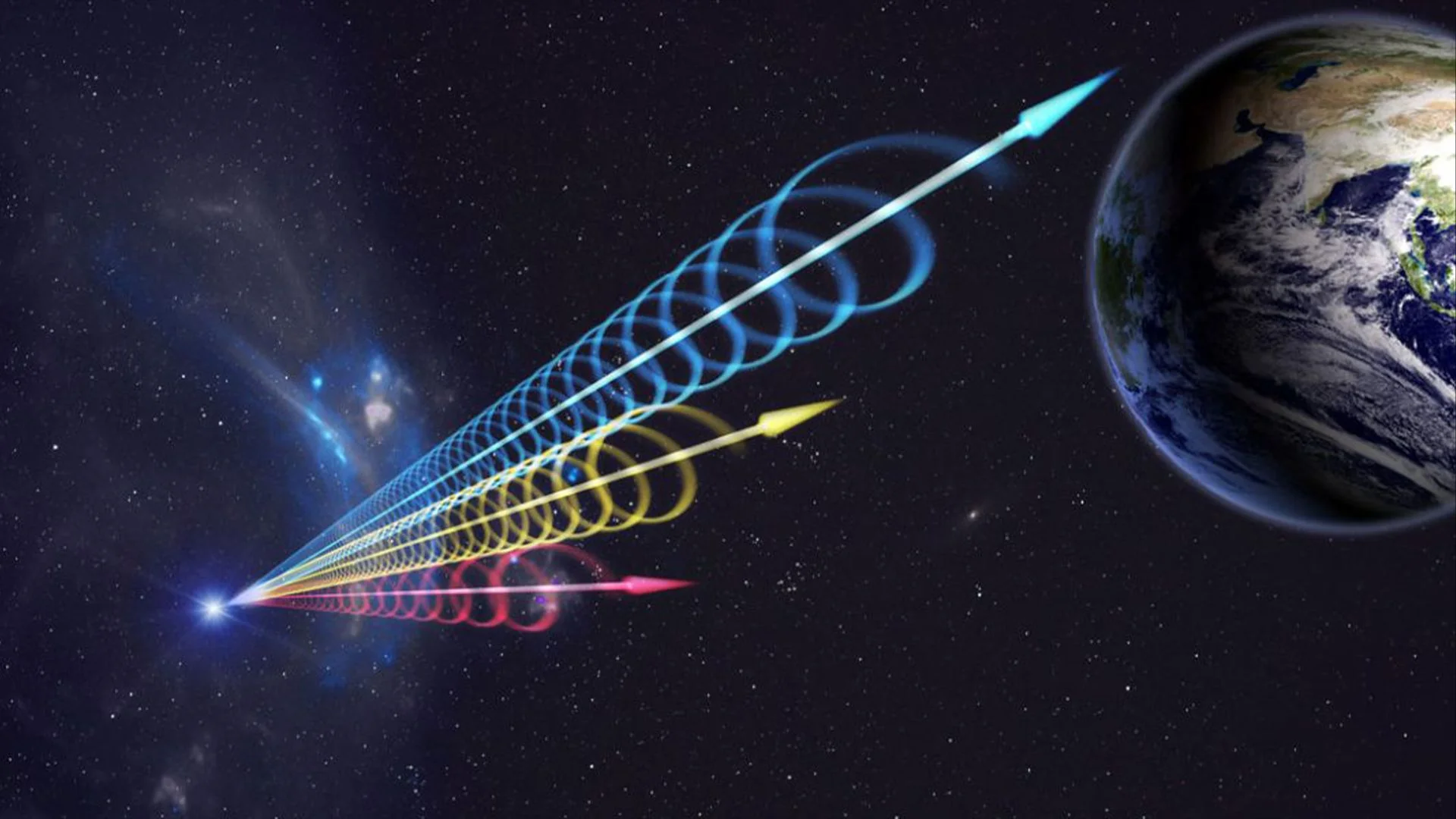
Astronomers have successfully identified the most distant fast radio burst (FRB) recorded to date, known as FRB 20240304B, originating from over 10 billion light-years away. This remarkable discovery sheds light on cosmic events from a time when the universe was merely 3 billion years old and bolsters our understanding of these enigmatic occurrences. The sheer scale of this finding offers fresh insights into our cosmic history, inviting a reconsideration of the processes that shaped the universe in its early phases. In a field where every new discovery chips away at the unknown, findings like FRB 20240304B are illuminating pathways to understanding fundamental astrophysical phenomena.
While thousands of FRBs have been detected since their discovery, their transient nature—lasting only milliseconds—has made them difficult to study and comprehend. Understanding these bursts is not just an exercise in curiosity; it’s pivotal for unraveling the mysteries of the universe. The recent research, published in the journal Science on October 8, utilizes data from the James Webb Space Telescope (JWST) to narrow down the exact galaxy of origin for FRB 20240304B, significantly expanding our knowledge of these bursts. This melding of observational powers marks a critical juncture for astronomical research, where the speed and depth of observations can spark new theories and questions.
The Role of JWST in the Discovery
Themiya Nanayakkara, a senior lecturer at the Sydney Institute for Astronomy and a co-author of the study, emphasized the pivotal role of JWST in this breakthrough. According to Nanayakkara, JWST's observations revealed that the host galaxy of the FRB was unexpectedly small, contained low metallicity, and was undergoing substantial star formation. This unfolding narrative of the host galaxy is significant; it hints at conditions that potentially foster FRBs, thereby deepening our understanding of their environments.
Researchers propose that FRB 20240304B might be linked to a magnetar—a type of neutron star with an incredibly strong magnetic field—potentially born from the remnants of a supernova. This association adds layers to our understanding. Magnetars are known for their powerful emissions, which makes the connection to FRBs plausible, bridging the gap between stellar evolution and cosmic phenomena. What’s compelling here is the emphasis on the lifecycle of massive stars. These stars don’t just disappear; they leave legacies that shape the universe’s present and future in unpredictable ways.
From MeerKAT Discoveries to JWST Insights
The discovery of FRB 20240304B was initially made using the MeerKAT telescope array in South Africa, which consists of 64 radio telescopes. This initial detection is not merely a logistical step; it’s a testament to the evolving capabilities of radio astronomy. Nanayakkara highlighted that MeerKAT provided not only the detection of the FRB but also a precise celestial location. Despite the initial findings of the radio signal's significant dispersion indicating vast distance, attempts to detect the host galaxy using terrestrial telescopes were unsuccessful. Researchers concluded it was too faint for those observations, a reality that underlines the limitations of ground-based technology in identifying such distant astronomical objects.
Turning to JWST proved transformative. The researchers accessed time on the telescope through its Director’s Discretionary Time program, which is reserved for urgent observational needs. JWST’s Near Infrared Camera acquired detailed images of the designated area, eventually uncovering the faint host galaxy. The team then relied on the Near Infrared Spectrograph to elucidate the galaxy’s composition, revealing spectral features indicative of hydrogen and oxygen. This meticulous process illustrates the transition from initial discovery to detailed analysis—researchers had to adopt a multi-telescope strategy to piece together the cosmic puzzle, a reminder that collaboration across different technologies can yield significant breakthroughs.
Evaluating Conditions in the Early Universe
By examining the spectral data, the research team was able to determine a redshift of approximately 2.15, translating to an observation of the galaxy as it existed when the universe was about one-fifth its current age. This finding is far more than just a number; it's a gateway into understanding how galaxies evolve over time. The relatively youthful nature of the host galaxy supports the hypothesis that some FRBs are products of magnetars—entities more likely to manifest in active galaxies characterized by intense star formation. These insights suggest that the processes governing star formation in the early universe may be analogous to what we observe today.
This research doesn’t just add data points; it refines our grasp of FRB origins and sets the stage for future investigations. By linking magnetars with FRBs, we're potentially looking at a consistent framework that can explain these bursts as products of high-energy environments. But implications stretch further. The interrelation of galaxy formation and the phenomena of FRBs could serve to illuminate not just past cosmic events, but also help predict future occurrences and their implications.
Future Outlook: The Path Ahead
Looking ahead, the team is eager to continue the hunt for additional FRBs using JWST. “We don’t know what the sources will be yet,” said Nanayakkara. “Once ground-based radio telescopes locate a new source, we can activate JWST for observations. It’s an exciting frontier because combining both telescopes opens a whole new realm of possibilities for discovery.” This collaboration emphasizes a modern trend in astrophysics: the integration of different observational techniques to tackle complex questions. If you're working in this space, the blend of radio and infrared observations provides a promising blueprint for future research.
With the limits of our current understanding constantly pushed back, the journey through this cosmic exploration seems unending, yet profoundly essential. The revelation of FRB 20240304B may be just the first of many finds that challenge our perceptions of space and time. There’s potential here not just for fragmentation of knowledge, but an opportunity to weave a narrative that captures how the universe has transformed over billions of years — and what it might still have in store for us.
Discussion
Sign in to join the discussion.