Research shows the Milky Way emerged from a turbulent assembly of thousands of smaller galaxies during the universe's early years.
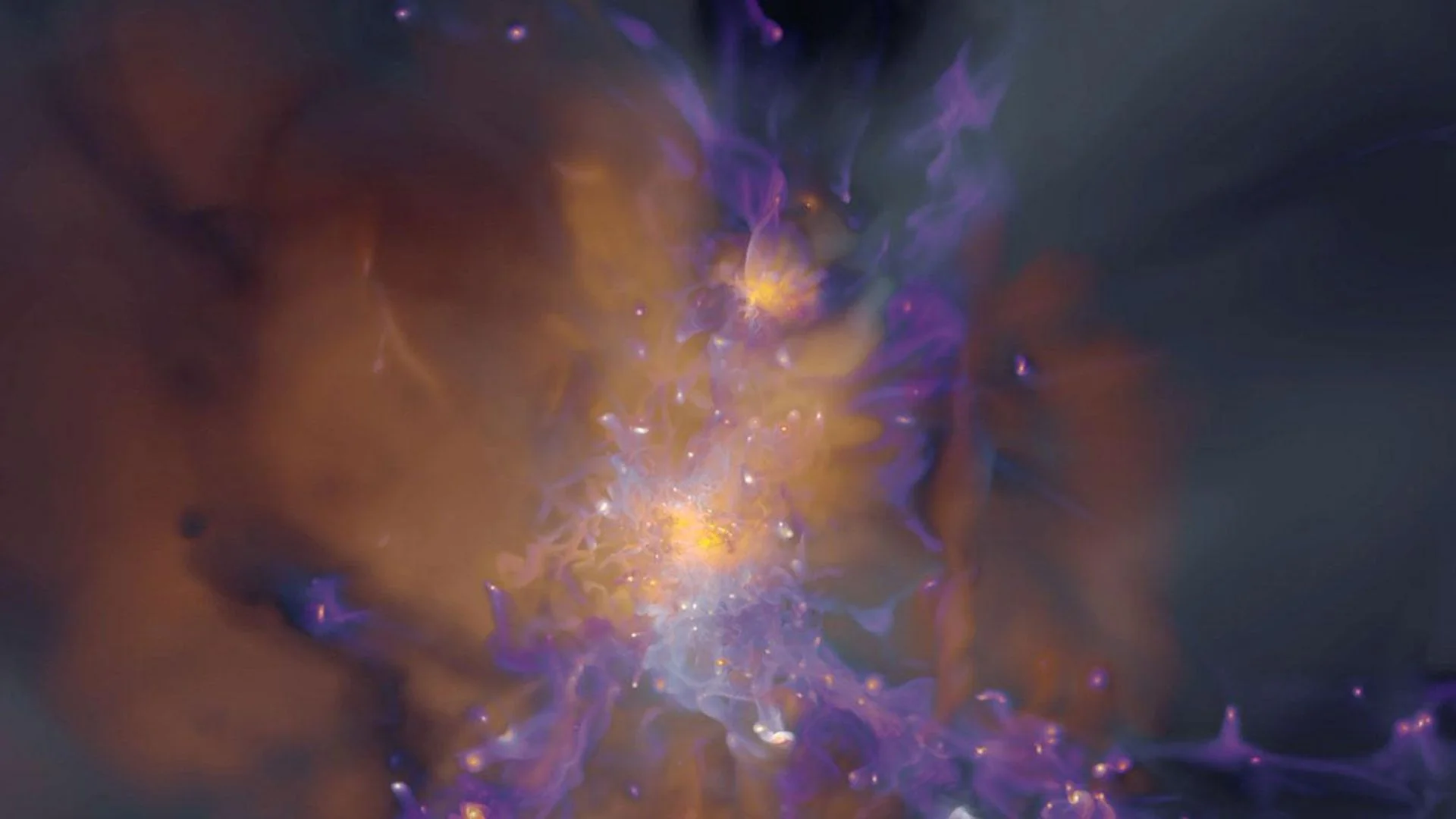
Recent research suggests that the Milky Way was once a chaotic collection of thousands of smaller galaxies before evolving into the spiral galaxy we recognize today. This transformation occurred in the first two billion years after the Big Bang, during which myriad galaxies coalesced through collisions and mergers. The implications of this evolution are profound, reshaping our understanding of cosmic history and the fundamental mechanisms of galaxy formation.
Harley Katz, a co-author and assistant professor at the University of Chicago, emphasized the significance of understanding these early cosmic events. "The physics happening right after the Big Bang has a direct impact on what we see today in the local universe," he stated. By tracing these developments, astronomers can better understand not just the Milky Way but also the universal principles governing galaxy evolution.
Megatron: Unraveling Cosmic Evolution
Aiming to better grasp the universe's infancy, astronomers have developed advanced simulations encoded with the laws of physics. The new study represents three years of supercomputer simulations, marking the most thorough account of our galaxy's formation yet—a critical resource amidst ongoing discoveries in the early universe. This isn't merely academic; understanding our cosmic origins helps inform other fields, including astrophysics and planetary science.
The James Webb Space Telescope (JWST) has offered unprecedented insights into that period, revealing early galaxies that challenge existing models, such as unexpectedly bright galaxies and a peculiar class of compact entities known as Little Red Dots. These discoveries underline the need for revisions in computer simulations to accurately reflect the complex conditions of the early universe. Existing frameworks may not fully capture the dynamic environments where new stars and galaxies emerge, emphasizing the necessity for updated models that integrate these novel observations.
To enhance their simulations, the research team created a framework called Megatron, which reconstructs the conditions from 180 million years to 2 billion years post-Big Bang. This model not only predicts the unique light signatures of ancient galaxies but also facilitates direct comparisons with JWST’s spectral data, providing an invaluable link between simulations and real cosmic observations. This connectivity is particularly important for validating theoretical predictions and enhancing the reliability of future cosmic investigations.
Furthermore, Megatron tracks the lifecycle of the universe's first stars—how they formed, perished, and enriched their surroundings with essential elements like carbon and oxygen. "These complementary observations allow us to test competing models of the first stars in ways that weren't previously possible," noted Martin Rey, a theoretical astrophysicist involved in the study. The intersection of observational data and simulations offers a multifaceted approach to understanding the intricate processes at play during the universe's formative years.
The findings were documented in one of six papers released on September 30 in The Open Journal of Astrophysics. This publication marks a significant contribution to the astronomical community, positioning Megatron as a potentially pivotal tool for future research.
The Milky Way's Formation Journey
The simulation initiates 180 million years following the Big Bang, a period marked by an absence of stars and galaxies. It captures the emergence of the initial stars during what is termed the "cosmic dawn," culminating in their explosive deaths that scattered the newly forged heavy elements into the cosmos, forming the precursors for future stars and planets. This period is critical because it set the stage for everything that followed—without these first stars, galaxies as we know them wouldn't exist.
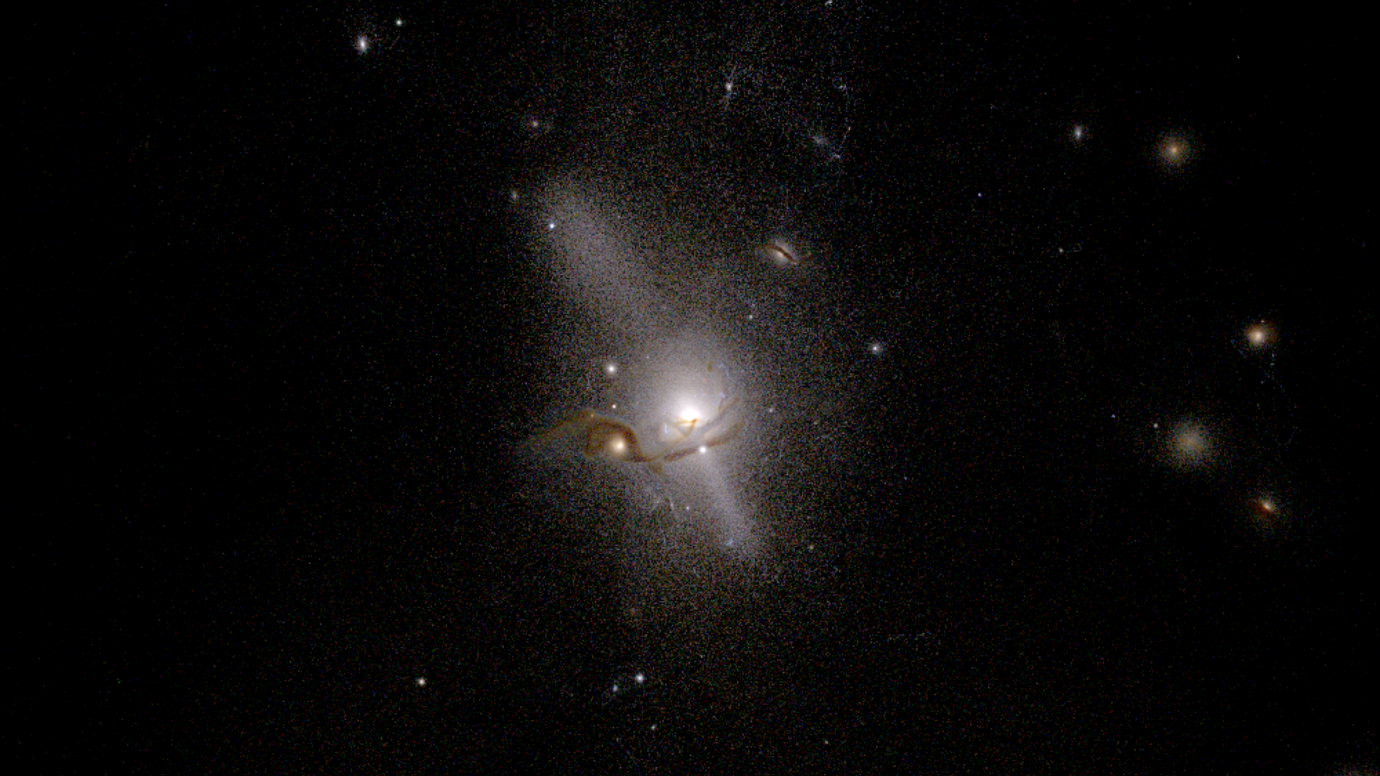
While the simulation concludes two billion years post-Big Bang, the Milky Way's assembly has continued, with ongoing studies uncovering traces of the smaller galaxies that merged with it over time. Notably, the ongoing merger with the Sagittarius dwarf galaxy has been taking place for over six billion years. These interactions serve as reminders that our galaxy is dynamic, constantly changing, and influenced by gravitational forces from neighboring celestial bodies.
Insights from these simulations are pivotal in refining our understanding of how various physics parameters influenced early cosmic events and aligning JWST's observations with theoretical models. However, the study also highlights gaps in current understanding, prompting further inquiry into the cosmic processes still not well-defined. "What are the parts we’re still missing? That can lead to new directions and questions," Katz remarked. Those gaps are not trivial; they could influence the broader interpretations of galaxy formation and evolution.
Researchers are currently enhancing the Megatron simulations to incorporate more intricate physics, especially the influence of active black holes, which JWST observations have shown to be surprisingly prevalent in the early universe. These black holes play a critical role not just in galaxy formation but also in how galaxies evolve over time, as they can profoundly affect the star formation rates in their vicinity.
Implications and Future Outlook
The revelations from Megatron and JWST aren’t just academic exercises; they promise to reshape our understanding of cosmic evolution in significant ways. If you're working in this space, consider how these simulations can provide a blueprint for upcoming studies and explorations. This is more significant than it looks. Traditional models may need a complete overhaul as new data comes to light. The integration of previously disregarded factors—like black holes and dark matter interactions—could lead to a more nuanced comprehension of galaxy formation.
The research community has a unique opportunity to collaborate across disciplines, combining theoretical models with observational data to fill the existing knowledge gaps. As we continue to enhance simulations like Megatron and refine observational techniques with instruments like the JWST, we’ll unlock new insights into the early universe's structure and behavior. These ongoing advancements are likely to pose new questions and offer fresh hypotheses, propelling forward our quest to understand the cosmos in which we reside.
Challenge your knowledge of our galaxy with our Milky Way quiz!.
Discussion
Sign in to join the discussion.