A newly excavated Roman camp near a Cantabrian settlement contains weapon fragments and evidence of a fire that destroyed two temples.
A Roman fort found near an Iron Age settlement in northern Spain is giving archaeologists a closer look at how Augustus’ forces subdued the Cantabri. Weapon fragments, shoe nails and evidence of a destructive fire connect the military camp to a campaign that ended local control of the region in 19 B.C. The discoveries don’t, by themselves, settle exactly how the final assault unfolded. They do put a Roman military position and a nearby community into the same archaeological picture, giving researchers a way to ask more precise questions about the conquest.
A fortified camp beside a Cantabrian settlement
Excavated earlier this year, the camp lies about 500 meters from a settlement once inhabited by the Cantabri, Celtic tribes who lived in the Cantabrian Mountains. Its earthen platform measures roughly 12 meters across and is enclosed by a stone wall about 1.5 meters thick, according to a translated statement. Those measurements give researchers a physical outline of the position, though they don’t establish how many soldiers occupied it or how long they stayed. The fort’s location is a key part of the evidence: near enough to the settlement to make a relationship plausible, but not so close that proximity alone proves what happened between the two.
The Cantabri resisted Roman rule for about a decade during the wars waged under Emperor Augustus. Their defeat brought the Iberian Peninsula under Roman control, expanding the Roman Empire. That broad outcome is clear; the local sequence of military pressure, resistance and destruction is harder to reconstruct. A fort associated with a nearby settlement can help narrow that gap by bringing evidence of Roman activity into direct comparison with the remains of a community that experienced the campaign.
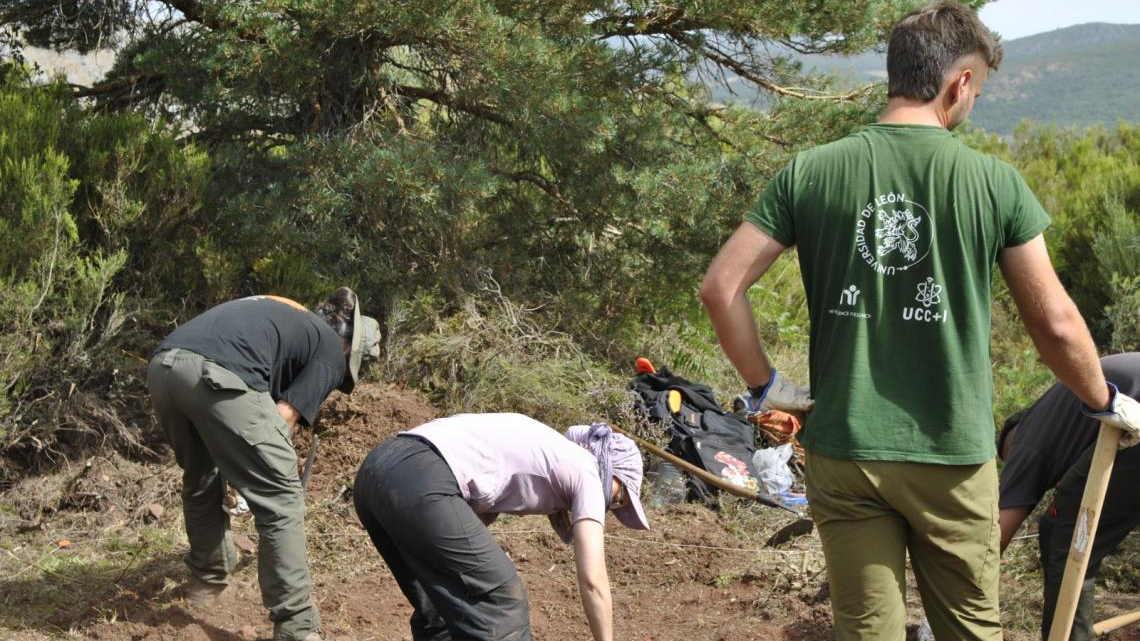
“It's not easy to find a camp associated with a hill fort in this condition,” said Eduardo González Gómez de Agüero, a University of León archaeologist who co-directed the excavation. The pairing matters because Roman camps and Iron Age settlements can leave different kinds of evidence, and researchers need to establish how those remains fit together before drawing a detailed account of events. This is more significant than it looks: the site offers a chance to connect military infrastructure with the community that stood nearby.
Weapons and fire point to the campaign’s costs
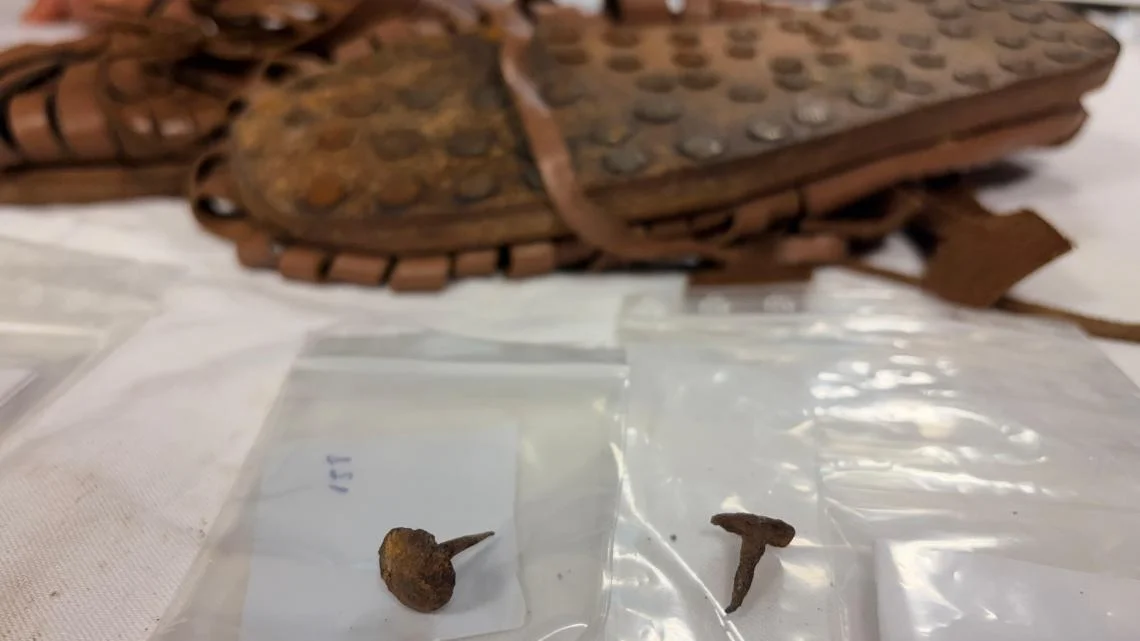
Among the finds are metal weapon fragments and iron hobnails, the small tacks driven into the soles of Roman soldiers’ leather military sandals to improve grip on muddy or rocky ground. These objects are consistent with a military presence, but their meaning depends on where they were found and how they relate to other material at the site. On their own, they can’t identify a particular battle or reveal the size of a force. Together with the fort’s position, they help build a case that Roman troops operated close to the settlement.
The sandal nails offer a small, practical detail of military life. Soldiers moving across uneven terrain needed footwear suited to the ground, and hobnails helped provide traction. Their presence makes the Roman occupation tangible in a way that a campaign map can’t. Still, the objects don’t tell researchers what each soldier did after reaching the area, or whether the camp functioned as a temporary position or part of a wider pattern of movement.
Archaeologists also found signs of a major fire that destroyed much of the settlement, including two temples. The team is investigating whether the Romans set it deliberately and whether the destruction happened in one attack or unfolded over time. Those questions are central, because a burned settlement can record violence without identifying who caused it or when. Evidence from the site may eventually help distinguish a single destructive episode from a longer period of upheaval, but the team hasn’t yet established which explanation fits.
González Gómez de Agüero said the fire may have served a purpose beyond military victory: “It's not just about defeating the enemy, but about humiliating them, erasing their identity, and breaking their connection to the land.” The destruction of temples makes that interpretation especially weighty, since those buildings were part of the settlement’s physical and communal life. And yet, the intention behind the fire remains a question for the research, not a conclusion the current finds can prove. (And this is the part most people overlook: evidence of destruction can be strong even when evidence of motive is not.)
What the site can add to the history of the conquest
The timing of the final Roman assault remains under study. A separate research team previously identified 66 Roman camps in northern Spain, evidence of the campaign’s scale. The new site helps researchers connect those military positions with Iron Age settlements. That connection shifts the focus from the number and distribution of camps to the communities that existed near them. If you're working in this space, the distinction matters: mapping military sites can show where Rome operated, while linking them to settlements can help explain how conquest affected local life.
“It is an important step in understanding how the conquest was carried out on the Cantabrian slope of León, an area where it was necessary to link the Roman camps with Iron Age settlements,” said University of León archaeologist Carlos Fernández Rodríguez. Establishing how the fort and settlement relate may help clarify where Rome fought for control—and how the campaign changed life across the region. The work is still in progress, so the exact relationship between the camp, the fire and the end of local control remains open. That uncertainty is useful: it marks what the evidence can support now, and what further study needs to test.
Why the link between camp and settlement matters
Archaeological accounts of conquest can easily become accounts of armies: their positions, equipment and movements. This site offers a way to keep the people living through the campaign in view. The camp’s proximity, the military objects and the destruction at the settlement form a compelling set of clues, but the story depends on careful comparison rather than a single dramatic interpretation. The fire’s cause and timing remain unresolved. Fragment by fragment.
What this means for you as a reader is that the discovery is less a final answer than a better starting point. It gives archaeologists a place where Roman activity and Iron Age life can be studied in relation to each other, while leaving room for evidence to complicate the picture. That said, the combination of a nearby fort and a devastated settlement makes the site a particularly valuable record of the human costs of the campaign.
Can you identify these historical objects of war? Test your smarts with our weapons of the world quiz!
Discussion
Sign in to join the discussion.