Three dwarf reed snake species can roll at up to 12.1 feet per second, steering their bodies while keeping their heads stable.
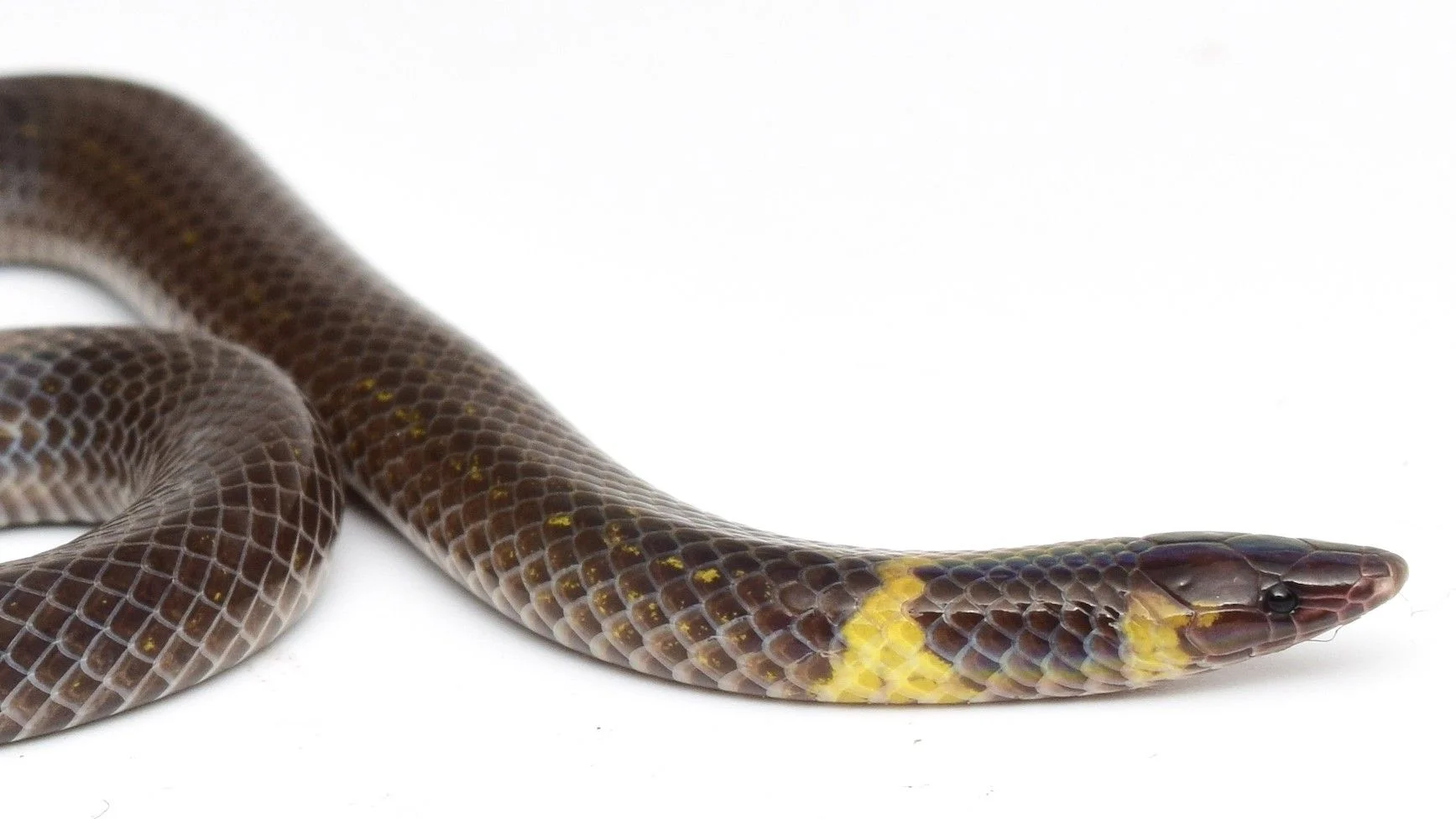
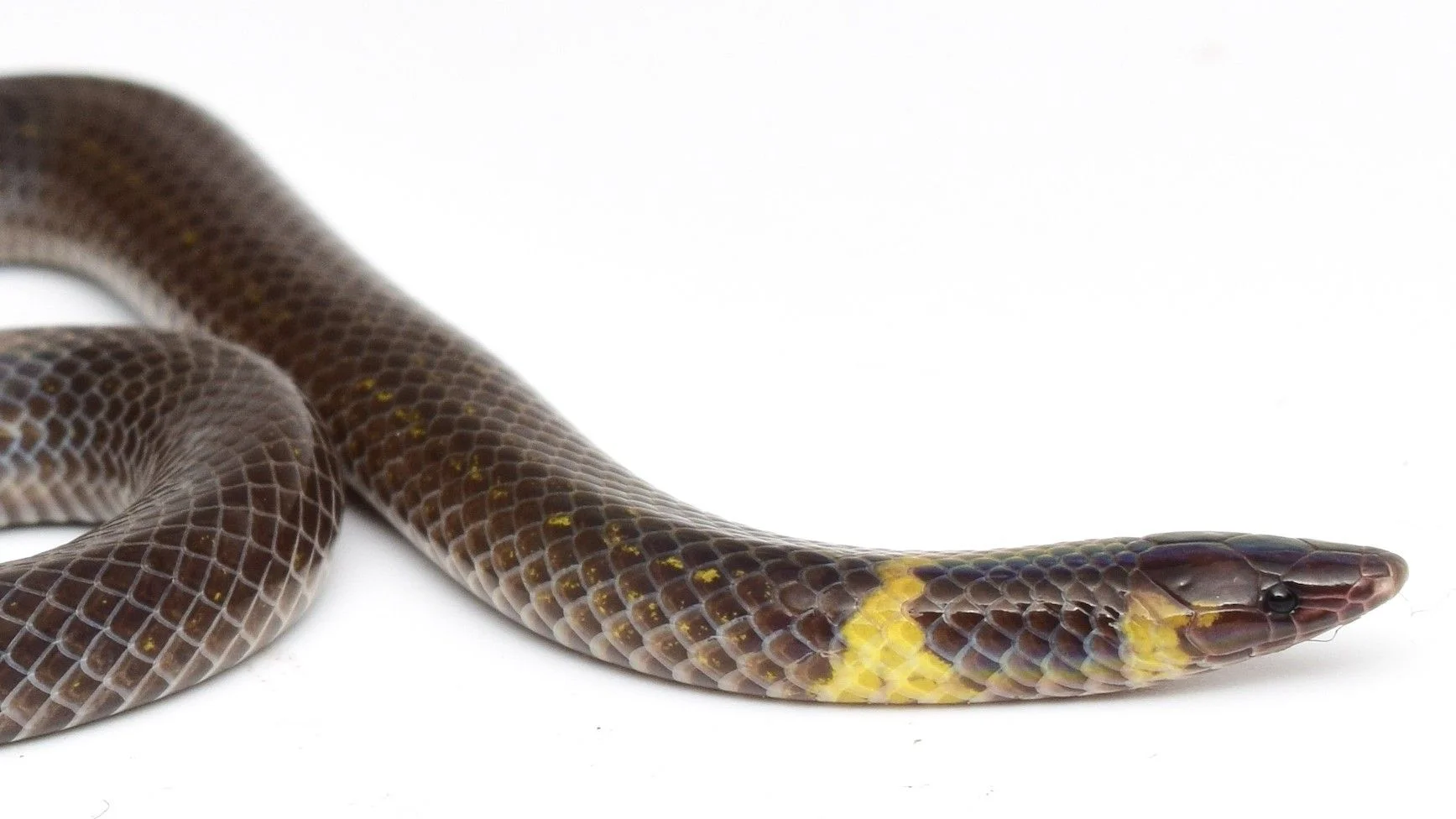
Dwarf reed snakes can escape danger by rolling at speeds that leave their usual slithering far behind. Researchers measured peak forward speeds of up to 12.1 feet per second (3.69 meters per second), averaging four times the speed of the snakes’ normal undulating movement. That difference matters because the rolling isn’t simply a change in posture: it lets the snakes cover ground quickly while their bodies rotate around their direction of travel.
A study published Monday (Oct. 19) in Current Biology documents the mechanics of this cartwheeling behavior in three species. The snakes keep their heads relatively steady as the rest of the body rotates, a control strategy that may let them roll quickly without losing their sense of direction. The findings offer a closer look at how a small, secretive animal can turn an unusual movement into a practical escape response.
Fast movement with a steady head
Yosuke Kojima, the study’s first author and a biology lecturer at Toho University in Japan, said the team filmed the snakes from multiple angles to quantify how they moved. “Rolling allows them to escape from danger very quickly,” he told Live Science. “In our study, their peak forward velocity during rolling was, on average, four times that of normal undulating locomotion.” Comparing the two gaits gives researchers a way to assess what the behavior could offer beyond its striking appearance.
Between 2019 and 2022, the researchers recorded repeated rolls by Pseudorabdion saravacense, P. collaris and P. longiceps. Three reed snakes from the separate genus Calamaria did not roll during the observations. That difference is useful context: the study documents the behavior in particular species, rather than showing that rolling is a general feature of reed snakes. The team’s work builds on a 2023 study that first formally described the behavior in P. longiceps, observed in northwestern Malaysia in 2019.
Kojima’s group began observing the same behavior around that time in Sarawak, on the island of Borneo. “I had never seen anything like it before, and I immediately wanted to learn more about it,” he said. The researchers’ later recordings turned that initial observation into something they could describe and measure, including the animals’ speed and the way they held their heads during a roll.
The new measurements confirm the earlier account of the rolling pattern and add detail about how the snakes manage their heads. Rolling can destabilize an animal and make it harder to adjust movement using sensory cues, so a rotating body poses a control problem as well as a locomotion opportunity. By keeping the head relatively fixed, and often lifted off the ground, dwarf reed snakes appear to counter those effects. The measurements describe what the snakes do; they don’t, by themselves, establish exactly how the animals process sensory information while rolling.
A directed escape, not a tumble at random
The snakes also showed control over where they rolled. They could follow a relatively straight route through a track just 8 inches (20 centimeters) wide, and often finished by slipping beneath nearby objects. A narrow route tests whether an animal can keep moving toward a destination while rotating, rather than simply spinning in place. That behavior suggests they stay aware of their surroundings while moving at speed.
Dwarf reed snakes are secretive, often nocturnal animals found across Southeast Asia. They hide beneath leaves and other natural cover and are prey for birds and other snakes. Their rolling escape has occasionally been seen by observers, despite how rarely the snakes appear in the open. That makes the filmed behavior especially useful: brief sightings can reveal that rolling happens, while repeated recordings let researchers compare how it works.
Other animals, including desert spiders and mother-of-pearl moth caterpillars (Pleurotya ruralis or Patania ruralis), also roll to escape threats. The researchers say the snakes stand out for the apparent precision of their movement. Here’s the thing: speed alone doesn’t explain that distinction. A fast escape is more useful if the animal can also keep its route and reach cover.
Rolling may do more than provide a quick exit. Researchers have proposed that the unusual motion could startle or confuse predators, though the study’s speed and movement measurements don’t establish how predators respond. A 2023 study also suggested that rolling might leave a less continuous scent trail, potentially making the snakes harder for king cobras (Ophiophagus) to track using smell. That remains a proposed benefit, rather than a result demonstrated by the new recordings.
What the behavior could tell us
The findings show how behavior can extend an animal’s physical options. As Kojima put it, “Behavioral innovation can give rise to surprising new abilities that we would not expect from an animal's appearance alone.” This is more significant than it looks: the snakes’ bodies are still moving in a way that seems awkward at first glance, yet their head control and directed route suggest the roll is organized enough to serve a clear purpose.
If you're working in animal movement research, the next question is how broadly this pattern holds across species and situations. The observations establish rolling in three dwarf reed snake species and show that three other reed snakes didn’t roll during the study. They don’t settle why some species use the behavior or whether it works equally well in different surroundings. More observations could clarify those limits. For now, the study makes a strong case that a snake’s escape repertoire can include an unexpected kind of motion. A controlled cartwheel.
How much do you know about snakes? Test your knowledge with our snake quiz!
Discussion
Sign in to join the discussion.