A cognitive psychologist proposes that orcas may damage rudders to produce an effect they’ve learned to anticipate, adding a new framework to the debate.
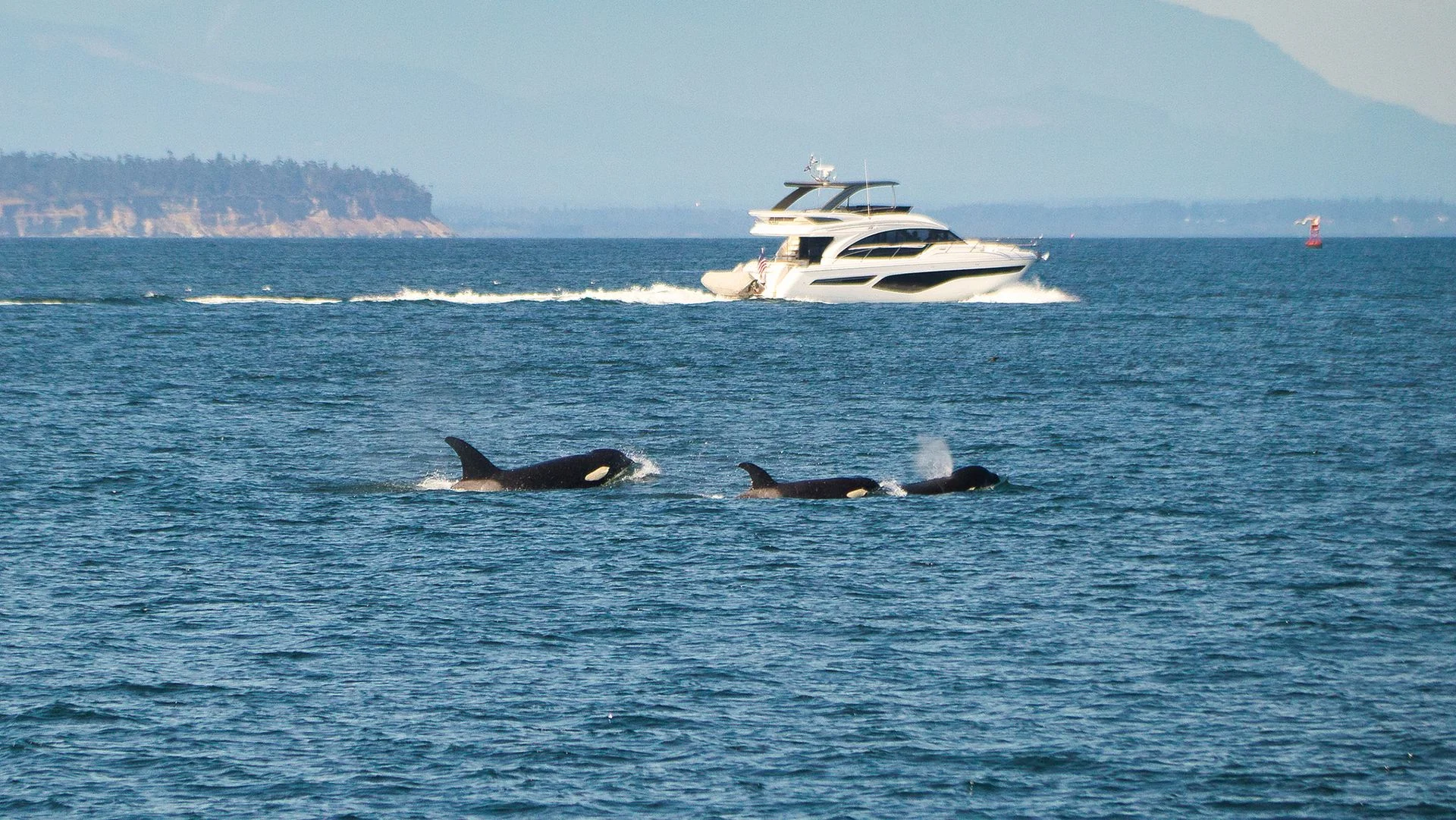
The recurring damage orcas inflict on boat rudders may involve more than a reaction to a stimulus or copying another whale. Cognitive psychologist Christian Frings proposes that the animals could be carrying out an action because they anticipate its sensory result: the sight or feel of a boat after its rudder has been damaged. His idea offers a way to study the behavior without assuming the whales have human-like motives or complex plans.
For roughly six years, some orcas have repeatedly approached boats and damaged or destroyed their rudders. The incidents have inspired explanations ranging from play and revenge to a warning against approaching a pod. Another proposal is cultural transmission: one animal observes another interacting with a boat and learns to repeat the behavior.
Frings, chair of general psychology and methodology at Trier University in Germany, doesn’t study orcas directly. His research focuses on how people control their actions. In a commentary published Sept. 8 in the journal Animal Cognition, he argues that ideas from human action-control research could help explain what the whales are doing. Orcas, he suggests, could serve as a test case for whether other species anticipate the consequences of their actions and act to bring those effects about.
Starting with the effect
Action-control frameworks are a group of theories about how people organize behavior. A key idea is that an action can begin with an anticipated result, which then helps call up the movements needed to produce it.
Frings uses turning on a light as an example. The process, in his account, starts with anticipating the lit room, not with pressing the switch. That expected visual result retrieves a motor program from memory; the motor program produces the result. People generally don’t need to think through every muscle movement involved in pressing the switch.
Applied to orcas and boats, the proposal is that a whale may anticipate what a damaged rudder will look or feel like, then perform a learned sequence of movements that produces that effect. Frings stresses that this doesn’t establish why the whale would want the result. As he told Live Science by email, “Why they want this effect is a secondary question and while of course interesting it touches a quite different topic.”
That distinction matters. The theory doesn’t claim that orcas intend to sink boats, frighten people or cause harm. They might, for example, seek the sensation of striking a rudder or being near a boat that moves differently afterward. Frings calls the behavior a possible form of probing: the whales may be testing what their actions do.
A different layer of explanation
Frings isn’t dismissing stimulus-response explanations or observational learning. Those accounts may help explain how the behavior starts or spreads. His proposal adds another possible layer: instead of a rudder simply triggering an attack, or a whale merely copying a companion, the animal may act with an anticipated consequence in mind.
In a stimulus-response account, the rudder acts as a cue that triggers a particular behavior. In observational learning, a whale sees another animal attack a rudder and imitates it. Frings says his approach asks a different question: could the whale be predicting the sensory consequences of its own actions and selecting movements that produce them?
He compares this kind of exploration with how human babies test the effects of movement, or experiment with sounds as they begin to babble. The comparison doesn’t imply that an orca thinks like a human infant. It illustrates a broader possibility: an animal may try an action, register the effect and learn which movements produce a result.
The framework also avoids making a strong claim about the whales’ inner lives. Frings says the behavior wouldn’t require “higher-order” thinking or elaborate intentions. As with switching on a light, an animal could pursue a familiar effect without reasoning through every step involved in producing it.
Testing the idea would require care
If orcas are acting to produce an expected effect, changing the relationship between their actions and that result might alter what they do. Frings offers boat design as a possible avenue for investigation. In a follow-up email, he suggested comparing a conventional rudder with a version that keeps a boat maneuverable even after an attack. If a damaged rudder normally leaves a vessel floating in what he describes as a “helpless” way, a design that prevents that outcome could break the link between the whales’ action and the effect they may seek.
That remains a hypothesis, and Frings cautions against trying such an approach with people aboard. Changing the result of an action could lead orcas to try a different behavior to achieve the effect, potentially making the encounter more dangerous. He says he can’t predict how they would respond.
The proposed test points to a practical value of the theory: it could help researchers ask more specific questions about what the whales learn from boat interactions. But the article doesn’t explain why orcas would seek a particular outcome, and it doesn’t establish that anticipated effects are driving the behavior. Frings presents the framework as an added perspective that researchers could investigate.
From laboratories to wild behavior
For Frings, the broader question is whether action-control models can apply across species. Researchers often develop frameworks for human behavior or for particular groups such as great apes. He suggests that a family of related models might describe how humans, apes and orcas use anticipated effects to guide actions.
Orca interactions with boats also offer a chance to consider whether theories developed in controlled laboratory settings can help explain behavior in the wild. Frings argues that lab research shouldn’t be treated as irrelevant to real-world actions. The whales’ behavior may provide a way to examine whether concepts from human psychology travel beyond the lab and beyond our own species.
That’s the proposal’s strongest contribution: it reframes the question from “What made the whale attack?” to “What result might the whale expect its action to produce?” Answering that will take evidence about the animals’ behavior and the effects they encounter. For now, Frings’ account is a testable idea that adds a new way to think about a puzzling pattern.
Reports of orcas damaging boats over the past six years have kept the behavior in public view, while studies of observational learning among orcas address how actions might spread. Frings’ commentary, meanwhile, asks whether anticipation of an action’s outcome could help explain how an individual carries it out.
This interview has been condensed and edited lightly for clarity.
- Orcas are adopting terrifying new behaviors. Are they getting smarter?
- 'If you do want to be a criminal, there is no better place to do it': Author Rose George dives into the dark depths of the fishing industry
- Half of the world's dams could be 'functionally inoperable' by 2060 from being flooded with sediment — and the American West is a major hotspot
Discussion
Sign in to join the discussion.