A Mary Baldwin biology student spotted a 6-inch Indigenous stone point on Virginia’s Eastern Shore. Archaeologists have taken it for study.
A find at the water’s edge
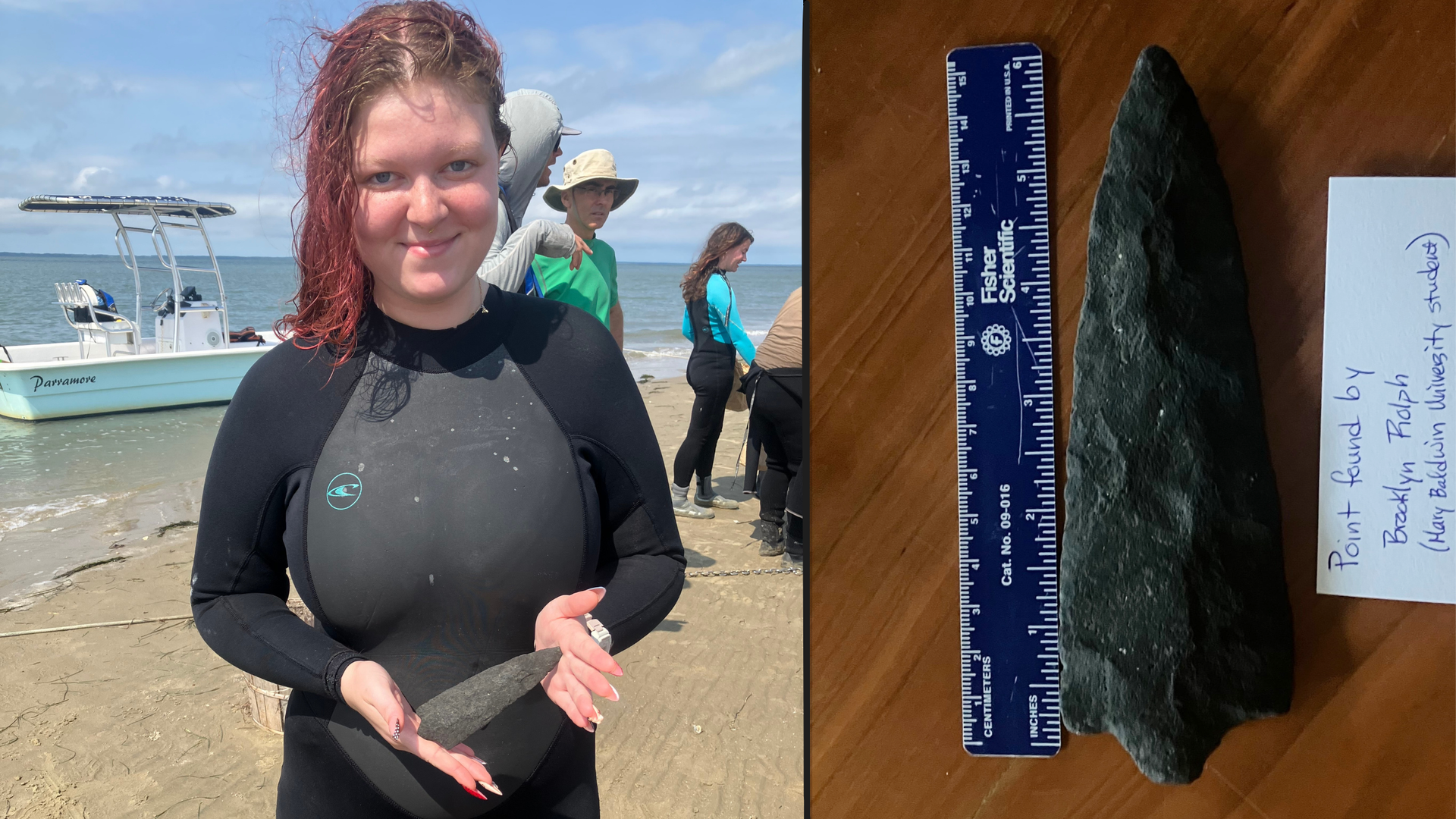
A biology field trip to Virginia’s Eastern Shore produced an archaeological find with a narrow window of discovery: a stone point that was soon to be covered by the incoming tide. Mary Baldwin University student Brooklyn Rolph spotted it while looking for shark teeth on a barrier island. The discovery came at the end of an excursion focused on coastal plants and animals, not an archaeological survey.
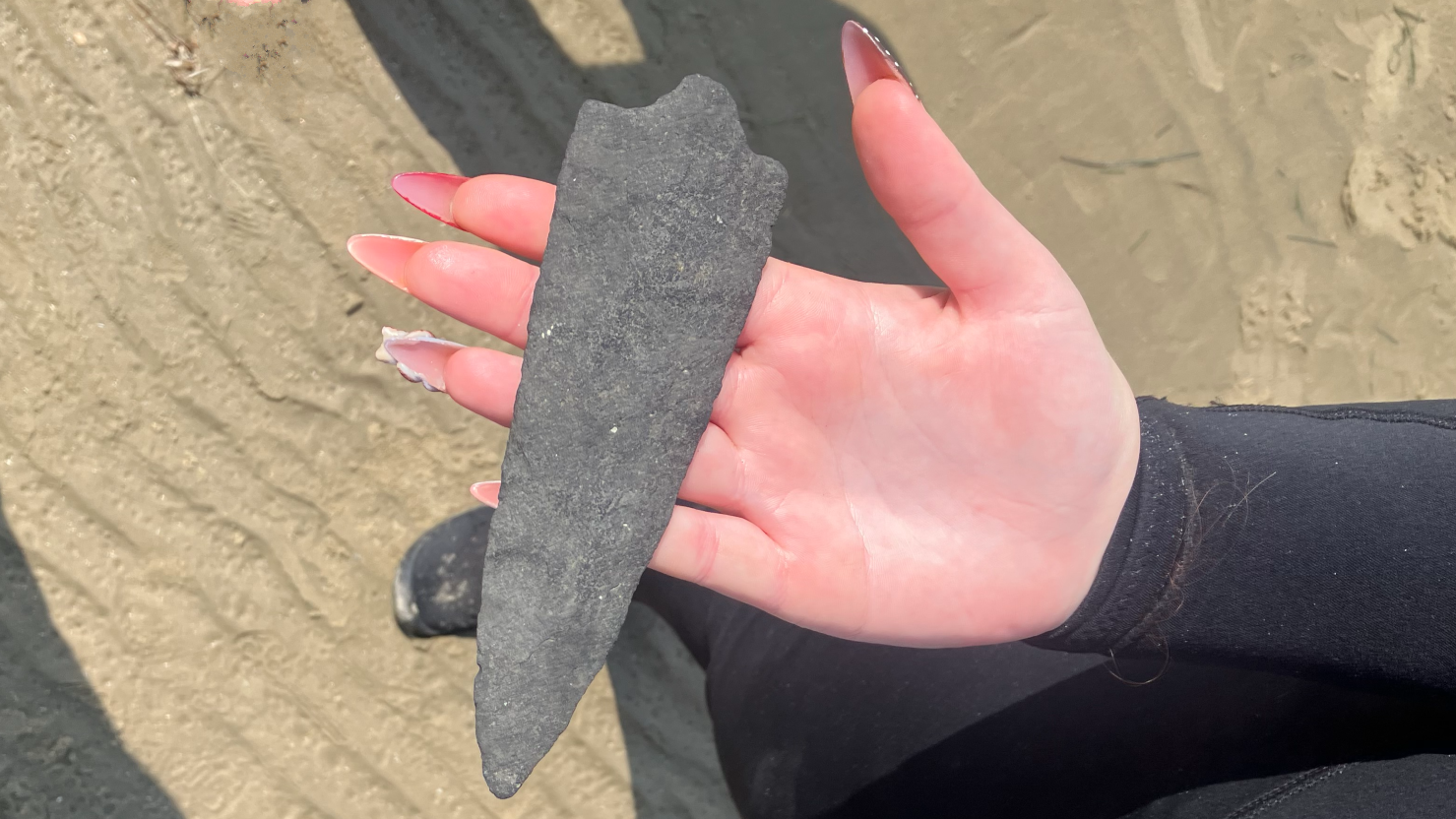
The artifact is about 6 inches (15 centimeters) long. Local archaeologists identify it as a Lehigh/Koens-Crispin point, a form made by Indigenous people along the East Coast roughly 4,500 to 3,000 years ago. Known as a “broadspear,” it may also have served as a knife during the Late Archaic period. Its shape offers a clue to how it was classified, though the precise task it performed can’t be established from the point alone.
That uncertainty is part of what makes the find interesting. A stone tool can preserve evidence of its manufacture and form, but its everyday use is harder to reconstruct without a wider archaeological context. The point’s age places it in a long stretch of Indigenous history on the East Coast; the report identifies its type and likely period, while leaving the object’s individual history unknown.
A brief moment before the tide
Rolph found the point on Sept. 21, the final day of an ecology course excursion focused on coastal plants and animals. After lunch, she made a quick visit to a shell mound and noticed the artifact beside an inlet. Her professors, who were leading the trip, were astonished. The timing mattered: the group had little time to recognize what it was before the tide threatened to cover it.
“The set of circumstances that came together that made this possible is quite unbelievable,” said Paul Callo, a Mary Baldwin biology professor and co-leader of the trip. “The tide was coming in, so the spear point was soon to be buried.” Rolph said she was already scanning for pointed objects underwater when she found it. She alerted the faculty, who were “ecstatic,” according to her university statement.
The find depended on an ordinary field trip taking an unexpected turn. Rolph was looking for shark teeth, and her attention to pointed shapes helped her notice an object that might otherwise have blended into the shoreline. The tide added urgency. A brief delay could have made the artifact harder to see or recover, though the account doesn’t say what would have happened to it if it had been submerged.
The group had permission from the state to explore the barrier islands off the Eastern Shore, the southern end of the Delmarva Peninsula. Callo said he was “truly at a loss for words” when Rolph showed him the find. “It is certainly awe-inspiring to see and touch something that was made by human hands thousands of years ago.” That reaction captures the find’s immediate force: an object made in the distant past was suddenly present in the hands of people studying the coast today.
What happens to the artifact
The island is part of a natural area owned by the Virginia Department of Conservation and Recreation, so the artifact belongs to the Commonwealth of Virginia. Archaeologists collected it from the university group and took it to the Virginia Department of Historic Resources for further study. That transfer places the point with specialists who can examine it beyond its initial identification, although no further findings are described here.
Rolph wasn’t hoping to keep it: “That's how you get cursed!” Her joke aside, the ownership details matter. An artifact’s significance isn’t only its age or appearance; where it was found and who is responsible for it also shape how it can be studied and cared for.
This is more significant than it looks. The point is one object, and the available account doesn’t establish what people did at this particular spot or how the tool came to rest there. Still, its recovery gives archaeologists material to study and preserves a chance to ask questions that a photograph alone couldn’t answer. If you're working in archaeology or coastal field research, the episode is a reminder that useful discoveries can emerge outside formal digs—and that noticing and reporting an artifact quickly can affect what researchers get to examine.
A small object. A brief opening in the tide.
How much do you know about the first people to reach the Americas? Find out with our First Americans quiz!
Discussion
Sign in to join the discussion.